How We Build No-Code Platforms for McKinley Park
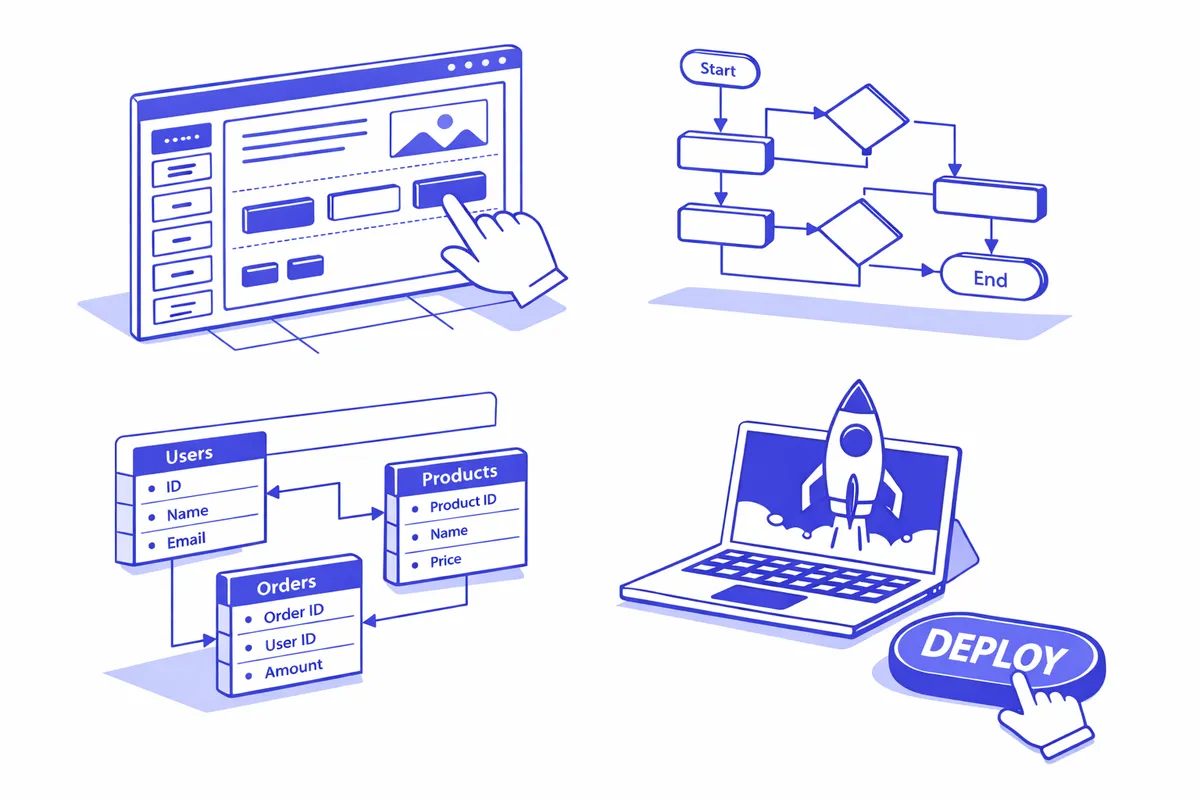
We begin by finding the workaround. Every business has one or two manual systems holding the operation together, and for a McKinley Park company that is usually a whiteboard near the dock, a binder at the front counter, or a spreadsheet only the owner understands. We sit with the people who use it, learn what it actually tracks, and map the steps before we pick a platform. The tool serves the workflow, not the reverse.
Then we choose the right no-code foundation for the job. A warehouse near Pershing Road that needs a shared freight and inventory tracker is a strong fit for Airtable. An auto shop on Archer Avenue that needs customer-facing booking and a job board might run on Glide so the whole thing lives on the team's phones. A family business that needs a more involved internal tool can use Bubble. We are not loyal to one platform. We are loyal to the cheapest, simplest build that solves the problem.
We build in short cycles and put the working tool in your hands fast, because a McKinley Park operator can tell us in five minutes of real use what a month of planning would miss. We migrate your existing data, whether it lives in a notebook or a spreadsheet, and we train the team on the floor near 35th Street. We also build it so you can change a field or add a view yourself, so the tool grows with the business instead of freezing the day we leave.
Industries We Serve in McKinley Park
Warehouses and logistics firms on the Pershing Road corridor use no-code platforms to retire the freight whiteboard for a shared inbound-and-outbound tracker that the dock and the office both update in real time. Built on Airtable or a similar tool, it shows shipment status, assigns drivers, and gives the owner a view from a phone, which ends the all-day phone tag between dispatch and the loading bay.
Auto service and repair shops near Archer Avenue turn to no-code development for booking and job-tracking apps that replace the paper calendar and the legal pad. Customers schedule online, the bays see the day's queue on a tablet, and the service writer logs status as each car moves, so the front counter near Western Avenue can answer "is it ready" without walking back to ask.
Family-run restaurants around 35th Street and McKinley Park itself use no-code tools to manage catering orders, supplier reorders, staff scheduling, and prep lists in one shared app instead of a stack of notebooks and a group chat. A simple build lets a multigenerational kitchen hand off a shift, or the whole business, without the system living only in one person's head.
Neighborhood grocers along Ashland Avenue and Western Avenue build no-code inventory and reorder apps that turn the under-the-counter notebook into a phone-based system. Staff log low stock as they spot it, the app builds the order, and the owner tracks vendor pricing over time, which tightens margins for a store competing with larger chains a few blocks away.
Contractors and trades working the bungalow blocks of McKinley Park use no-code platforms to run a project tracker that holds job stages, crew assignments, material lists, and client contact details in one place. Instead of a truck full of paper and a phone full of texts, a contractor near Stearns Quarry checks every active job from a single app and knows what each crew is doing today.
Family medical and dental practices near the Chicago Public Library McKinley Park branch use no-code development for internal tools the big practice-management systems do not cover: referral trackers, equipment maintenance logs, supply ordering, and simple patient-intake workflows. A lightweight custom app fills the gaps without the cost or complexity of another enterprise platform.
What to Expect Working With Us
1. Find the workaround. We identify the manual system your McKinley Park business actually runs on, usually a whiteboard, a binder, or a spreadsheet, and we learn it by watching the people who use it every day. That workaround becomes the spec for the build.
2. Pick the platform, build the first version. We choose the no-code foundation that fits the job and budget, then build a working version fast. You are using a real tool, not reviewing a mockup, within the first couple of weeks.
3. Migrate and train on the floor. We move your existing data into the new app and train the team where they work, near the dock or the front counter on 35th Street, so adoption happens with the people who will live in the tool.
4. Hand over the keys. We build the platform so your team can adjust fields and views without us, and we time the rollout so you can put a new tool in place during the late-winter slow stretch before the Southwest Side busy season picks back up.