How We Build Multi-Agent Systems for McKinley Park
We begin with a deep workflow mapping process. Multi-agent projects require thorough understanding of every step in your complex workflows before we design anything. We interview operations staff, observe actual workflows, and document every step, system, dependency, and decision point. For a food producer, that means understanding order intake, ingredient procurement, production scheduling, quality control, inventory management, and delivery logistics in detail. For a warehouse, it means receiving, cataloging, order processing, routing, returns, and client communication.
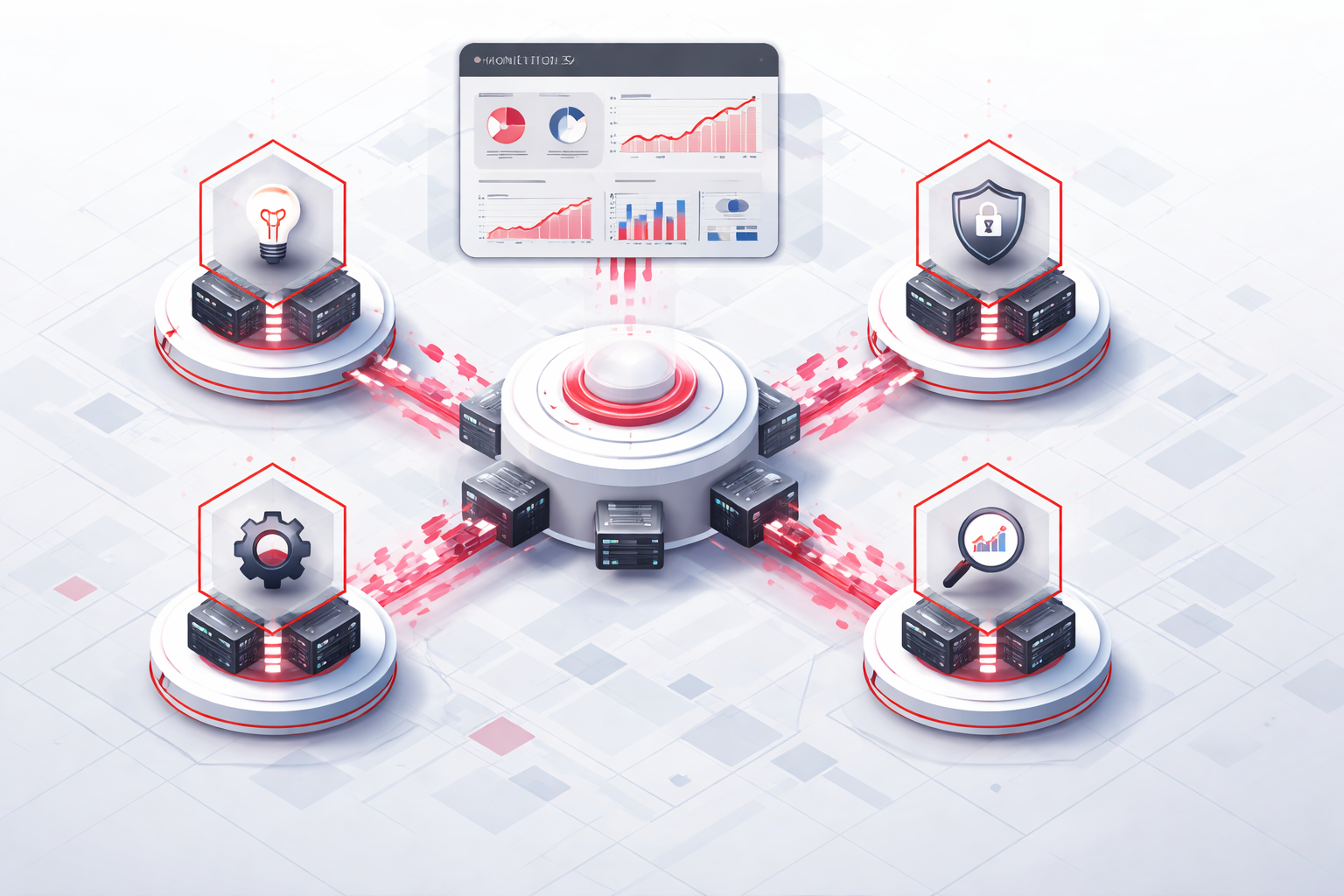
From the workflow map, we design the agent architecture: how many specialized agents the system needs, what each owns, how they communicate, and how they escalate to humans. We present this architecture for your review before building anything. You need to understand how the system will work before we implement it.
Building the agents involves connecting them to your existing systems: the inventory platform, the scheduling software, the billing system, the customer communication tools. We do not ask you to replace your existing tools to accommodate the agents. We build agents that work with what you have.
Deployment is staged. The system runs initially with significant human oversight. Agents propose actions rather than executing them. As you verify that the agents are making correct decisions, autonomy increases. Most McKinley Park operations reach 70 to 80 percent full automation within the first three months, with the remaining 20 to 30 percent of cases being genuinely complex situations that warrant human decision-making.
Industries We Serve in McKinley Park
Food producers and specialty manufacturers near Bubbly Creek and the Western Avenue industrial corridor use multi-agent systems to coordinate the full order-to-delivery workflow: order intake, ingredient procurement, production scheduling, quality tracking, inventory management, and delivery logistics. The system manages entire production cycles automatically for routine orders while flagging exceptions for human attention.
Small warehouses and distribution operations near Pershing Road use multi-agent systems to coordinate receiving, inventory cataloging, order processing, delivery routing, and client status communications. Operations that currently require a coordinator spending most of their day managing information flow between systems can redirect that coordinator toward exception handling and client relationship management.
Contractors with multiple active job sites throughout McKinley Park and Brighton Park use multi-agent systems to coordinate material ordering across jobs, crew and subcontractor scheduling, billing milestone triggers, and client communication updates. A contractor managing six active sites simultaneously needs this kind of coordination layer to maintain quality and communication without the overhead of a full-time project manager.
Auto service operations on Western Avenue and 35th Street with high job volume use multi-agent systems to coordinate appointment scheduling, parts procurement, technician assignment, work order tracking, billing, and post-service follow-up. High-volume shops handle more throughput without adding service advisors.
Logistics and freight operations in McKinley Park's industrial zone use multi-agent systems to coordinate pickup scheduling, route optimization across multiple stops, delivery confirmation tracking, billing, and exception handling. Dispatchers focus on complex routing decisions and customer escalations rather than routine status coordination.
Catering and large-format food service operations on Archer Avenue use multi-agent systems to coordinate event bookings, ingredient procurement, kitchen scheduling, staffing, and delivery logistics across multiple simultaneous events. Catering businesses that grow beyond what a single coordinator can manage deploy multi-agent systems to maintain operational quality at scale.
What to Expect Working With Us
1. Workflow mapping and architecture design. We document your complex workflows in detail and design the multi-agent architecture that automates them. This is the most critical phase. A thorough map leads to an agent design that actually reflects your operations rather than a generic template. Two to three weeks.
2. Agent development and system integration. We build the agents, connect them to your existing systems, and test the automation against real workflow scenarios. Four to six weeks depending on workflow complexity and the number of systems involved.
3. Staged deployment with supervised autonomy. We deploy the system with human oversight initially. Agents propose actions that humans approve before execution. As you build confidence in agent decision-making, autonomy expands. Two to four weeks to reach stable autonomous operation.
4. Ongoing optimization and capability expansion. We monitor agent performance, refine decision logic based on real operational data, and expand the system to handle additional workflow types as your business evolves. Quarterly reviews identify new automation opportunities.