How We Build HR Automation for McKinley Park
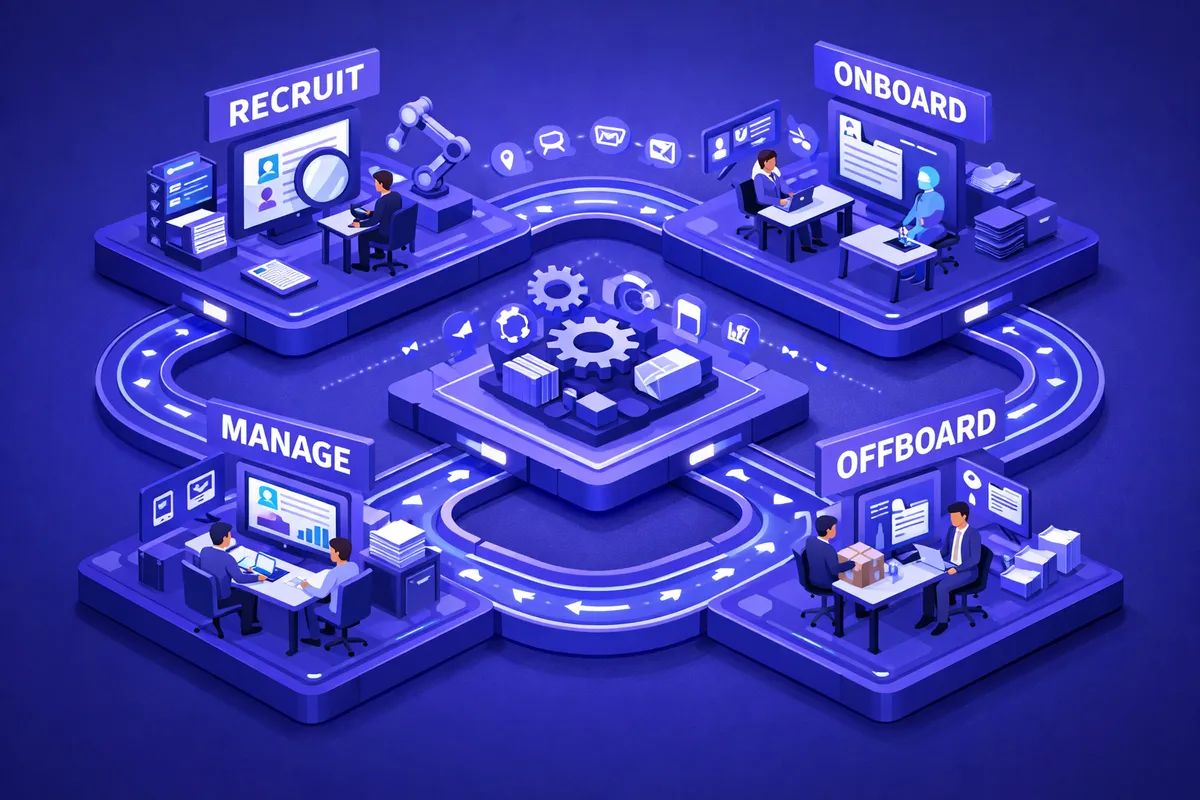
HR automation for a McKinley Park small business starts with an inventory of every recurring HR task: hiring, onboarding, time tracking, payroll, compliance renewals, and offboarding. We map what currently happens manually, identify the error points and time costs, and design the automation sequence that replaces each manual step.
For most small businesses in McKinley Park, the highest-value automation targets are new hire onboarding, I-9 and work authorization tracking, payroll data collection, and mandatory training completion tracking. We build these first because they produce the most immediate reduction in owner time and compliance risk.
Onboarding automation triggers when a new hire is added to the system: a digital package goes to the new employee with every required form, the employee handbook in their preferred language, and the mandatory policy acknowledgments. The system tracks completion and reminds the employee of any incomplete items. The manager receives a completion dashboard rather than a pile of paper to verify. For a warehouse operation near Stearns Quarry that processes two to three new hires a month, the onboarding sequence runs without anyone initiating it.
We build on tools that match the business's technical capacity and budget. For most McKinley Park small businesses, that is a combination of a digital HR platform like Gusto, Rippling, or BambooHR configured around the business's specific needs, supplemented by automation connectors that fill any gaps. We do not recommend the most feature-rich platform. We recommend the one that the owner will actually use and that the employees can access from a phone.
Industries We Serve in McKinley Park
Restaurant and food service businesses on Archer Avenue turn over staff frequently and operate under Chicago's mandatory food handler training requirements, sexual harassment prevention training obligations, and predictive scheduling rules for covered employers. HR automation ensures that every new hire completes required training before their first shift, that scheduling documentation meets compliance standards, and that training records are stored and searchable rather than in a file cabinet that requires a half-hour to locate a specific document.
Small warehouse and logistics operations near Ashland Avenue manage a workforce with safety training requirements, equipment certification tracking, and drug testing obligations that appear in customer contracts. HR automation tracks every expiration date and sends renewal notifications before the lapse. When a customer or insurer asks for certification documentation, the HR system produces it in minutes rather than requiring the owner to locate paper records.
Auto service businesses along Western Avenue employ technicians whose ASE certifications, manufacturer training completions, and state licensing requirements expire on different schedules. HR automation builds the compliance calendar into the employee record and sends renewal alerts to both the employee and the manager with enough lead time to schedule the necessary training or exam.
Neighborhood grocery and convenience retailers near 35th Street manage part-time hourly staff with high seasonal variability. HR automation handles the new hire paperwork cycle that repeats every fall when school schedules change and every summer when students come on and off the payroll. Digital I-9 verification, direct deposit setup, and tax form collection all run through the automated onboarding sequence without requiring the store manager to sit with each new hire for 90 minutes of paperwork.
Family medical and dental practices near the McKinley Park branch of the Chicago Public Library operate under healthcare-specific HR requirements: HIPAA training, background checks, DEA registration verification, and professional license tracking for clinical staff. HR automation builds a compliance calendar for every employee type, sends renewal reminders at 60 and 30 days before expiration, and maintains the documentation trail required for state licensing board audits.
Contractors working the bungalow and industrial corridor between Pershing Road and Western Avenue employ field crews that are rarely in the office and may work irregular schedules. HR automation handles the field-accessible onboarding: new hire forms submitted from a phone, direct deposit setup without a visit to the office, safety briefing acknowledgments recorded before the worker arrives on site. For a contractor who brings on two or three workers every spring, the automated onboarding sequence makes each hire faster and more consistent than the previous one.
What to Expect Working With Us
1. HR process audit and compliance gap review. We inventory every recurring HR task and map the current manual process for each one. We also review the compliance obligations specific to your industry and workforce size in Chicago, because small employers are frequently unaware of the requirements that apply to them until a complaint surfaces the gap.
2. Platform selection and configuration. We configure the HR platform to match your workforce composition: pay structures, department organization, compliance calendar, and required document library. For bilingual workforces in McKinley Park, we build the system with Spanish-language onboarding materials and employee-facing communications as a core feature, not an afterthought.
3. Automated sequence build and testing. We build the onboarding, compliance renewal, and payroll automation sequences, test each trigger against realistic scenarios, and verify that exception cases surface clean alerts rather than failing silently. A new hire whose I-9 documentation is incomplete should receive a specific notification about exactly what is missing, not a vague error.
4. Rollout and manager training. We train the owner and any managers who will use the system, covering both day-to-day operations and the compliance reporting they will need for audits or disputes. Ongoing support for the first 60 days ensures that questions arising from real-world use get answered before they compound into problems.