How We Build Customer Portals for McKinley Park
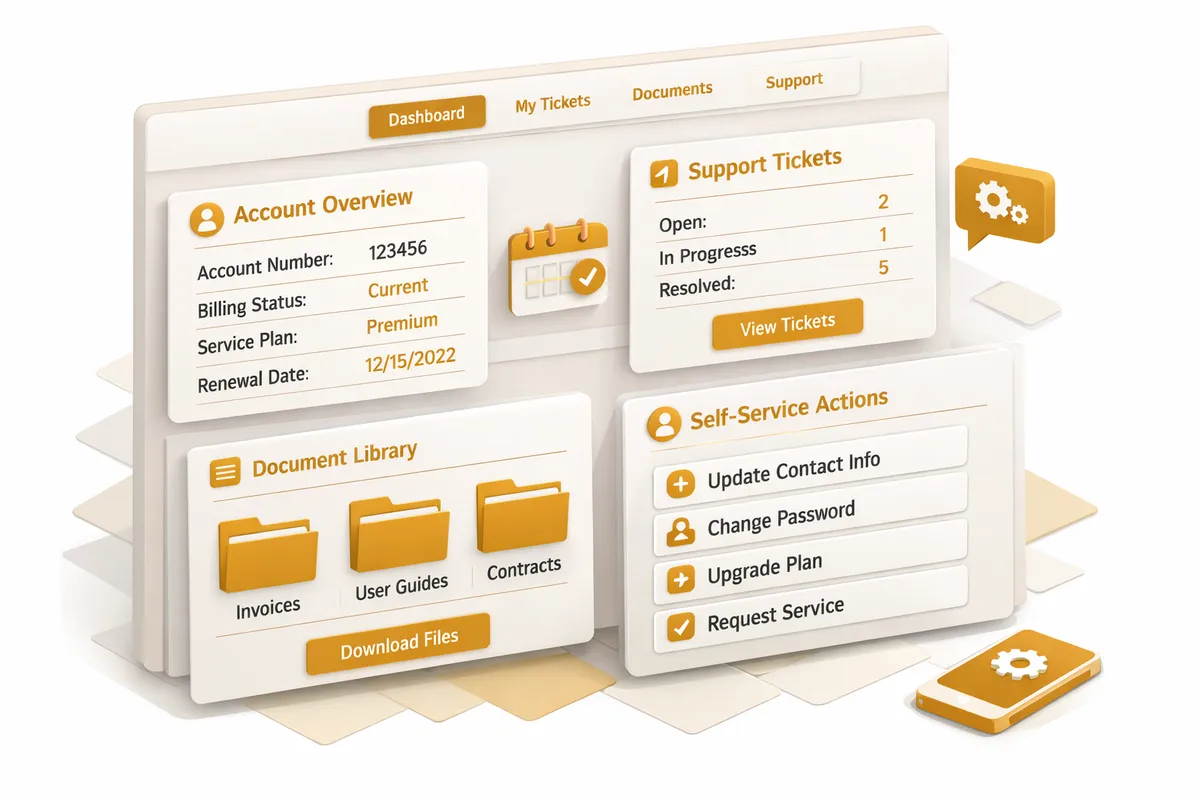
Portal development for McKinley Park B2B businesses begins with the account management lifecycle. For a wholesale or logistics business, the key touchpoints are order placement confirmation, shipment status, delivery confirmation, invoice access, payment records, and reorder management. For a contractor or service business, the key touchpoints are estimate access, job confirmation, schedule visibility, progress updates, invoice delivery, and warranty or service records. We map the specific lifecycle for each client and build the portal scope to cover the full cycle rather than one or two functions.
Integration with the order management, accounting, and scheduling systems the business already uses is essential for McKinley Park's small and mid-size commercial operations. A business that has to manually update the portal every time an order ships has not gained anything. We build the integration layer that connects the portal to the business's existing operational data so account status reflects current information automatically. For businesses running QuickBooks for accounting, standard order management software, or industry-specific field service platforms, the integration paths are well-established.
Security and access control for B2B portals in McKinley Park are designed for the commercial account structure. A restaurant group with five locations needs a single account that lets their purchasing director see all locations' order history and lets each location manager see only their own orders. A property management company needs an account that separates their properties by region and lets each regional manager see only the properties they are responsible for. We build access models that reflect the actual structure of the B2B relationship rather than forcing commercial accounts into consumer portal patterns.
For businesses along the Archer Avenue commercial strip, portal design is also about competitive positioning. McKinley Park's commercial businesses compete for accounts against larger suppliers and regional chains that have invested in customer experience infrastructure. A portal gives a McKinley Park business a professional account management experience that stands alongside what national competitors offer, without requiring the overhead of a full customer service department.
Industries We Serve in McKinley Park
Warehouse and wholesale distribution businesses near Western Avenue and Stearns Quarry build portals that give commercial accounts access to current inventory availability, pending order status, delivery tracking, invoice download, payment history, and reorder tools. For wholesale relationships where accounts order the same products on regular cycles, the portal can surface reorder reminders based on purchase history and help accounts manage lead times more effectively.
Small manufacturers and fabricators near the Archer Avenue industrial corridor use portals to give contract clients access to job status, production phase updates, completion estimates, quality documentation, and invoice access. For a fabricator handling multiple concurrent custom jobs for several commercial clients, a portal eliminates the per-job status calls that would otherwise require a dedicated customer service contact.
Commercial contractors and construction services operating out of McKinley Park use portals to manage the commercial client relationship from estimate to final billing. Clients access their project estimate, review change orders, track schedule progress, receive completion documentation, and access warranty records without requiring the contractor to manually answer each inquiry. For contractors building repeat relationships with property management companies or commercial facility managers, the portal strengthens the relationship by demonstrating organized account management.
Logistics and delivery companies with commercial accounts along the near Southwest Side use portals that give shippers and receivers access to shipment tracking, delivery confirmation documentation, rate quotes, invoice history, and claims submission. For logistics operations serving food service, restaurant supply, or commercial distribution accounts in the McKinley Park to Bridgeport corridor, a portal reduces the per-shipment communication overhead that accumulates across a high-volume account base.
Auto service and fleet maintenance businesses along Ashland Avenue serving commercial fleet accounts use portals for vehicle service history, maintenance schedule tracking, current work order status, invoice access, and fleet-level reporting. A commercial fleet account that manages twenty or thirty vehicles benefits from a portal that gives the fleet manager visibility into the full maintenance history of every vehicle in one place.
Family medical practices and community clinics near McKinley Park itself serve the neighborhood's Latino families and working-class residents with patient portals for appointment management, intake form completion, care instruction access, and secure messaging with the care team. For practices along 35th Street serving long-term patient families, a portal that maintains the complete care communication history in one place strengthens the ongoing care relationship.
What to Expect Working With Us
1. Commercial account structure mapping. We document the structure of your B2B accounts: who at each account needs access, what they need to see, and how their access should be scoped. For McKinley Park businesses serving commercial accounts with multiple contacts or multiple locations, this mapping drives the access control architecture that prevents one account's contacts from seeing another account's data.
2. Integration with existing order management and accounting systems. We assess your current operational systems and design the integration that keeps portal data current automatically. For common platforms used by McKinley Park's small manufacturing and distribution businesses, including QuickBooks and standard order management tools, integration paths are well-tested.
3. B2B portal interface design. Commercial portals for McKinley Park's industrial and service businesses are designed for efficiency over style. The purchasing manager who checks order status twice a day needs a fast, clear interface, not an elaborate design. We calibrate the interface to the actual user and their workflow.
4. Account migration and client onboarding. We build the process for migrating your existing commercial accounts into the portal, including a communication to your accounts that explains what the portal provides and how to set it up. For commercial accounts accustomed to phone and email, a clear onboarding message framed around what the portal does for them drives adoption.