How We Build Custom CRM for McKinley Park
The first question we ask is: who are your customers, and what does the relationship with them look like over time? For a contractor working bungalow blocks between Pershing Road and Western Avenue, the answer is: a mix of homeowners with ongoing maintenance needs and occasional major project clients, with a referral network connecting both groups. For a caterer on Archer Avenue, it is: event clients with predictable life cycle patterns, repeat clients, and a network of event planners and venues that generate referrals.
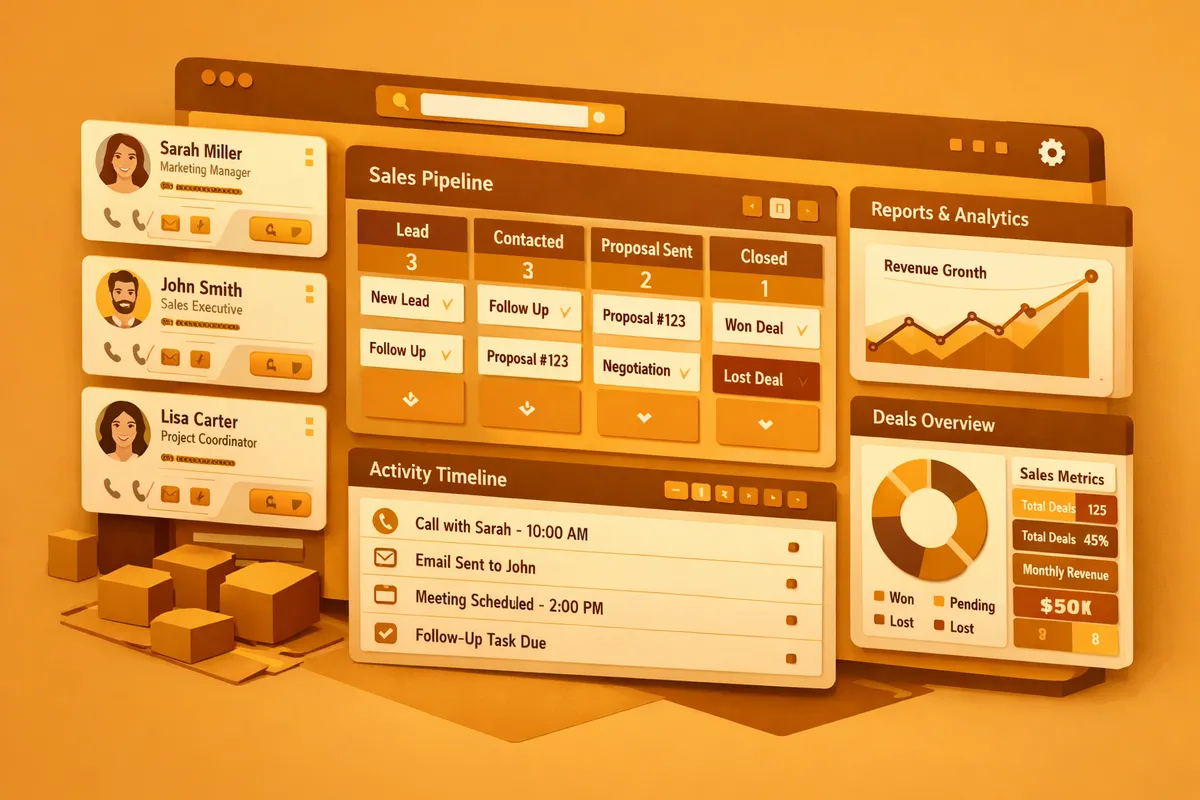
Each of those relationship maps is different, and a custom CRM reflects the one that fits the specific business. We define the customer stages, the data fields that matter, the follow-up triggers, and the reporting views that let the owner understand their customer base at a glance. A contractor's CRM needs job history, seasonal follow-up triggers, and a referral source field. A caterer's CRM needs event dates, guest counts, past menus, and an anniversary follow-up system.
We build on tools with low maintenance overhead. Most McKinley Park small business CRMs live in Airtable or Notion, connected to a simple form for capturing new customers and a basic automation layer for follow-up triggers. For businesses with more complex needs, we build on a lightweight custom database with a clean admin interface. We do not build systems that require a developer to maintain. If the owner cannot update a customer record or add a follow-up note without calling us, we have failed.
The build phase typically takes three to four weeks. We configure the data model, import any existing customer data from spreadsheets or contact lists, set up the follow-up automation, and build the owner-facing dashboard that shows the information they need without requiring them to navigate a complex system. Training is hands-on, and we do not consider the project complete until the owner is independently managing the system.
Industries We Serve in McKinley Park
Contractors and home services businesses working the bungalow corridors between 35th Street and Pershing Road have a natural referral network that a custom CRM can make explicit. The system records every job, every referral source, and every completed project. Seasonal follow-up triggers reach out to past clients before the spring project window and before the holiday rush. The contractor stops relying on memory and starts managing the customer relationship like the asset it is.
Restaurants and catering operations along Archer Avenue use custom CRM to manage event client relationships over time. A quinceañera client who had a great experience in June is a repeat client for the next family event and a referral source for their social network. The CRM captures the event details, the guest preferences, and the follow-up schedule so the relationship continues after the flowers go home. Without that record, the client is just a phone number that fades.
Auto service businesses on Western Avenue have a natural CRM use case that most still manage from memory: the customer who brings in two family vehicles, who referred a neighbor, who is due for an oil change in March. A custom CRM creates the service history, captures the household vehicle inventory, and triggers a reminder at the right mileage or calendar interval. The customer feels remembered because they are remembered, in a system rather than in someone's head.
Neighborhood medical and dental practices near the McKinley Park branch of the Chicago Public Library manage patient relationships that benefit from continuity tracking. When was the last preventive visit? Which family members are patients? Who referred this patient? A custom CRM for a small practice does not replace an EMR or a practice management system. It supplements those systems with relationship context that makes patient communication more personal and more timely.
Small warehouse and logistics operations along the Ashland Avenue corridor manage a client list that is often small in number but high in revenue per relationship. A custom CRM tracks every contact at each client company, the history of jobs, the outstanding bids, and the follow-up schedule for contracts approaching renewal. When a client's regular contact leaves the company, the CRM ensures the relationship transfers to the new contact rather than starting from zero.
Family-run grocers and neighborhood retailers near 35th Street use custom CRM primarily for their bulk and wholesale customer base. A caterer who orders large quantities for events, a restaurant that buys produce weekly. The CRM tracks purchasing patterns, flags customers who have not ordered in a while, and supports the kind of proactive relationship management that keeps the business relationship from quietly drifting to a competitor.
What to Expect Working With Us
1. Customer relationship mapping. Before we write a line of configuration, we spend time understanding who your customers are, how they find you, what the relationship looks like over time, and what follow-up actions would most strengthen that relationship. For a McKinley Park contractor, this often surfaces that the referral source is the single most valuable data point they are not currently capturing.
2. Data model and system build. We configure the CRM structure to match your specific customer relationships and business stages. We import existing customer data, set up follow-up automation triggers, and build the reporting views that give you a clear picture of your customer base without requiring you to manually compile that picture.
3. Migration of existing contacts and records. If your current customer list lives in a spreadsheet, a phone contact list, or a filing cabinet, we migrate it into the new system before you start using it. You do not start with an empty CRM. You start with your actual history, organized.
4. Training and 30-day support. We train you directly on the system, walking through adding customers, logging interactions, handling follow-up queues, and reading the dashboard. For the first 30 days after launch, we are available for questions as you encounter real-world situations the training session did not cover.