How We Build Business Process Automation for McKinley Park
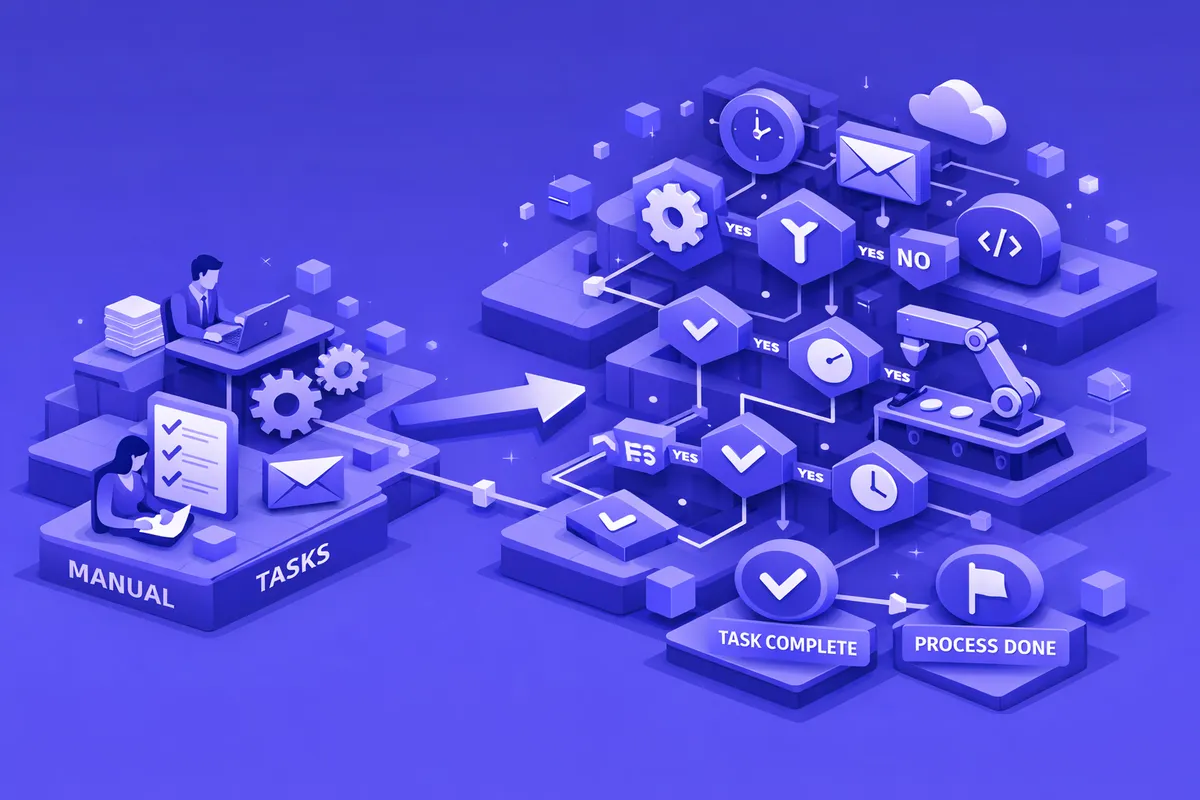
Discovery starts with a process walkthrough. We ask the owner to walk us through a typical week, step by step. What happens when a new lead comes in? Who contacts them, how, and when? What triggers an invoice? Who handles appointment reminders? What happens when a job is complete? We map every step, identify which ones require human judgment and which ones are purely mechanical, and that distinction is where automation applies.
The automation targets we identify first are the ones with the highest recurrence and the lowest complexity: appointment confirmations, invoice generation on job close, lead response emails, low-stock reorder alerts, payment reminder sequences. For a McKinley Park auto service shop, that is usually the appointment reminder and ready-for-pickup notification. For a contractor near Pershing Road, it is usually invoice generation and job status updates to clients. For a grocery near 35th Street, it is usually reorder triggers and vendor payment scheduling.
We build using tools that the business can manage without a developer on call. Zapier for light workflow connections. Notion or Airtable for process tracking. Existing software APIs where the business already has a POS or scheduling tool. The goal is not to build the most sophisticated system possible. It is to build the system that actually gets used, that the owner understands well enough to modify when the business changes.
Testing happens before any process goes live. We run each automation against realistic edge cases: what happens when a customer cancels? What happens when an invoice has a line-item question? What happens when a job runs over schedule? For every exception path, either the automation handles it or it surfaces a clean alert for the owner to handle manually. Nothing falls through the middle.
Industries We Serve in McKinley Park
Family-run auto service shops on Western Avenue benefit immediately from appointment confirmation and vehicle-ready notification automation. A customer books online or by phone, receives a confirmation text, gets a reminder the morning before their appointment, and receives an automated notification when their vehicle is ready. The owner stops making phone calls and focuses on the work. Repeat booking prompts sent 90 days after a previous service bring customers back before they end up at a competitor.
Contractors and home services businesses near Stearns Quarry use business process automation to manage the intake-to-invoice cycle without manual handoffs. A new request triggers an automated acknowledgment and intake form. A completed estimate triggers a follow-up if no response comes in 72 hours. A signed contract triggers a project setup sequence that schedules milestones and creates the first invoice template. None of these steps require the owner to initiate them.
Restaurants and catering operations on Archer Avenue handle reservation requests, catering inquiry follow-ups, and event booking confirmations through automated response sequences. An inquiry submitted through the website or social media triggers an immediate response with availability and next steps, rather than waiting until the owner checks their inbox between lunch and dinner service. Deposits for events trigger automated receipt emails and a reminder sequence leading up to the event date.
Small warehouse and logistics operators along Ashland Avenue use process automation to close the loop between job completion and billing. When a delivery is marked complete in their tracking system, an invoice generates automatically and routes to the client. Payment due reminders go out on schedule. Jobs approaching their deadline trigger alerts before they become late, rather than after. The billing cycle shrinks from weeks to days.
Neighborhood grocery and convenience retailers near 35th Street automate reorder triggers for high-velocity SKUs, vendor invoice approval workflows, and weekly sales reporting. When a product category drops below a set inventory threshold, a purchase order drafts automatically and routes to the owner for approval. Vendor invoices received by email get logged and scheduled for payment without manual entry.
Family medical and dental offices near the McKinley Park branch of the Chicago Public Library use automation for appointment reminders, new patient intake forms, and insurance verification follow-ups. Automated appointment reminders reduce no-show rates measurably. New patient intake forms sent before the appointment mean the first visit is not consumed by paperwork. Insurance verification requests that would otherwise require a staff member to make phone calls go out automatically and track responses.
What to Expect Working With Us
1. Process map and automation target identification. We spend one full session walking through your operations and mapping every recurring manual step. We prioritize the top five to seven automation targets by time savings and business impact. For a McKinley Park contractor, this typically surfaces invoice generation, appointment confirmation, and project status updates as the highest-value targets.
2. Build and connect. We configure the automation tools, build the workflow logic, and connect them to your existing systems. We do not require you to switch software you already rely on. We connect to what you have or recommend simple additions where the existing tools have gaps.
3. Exception path testing. Before any automation goes live, we test every edge case: cancellations, errors, unusual sequences, and failures. We build clean exception alerts for anything the automation cannot handle autonomously, so nothing falls through without surfacing to you.
4. Handoff and self-sufficiency training. We walk you through every automation we built so you understand what it does, when it triggers, and how to adjust it as the business changes. The goal is a system you own and can maintain, not one that requires us to be present for every modification.