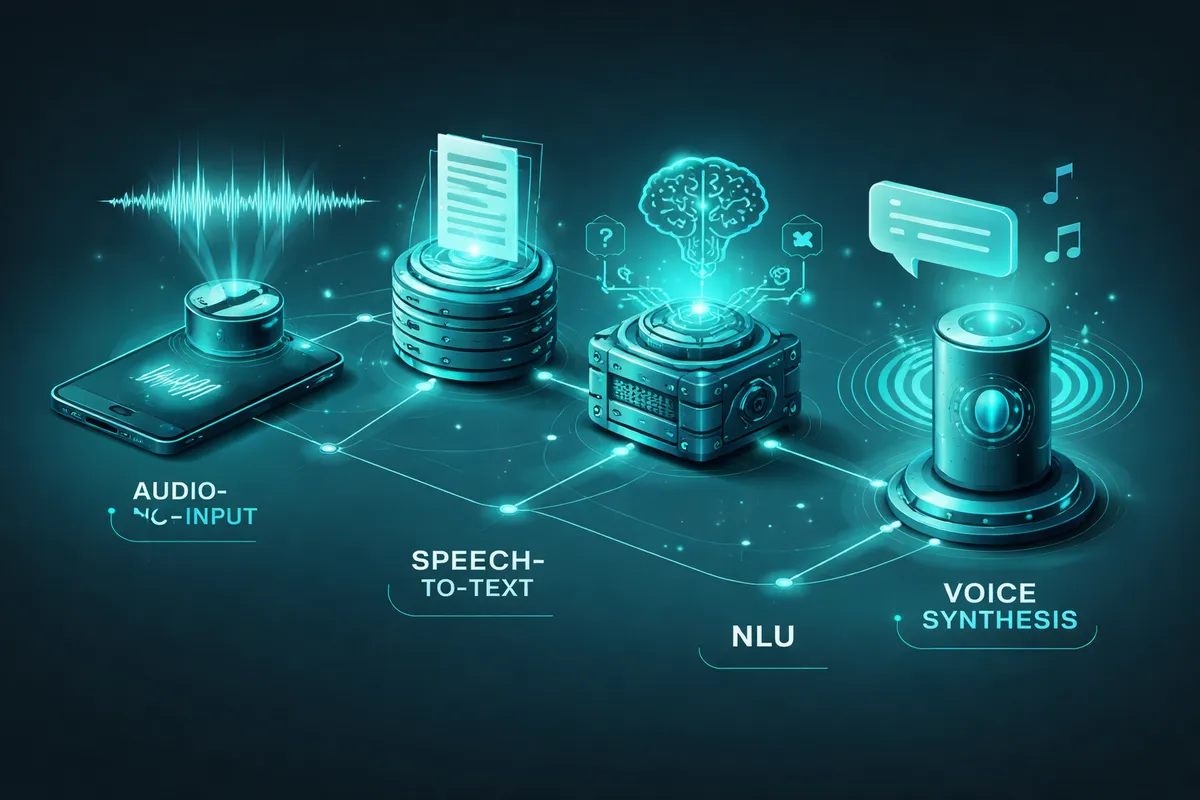
How We Build Voice AI for the Loop
Call flow analysis and design. We begin by analyzing your current incoming call patterns: who calls, why they call, how calls are currently handled, and where the current system fails. For a Loop law firm, this typically reveals distinct call categories requiring different handling: new matter inquiries, existing client check-ins, opposing counsel coordination, and administrative calls. For a financial services firm, it reveals prospect calls, existing client service calls, and institutional counterparty coordination. We design voice AI call flows that handle each category appropriately.
Intake and qualification design. For each call category, we design the information collection and qualification logic that makes calls useful before they reach a professional or get scheduled. A new matter inquiry call collects practice area, the nature of the legal issue, the caller's preferred contact information, and their scheduling availability. A prospect inquiry call at a financial services firm collects investment objective, asset range, and how the prospect heard about the firm. Qualification data is collected consistently and logged to your CRM or practice management system automatically.
Routing and escalation logic. We configure the routing logic that directs calls to the appropriate professional or queue based on qualification results. Urgent existing client matter calls route differently from routine status inquiries. High-priority prospect calls route immediately to available advisors rather than to a scheduling queue. Calls that the voice AI identifies as requiring immediate attorney attention escalate with the call context already logged. Routing logic is designed to match your organization's actual priority structure, not a generic model.
System integration and configuration. We integrate voice AI with your existing phone system infrastructure, your scheduling platform, and your CRM or matter management system. Calls flow through your existing numbers. Appointments booked by the voice AI appear in professionals' calendars. Caller information and call transcripts log to the appropriate CRM record or matter file automatically. Integration is designed to add capability to your existing workflows rather than require wholesale system changes.
Monitoring, optimization, and voice quality refinement. We monitor call handling performance in production: what percentage of callers complete the intake flow, where callers disengage or ask to speak with a human, and how accurately the routing logic serves the actual call distribution. We refine call flows based on production patterns and conduct periodic quality reviews of call handling accuracy with your team.
Industries We Serve in the Loop
Law firms and legal practices across LaSalle Street, Dearborn Street, and the Loop deploy voice AI to handle new matter inquiry intake with consistent qualifying questions and immediate consultation scheduling; existing client status calls with automated matter status retrieval for routine inquiries and professional routing for substantive questions; opposing counsel scheduling coordination without requiring attorney availability; after-hours intake that captures prospective client information and schedules consultations before the next business day; and administrative call handling for vendor, court, and routine coordination that doesn't require attorney involvement.
Financial services and wealth management firms along Wacker Drive and South Wacker deploy voice AI for prospect inquiry handling that qualifies callers by investment objective and asset range before advisor connection; existing client service call handling that addresses routine account inquiries and routes investment questions to appropriate advisors; appointment scheduling for annual review meetings and consultations without requiring staff scheduling coordination; after-hours contact handling that captures urgent client needs with immediate professional notification; and institutional counterparty call handling for transaction coordination and settlement inquiries.
Management consulting and advisory firms near Michigan Avenue and throughout the Loop apply voice AI to client project call handling that routes to appropriate engagement team members based on project context; prospect inquiry handling that qualifies caller background and project scope before business development connection; candidate inquiry handling for open positions with basic qualification and interview scheduling; after-hours call handling that captures client escalations with appropriate urgency routing; and administrative coordination for travel, scheduling, and logistics that doesn't require consultant involvement.
Accounting and tax practices at Loop office locations deploy voice AI for existing client appointment scheduling and reminder confirmation; new client inquiry intake with service type and timeline qualification; after-hours contact handling during filing season peak periods when office volume exceeds staff capacity; administrative call routing for document delivery, extension requests, and payment inquiries; and referral partner coordination for cross-referral scheduling and engagement intake.
Commercial banks and financial institutions in the Loop apply voice AI to commercial banking client service call routing based on relationship manager and business unit assignment; retail banking inquiry handling with account service inquiry resolution and branch connection; commercial loan applicant inquiry handling with initial qualification and loan officer scheduling; compliance and regulatory inquiry routing to appropriate departments; and after-hours contact handling with appropriate urgency classification and morning routing preparation.
Insurance brokers and carriers operating from Loop offices deploy voice AI for client policy inquiry handling with coverage retrieval and claims routing; new business prospect qualification with coverage need and timeline assessment before agent connection; claims first notice of loss intake that collects required documentation and routes to appropriate adjusters; renewal inquiry handling with retention-focused qualification and advisor scheduling; and administrative coordination for certificate requests, billing inquiries, and document delivery.
What to Expect Working With Us
1. Phone workflow analysis and call flow design. We analyze your current incoming call patterns, interview your reception and administrative staff on call types and handling, and design voice AI call flows for each category. We review designs with your leadership to validate that routing logic matches your actual operational priorities before configuration. This phase typically takes two to three weeks.
2. Voice AI configuration and qualification logic development. We configure voice AI with your call flows, intake question sequences, qualification logic, and routing rules. We record or configure voice presentation appropriate to your professional brand. We build CRM and practice management system integrations for automatic data logging. Configuration typically takes three to five weeks depending on call flow complexity and integration requirements.
3. Testing and staged deployment. We test voice AI against simulated call scenarios and refine call flows based on testing results. We deploy to a defined subset of your incoming call volume initially, monitoring closely and refining routing accuracy and caller experience before expanding to full call volume. Staged deployment typically runs two to four weeks.
4. Full deployment and ongoing optimization. We expand to full incoming call handling with monitoring dashboards showing call handling metrics, completion rates, and routing accuracy. We conduct monthly reviews of call handling performance during the first quarter and transition to quarterly reviews as the system stabilizes. We refine call flows and routing logic based on production patterns and evolving organizational requirements.