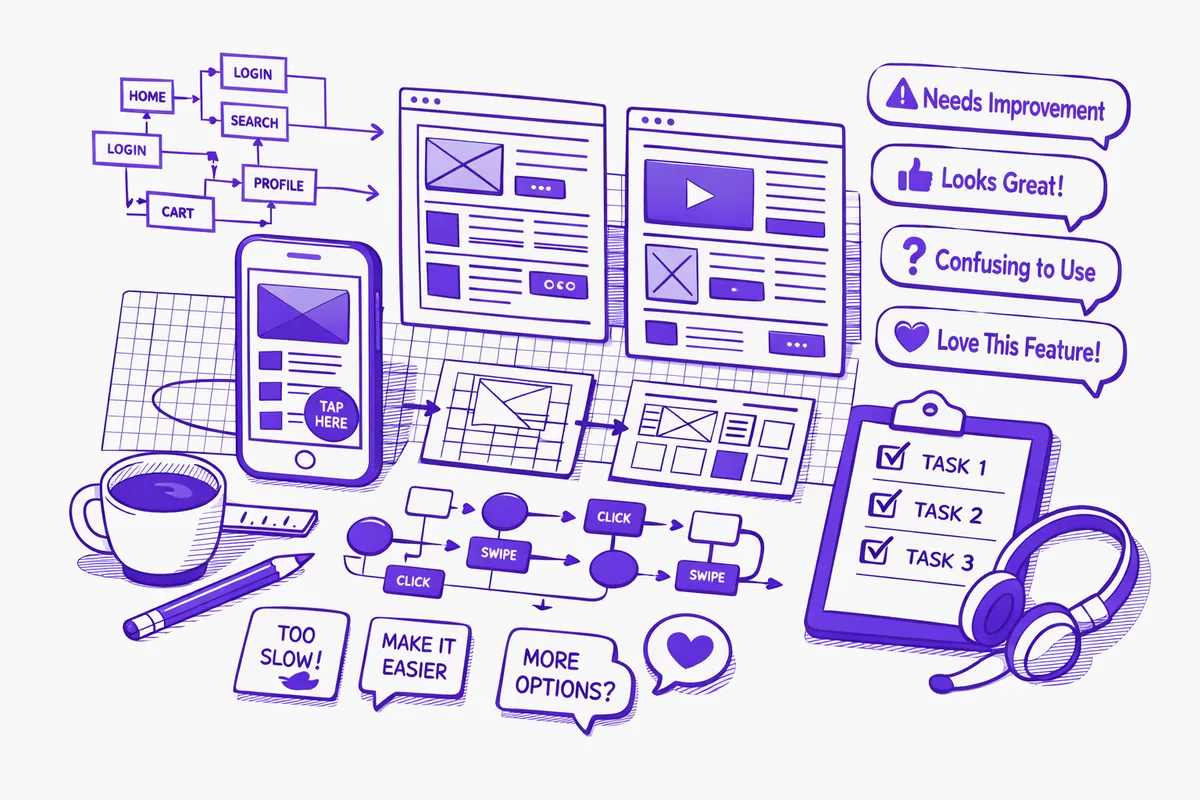
How We Build UI/UX Design for the Loop
We start with the operational reality of the Loop's professional environment. User research for Loop products means understanding the context of use before designing any interface. For law firm products, that means interviewing associates and partners about how they access case information across devices, what they need from a matter management tool during a client call, and where current software creates delays in the workflow. For financial services products, it means understanding the decision-making context of analysts and advisors who use digital tools as an extension of their professional judgment.
Information architecture for Loop professional products must prioritize hierarchy and scanability above all else. A LaSalle Street attorney reviewing a matter status needs to see the current stage, the open items, and the next deadline without navigating through secondary menus. A Wacker Drive financial advisor pulling up a client portfolio summary needs account value, performance, and allocation visible at the top level. We design the navigation structure so that the information most accessed under time pressure is always one step from the surface.
High-fidelity design for Loop professional tools means clean, dense interfaces that communicate competence. This is not the consumer application context where playful interaction design signals approachability. The professional population along LaSalle and Michigan Avenue expects interfaces that look like professional tools, not like mobile games. We design with precision, using typography, spacing, and color to establish hierarchy and guide attention without decoration that slows comprehension. Every design decision we make is testable with users from the Loop's professional community before development begins.
Industries We Serve in the Loop
Law firms on LaSalle Street and adjacent streets rely on case and matter management tools that serve attorneys across devices and contexts throughout the workday. We design client portals, matter status interfaces, and document management tools for the operational conditions of downtown Chicago legal practice, where professionals move between offices, courtrooms, client sites, and transit with open matters in hand.
Banks and financial service firms near the Board of Trade Building and across the Loop's financial district need client-facing platforms and internal analytics tools designed for high-stakes professional use. Portfolio dashboards, research distribution interfaces, and client reporting tools designed for financial professionals who will immediately identify any data presentation that obscures rather than clarifies.
Consulting firms on Wacker Drive and throughout the Loop's office towers deliver client work through digital tools that reflect on the firm's analytical and strategic competence. Project dashboards, deliverable portals, and client communication platforms designed for the consulting context, where the digital interface is an extension of the engagement, not an afterthought.
Professional associations serving Chicago's legal, financial, and business communities operate member platforms, event registration tools, and continuing education portals for a membership base that works in the Loop's professional towers. We design association platforms for a user population that includes some of the most demanding digital tool users in the city.
Hotels and hospitality operations concentrated near Michigan Avenue, Millennium Park, and the Chicago Theatre need booking interfaces, event management tools, and guest service platforms designed for the pre-visit and in-stay digital experience. The Loop hospitality visitor has high expectations and needs digital tools that remove friction from every transaction.
Commercial real estate firms operating across the Loop's high-rise office market need tenant portals, property management interfaces, and lease management tools designed for building managers and corporate tenants who expect professional-grade digital tools. We design for the complex multi-tenant relationships and transactional complexity of Loop commercial real estate.
What to Expect Working With Us
1. Discovery and scope. We begin by understanding the professional context of the product. For Loop organizations, this means interviewing the attorneys, analysts, associates, or administrators who will use the tool daily, reviewing existing workflows, and mapping where the current digital experience fails to match the professional environment. We document the use cases, the user profiles, and the operational constraints before any design begins.
2. Architecture and wireframes. We design the information architecture before any visual design decisions. For Loop professional tools, this phase focuses on navigation hierarchy, data presentation structure, and the priority ordering of information across surfaces. Wireframes allow Loop stakeholders to evaluate the structure of the interface quickly and surface issues before the investment in high-fidelity design.
3. High-fidelity design and prototype. Pixel-precise interfaces in Figma, built to the professional standard the Loop business environment requires. Interactive prototypes allow stakeholders from LaSalle Street firms or Wacker Drive offices to test the product's core flows before development begins. We build design systems with documented components ready for developer handoff.
4. Testing and delivery. We test with users from the Loop's professional community. The feedback from a partner at a LaSalle Street firm, an analyst at a Board of Trade financial firm, or an associate director at a Loop consulting office is qualitatively different from feedback collected from general consumer test panels. We use the Loop's professional density to recruit appropriate test participants and incorporate findings before handoff.