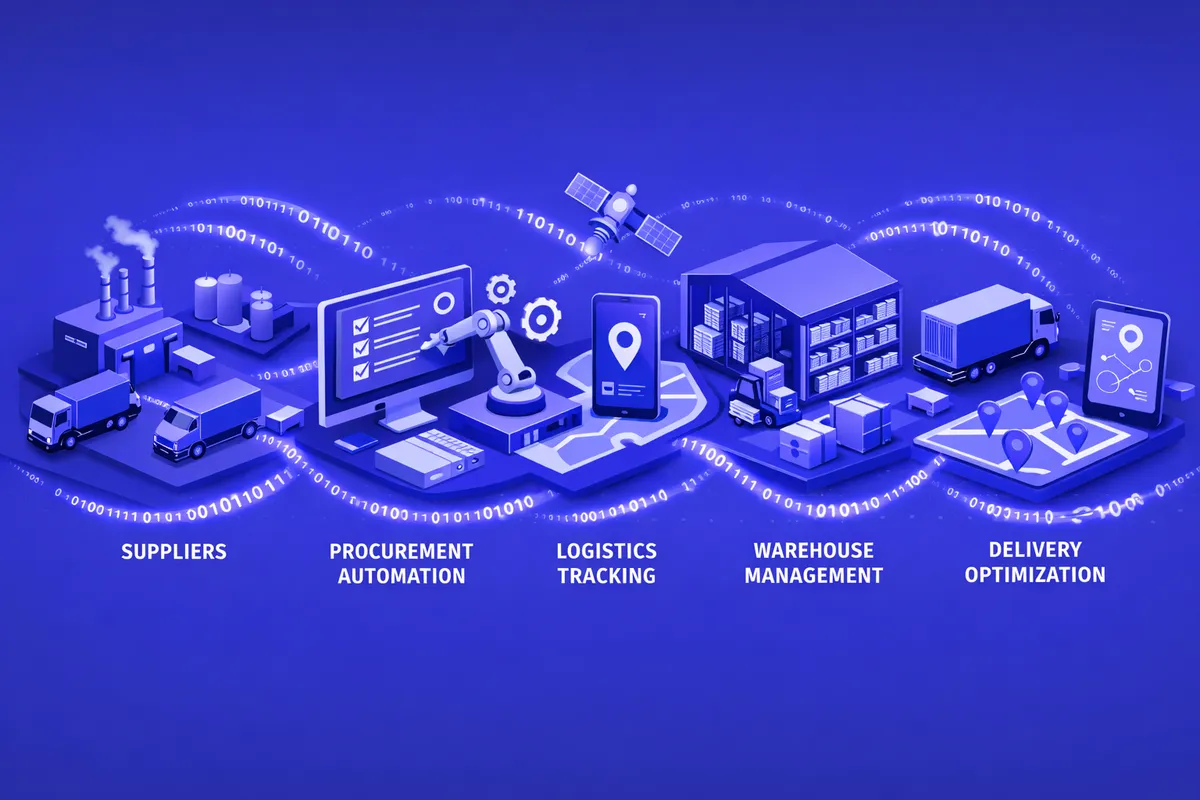
How We Build Supply Chain Automation for the Loop
Supply chain automation for Loop operators starts with a vendor and process inventory. We catalog every vendor relationship: contract terms, order frequency, lead times, historical performance, and the current process for ordering, receiving, and reconciling. For a Michigan Avenue hotel, that catalog might include sixty-plus active vendor relationships. For a Wacker Drive property management firm, it might include maintenance contractor networks spanning thirty buildings.
From the vendor catalog, we map the procurement workflows: how orders are initiated, approved, sent, received, and reconciled. Most Loop operators have informal procurement processes that evolved over time rather than designed procurement workflows. The informal process works at low volume and breaks at high volume because it depends on specific people remembering to do specific things. The automation layer formalizes the process so it runs consistently regardless of volume or personnel changes.
Automation priority follows dollar volume and frequency. High-dollar contracts, like major maintenance service agreements for Wacker Drive office buildings, warrant the most sophisticated vendor management automation: automated performance tracking, alert-based contract renewal management, and structured invoice reconciliation. High-frequency, lower-dollar procurement, like daily food and beverage purchasing for a hotel restaurant on Michigan Avenue, benefits from automated par-level monitoring and purchase order generation based on inventory levels rather than manual daily ordering decisions.
We integrate supply chain automation with your accounting system so purchase orders automatically generate expected expense records, received goods automatically update inventory counts, and vendor invoices are automatically matched against purchase orders and receiving records before routing for payment approval. The accounts payable team reviews exceptions rather than processing every invoice manually.
Industries We Serve in the Loop
Hotels and full-service hospitality properties on Michigan Avenue near Millennium Park manage procurement across food and beverage, housekeeping, maintenance, and capital improvements. F&B purchasing automation connects inventory tracking to par level management to automatic purchase order generation. When the wine cellar for a Michigan Avenue restaurant falls below par on a specific label, the order goes to the distributor without a purchasing manager intervention. The PO, the receiving document, and the invoice reconciliation all flow through the system automatically.
Commercial real estate operators and property managers along Wacker Drive manage vendor relationships across facility maintenance, mechanical systems, cleaning services, landscaping, and capital projects. Automated contract renewal management ensures that maintenance agreements for major mechanical systems in Wacker Drive office towers are reviewed before their automatic renewal date, not discovered to have renewed at the old rate two months after the renewal date passed.
Retail operations on State Street manage procurement cycles that shift dramatically between the summer tourist season and the holiday corridor. Automated reorder point management adjusts par levels based on seasonal demand patterns, triggering purchase orders at the right time to avoid both stockout during peak periods and excess inventory after the holiday season ends.
Near the Chicago Cultural Center, professional associations and event-focused organizations on Randolph Street manage procurement for a programming calendar where each event has different vendor requirements. Automated vendor request workflows that generate RFPs, track bids, route for approval, and issue purchase orders replace the email-based coordination that currently requires a staff member to manage each vendor relationship individually.
Building amenity and commercial food service operators in Loop office towers serving the LaSalle Street and Wacker Drive corporate population manage procurement cycles for café operations where food waste is a direct margin cost. Automated inventory management with demand forecasting based on building occupancy patterns and day-of-week trends reduces over-ordering and waste without requiring the café manager to review inventory counts manually every morning.
Law firm and financial services facilities management teams in Loop high-rises manage procurement for office supplies, printed materials, client entertainment, and facilities maintenance. Automated procurement workflows with approval routing by dollar threshold and expense category replace the ad hoc purchase approval processes that currently involve email chains and lost receipts.
What to Expect Working With Us
1. Vendor and procurement process inventory. We spend the first two weeks documenting your complete vendor landscape and current procurement workflows. This inventory produces two outputs: a clear picture of where automation will deliver the most value, and a vendor performance baseline against which post-automation performance can be measured.
2. Automation architecture and integration design. We design the automation layer against your specific procurement workflows and identify the integration points with your accounting system, inventory management platform, and vendor communication channels. For most Loop operators, the accounting integration is the highest-priority component because it eliminates the manual invoice reconciliation cycle that consumes the most accounts payable time.
3. Phased build with priority on highest-volume workflows. We build and deploy automations in order of business impact, starting with the procurement workflows that consume the most time or carry the most financial risk if managed inconsistently. For a Michigan Avenue hotel, that typically means F&B purchasing automation first, followed by housekeeping supply management, followed by maintenance contractor workflow.
4. Vendor communication rollout and performance monitoring. The most effective supply chain automation includes vendor-facing components: purchase order transmission, acknowledgment tracking, delivery confirmation, and invoice submission portals. We manage the vendor rollout communication and provide the monitoring dashboard that shows purchasing and operations management the performance data they need to make better vendor decisions.