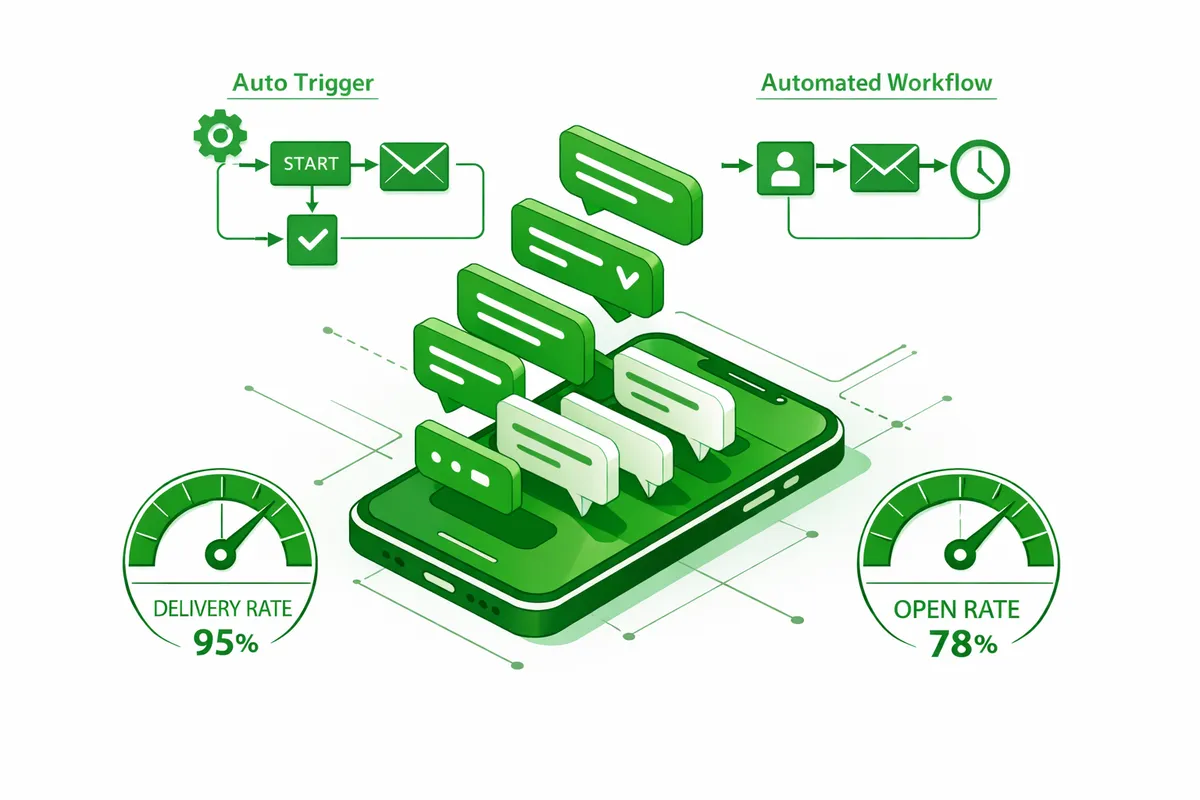
How We Build SMS Marketing for the Loop
Loop SMS programs require a different architecture than retail or hospitality SMS programs built for residential neighborhoods. The subscriber base is segmented by professional role, visit frequency, and communication purpose from the first opt-in interaction. A hotel guest list near Ohio Street requires different message cadence and content than a theater subscriber list on Randolph Street or a professional association membership list on Wacker Drive.
Platform selection for Loop businesses factors in integration capabilities with property management systems for hotels, ticketing platforms for theaters, CRM systems for law and financial services firms, and event registration platforms for conference venues. We configure the platform, build the automated sequences, and establish the compliance infrastructure before a single message goes out.
Timing strategy for Loop SMS accounts for the commuter flow patterns around Madison Street, State Street, and the elevated train stops that define the Loop's pedestrian rhythm. A message timed for 8 AM reaches Loop workers as they exit transit. A message timed for 12:15 PM reaches them during the lunch decision window near Millennium Park. A message timed for 5:45 PM reaches them as they leave the office and move through the Loop toward transit or dinner. These windows perform measurably better than off-peak sends, and our Loop programs are scheduled around them.
Industries We Serve in the Loop
Law firms and legal services on LaSalle Street benefit from SMS for client communication workflows that replace phone tag and email chains: appointment confirmations, document submission reminders, status updates on pending matters, and intake process follow-up for prospective clients moving through the firm's pipeline.
Hotels and hospitality businesses near Michigan Avenue and Lake Shore Drive use SMS for pre-arrival messaging, in-stay service coordination, loyalty program communications, and last-minute inventory promotion when occupancy targets require a targeted push to opted-in guests and local corporate accounts.
Financial services companies and banks operating near the Board of Trade Building and throughout the Loop deploy SMS for client appointment reminders, account notification sequences, and relationship-maintenance communications that keep high-value clients engaged between formal interactions.
Theaters and arts organizations along Randolph Street and near the Chicago Cultural Center use SMS for same-day ticket availability campaigns, subscriber loyalty programs, pre-show event reminders, and donor engagement sequences for the audience members who also support these organizations financially.
Professional associations and conference venues on Wacker Drive and throughout the central business district use SMS to manage event attendance, coordinate logistics during multi-day conferences, and deliver post-event follow-up to members while the event experience is still recent.
Commercial real estate and property management firms serving the Loop's office and residential tower market use SMS for tenant communications, lease renewal reminders, building notification sequences, and the kind of time-sensitive property management communications that require reliable delivery and immediate read rates.
What to Expect Working With Us
1. Discovery and scope. We assess your Loop business type, your current subscriber data or list-building starting point, the platforms you use for scheduling and CRM, and the compliance documentation you already have in place. This determines the program architecture before any configuration begins.
2. Platform setup and compliance infrastructure. We configure the SMS platform appropriate to your business category, build opt-in flows with legally required consent language, establish quiet-hours settings and opt-out processing, and integrate with your existing CRM, ticketing, or property management systems.
3. Campaign launch and sequence activation. Automated sequences go live first: appointment reminders, welcome series, confirmation flows. Promotional campaigns follow once the compliance foundation is established and initial subscriber data starts to inform segmentation.
4. Optimization and performance reporting. Monthly performance reviews cover open rates, click-through rates, revenue attribution by campaign, and list health metrics. Timing, content, and segmentation adjustments are made based on what your specific Loop subscriber base responds to, not industry averages.