How We Build RAG Systems for the Loop
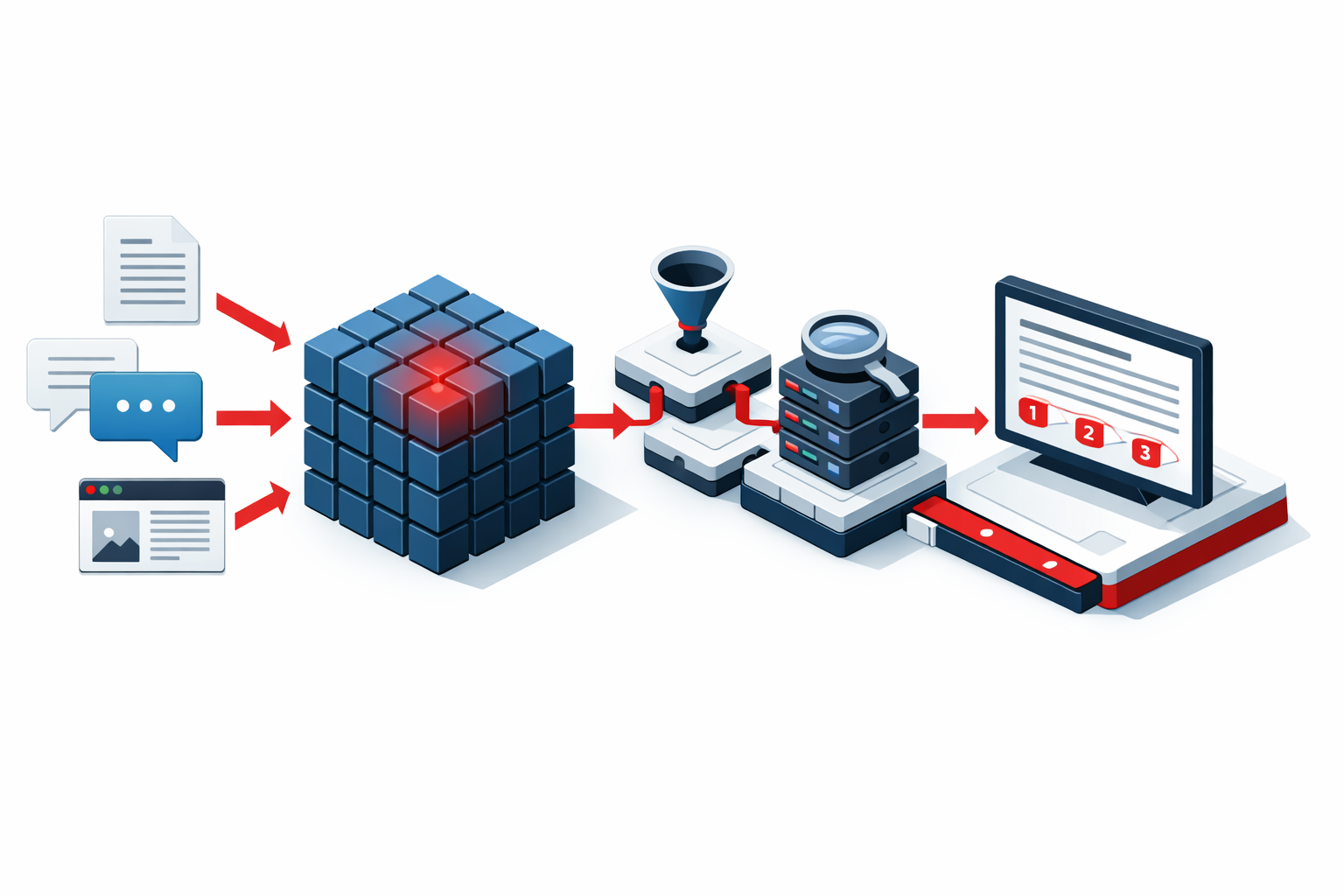
RAG system development for Loop organizations begins with a knowledge base assessment and architecture design session. We assess the document types and volumes in the organization's existing knowledge base, evaluate the quality and accessibility of the current document storage, and design the RAG architecture that will enable accurate retrieval and synthesis from that knowledge base. For a LaSalle Street law firm, this assessment covers the document management system, the brief and memoranda archive, and any other structured knowledge repositories the firm maintains.
Indexing and chunking strategy follows the architecture design. The quality of RAG retrieval depends critically on how the documents are indexed and chunked for retrieval. Legal documents require different chunking strategies than financial research documents. A legal brief is structured with specific argumentation that may be relevant in sections rather than as a whole document. An investment committee memo has specific sections whose relevance depends on the question being asked. The chunking strategy is designed for the document types in the knowledge base rather than applied generically.
Retrieval configuration and synthesis design specifies how the system retrieves relevant document segments and synthesizes them into coherent, cited answers. For professional organizations where answer accuracy is critical, the RAG system is configured to include source citations in every answer, so the professional can verify the retrieved information against the original document before relying on it in client-facing or compliance-sensitive contexts.
Industries We Serve in the Loop
Law firms on LaSalle Street benefit from RAG systems that make the firm's institutional knowledge base, including briefs, memoranda, client correspondence, and research files, searchable through natural language queries. The RAG system accelerates research, reduces duplication, and enables new associates to access institutional knowledge that would otherwise require years of tenure to accumulate.
Investment management and financial advisory firms on Wacker Drive benefit from RAG systems that make the firm's proprietary research archive, including investment committee memos, due diligence files, and portfolio company analysis, searchable through investment research queries. The RAG system ensures prior analytical work informs current investment decisions rather than being repeated from scratch.
Consulting and professional services firms along Wacker Drive and Madison Street benefit from RAG systems that make the firm's methodology, deliverable archive, and client engagement history searchable through engagement development queries. A consultant who can query the firm's prior deliverables for relevant frameworks, case studies, and client situations builds on institutional knowledge rather than reinventing it.
Commercial banks and financial institutions with Loop operations benefit from RAG systems that make the institution's credit policies, underwriting guidelines, regulatory guidance interpretations, and prior credit memoranda searchable through credit analysis queries. The RAG system ensures that credit decisions are informed by prior institutional analysis on similar credits.
Professional associations near the Chicago Cultural Center benefit from RAG systems that make the association's research archive, policy positions, advocacy history, and publication library searchable through member service and research queries. Association staff can access the full depth of the organization's historical knowledge without manual archive searches.
Corporate legal and compliance departments in Loop towers benefit from RAG systems that make the department's contract templates, legal opinions, regulatory guidance interpretations, and prior advice memos searchable through operational legal queries from business unit colleagues.
What to Expect Working With Us
1. Knowledge base assessment and architecture design. We assess the document types, volumes, and storage systems in the knowledge base, evaluate retrieval quality requirements, and design the RAG architecture appropriate to the organization's knowledge base and use cases.
2. Indexing pipeline and chunking strategy. We design the indexing pipeline that processes documents for RAG retrieval, implement the chunking strategy appropriate to the document types in the knowledge base, and validate retrieval quality against representative queries before production deployment.
3. Retrieval configuration and synthesis design. We configure the retrieval system for accuracy and relevance to the organization's specific query patterns, design the synthesis layer that assembles retrieved segments into coherent, cited answers, and validate output quality against professional accuracy standards.
4. Deployment, access control, and ongoing maintenance. We deploy the RAG system with role-based access controls appropriate to the organization's information security requirements, integrate with existing document management workflows, and maintain the index as new documents are added to the knowledge base.