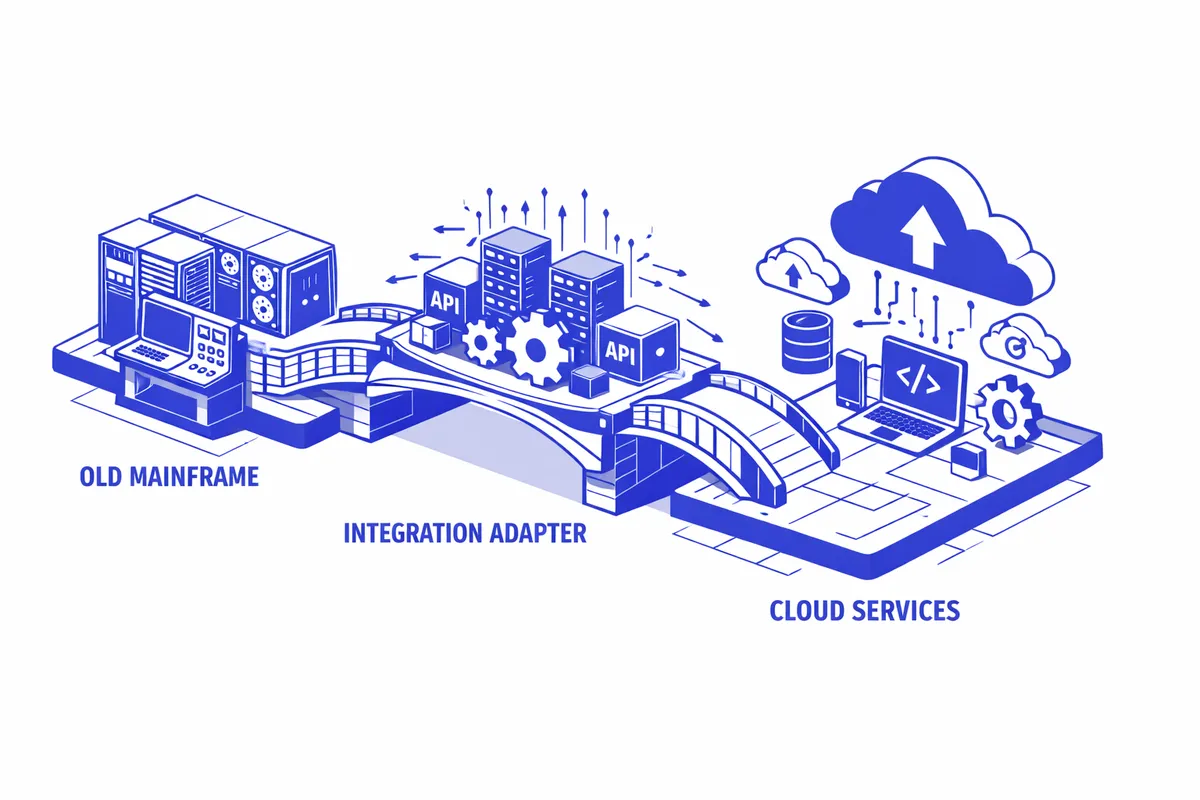
How We Build Legacy System Integration for the Loop
The Loop's legacy integration work requires a higher level of security and compliance rigor than most other Chicago neighborhoods. Law firms require integrations that respect client confidentiality. Financial institutions require integrations that satisfy audit and data governance requirements. Healthcare-adjacent practices near Northwestern Memorial operate under HIPAA constraints. We build every integration to meet the standards the client's industry requires, not just to establish connectivity.
Discovery in the Loop begins with a thorough assessment of the legacy system: what data it holds, what integration or export capabilities it exposes, what security constraints govern data access, and what compliance requirements shape how data can transit between systems. For undocumented systems maintained by vendors who no longer provide active support, this discovery phase builds the operational understanding necessary to design reliable integration from the outside.
Integration architecture in the Loop context typically involves API wrapper development that exposes controlled access to legacy system data through secure endpoints, transformation layers that reformat legacy data structures into formats that modern applications expect, and monitoring infrastructure that catches errors and data inconsistencies before they affect operations. For financial and legal clients, audit logging of all data access and transformation is standard. Deployment follows a staged process with parallel operation of old and new data paths until the integration demonstrates stability under production conditions.
Industries We Serve in the Loop
Law Firms and Legal Services: LaSalle Street law firms with legacy practice management, matter tracking, or billing systems need integration with modern client portals, document automation tools, and analytics platforms. We build connection layers that give modern applications access to matter data without requiring migration of established case history to new platforms.
Banks and Financial Services: Financial institutions and wealth management firms along Wacker Drive operate on core platforms that require integration with digital banking interfaces, compliance reporting tools, and modern customer communication systems. We build secure integration layers that meet audit and data governance requirements.
Consulting and Professional Associations: Consulting firms and professional associations near the Chicago Cultural Center and along Randolph Street use customized CRM and member management systems that need integration with modern proposal tools, communication platforms, and event management software.
Hotels and Hospitality: Hotels operating between State Street and Michigan Avenue use property management systems that require integration with revenue optimization tools, digital guest communication platforms, and online booking aggregators to compete effectively in the modern hospitality market.
Commercial Real Estate: Commercial real estate firms managing Loop office and retail inventory rely on legacy property management and lease administration platforms that need integration with modern analytics dashboards, tenant communication tools, and financial reporting systems.
Theaters and Cultural Institutions: The Chicago Theatre, Chicago Cultural Center, and Art Institute of Chicago area arts organizations use ticketing, membership, and donor management platforms that require integration with modern email marketing tools, digital fundraising platforms, and audience analytics systems.
What to Expect Working With Us
1. Security and Compliance Assessment: Before any integration design work begins, we assess the security and compliance requirements that govern your legacy system and the data it holds. For Loop clients in law, finance, and healthcare-adjacent industries, this assessment defines the boundaries that all integration architecture must respect.
2. Legacy System Discovery: We document your legacy system's actual integration capabilities: the APIs it exposes if any, the database structures it uses, the export formats it supports, and the behaviors it exhibits under different access patterns. For systems maintained by vendors who no longer provide documentation support, this discovery builds the technical understanding necessary to design reliable integration.
3. Integration Design and Build: We design integration architecture appropriate to your security requirements, performance needs, and the specific data flows your business requires. Build includes transformation logic, error handling, retry logic, and audit logging. Every component is designed to run stably over months and years, not just in initial testing.
4. Staged Deployment and Monitoring: We deploy with parallel operation of old and new data paths and sustained monitoring that catches errors, data inconsistencies, and performance degradation before they affect business operations. Loop clients typically require 30 to 60 days of parallel operation before full cutover to confirm stability under the full range of production conditions.