Your Cart (0)

Your cart is empty

Loop, Chicago

Lead Generation in Loop

Lead Generation for businesses in Loop, Chicago. We know the neighborhood, the customers, and what it takes to compete locally.

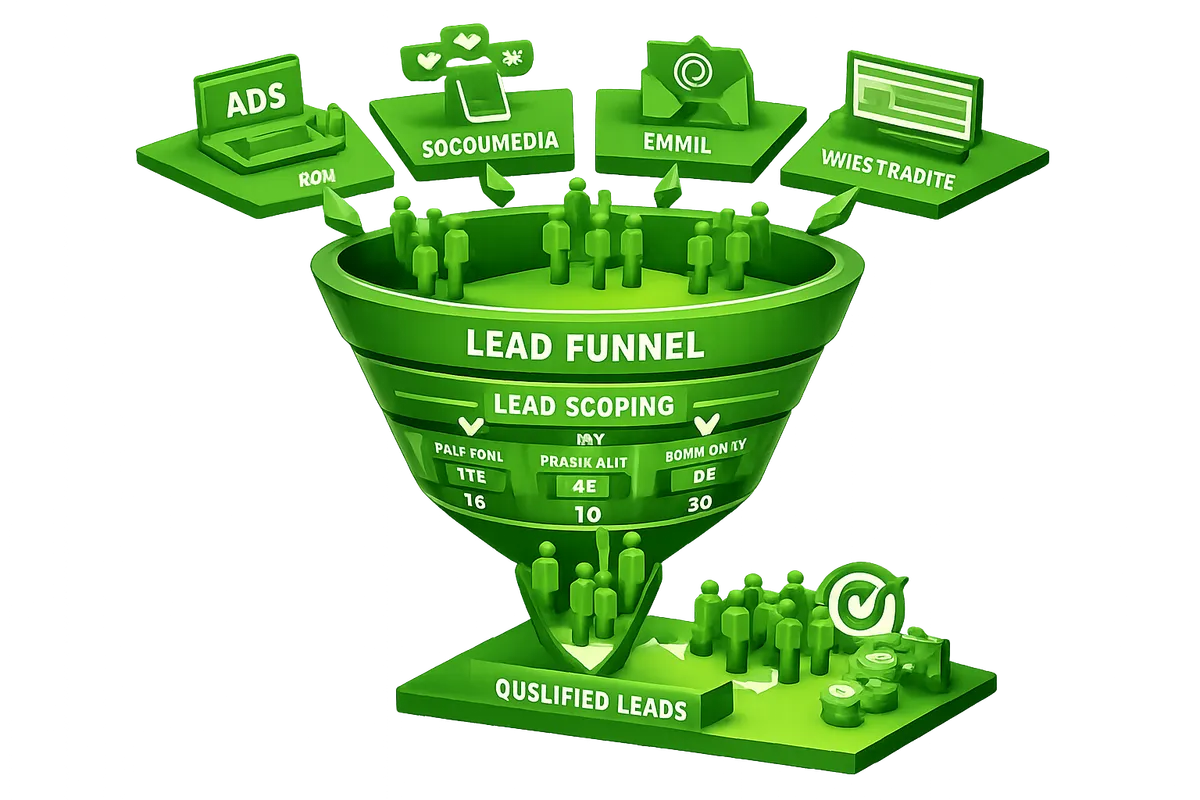
Lead Generation in Loop service illustration

Inbound Lead Generation for Loop Professional Services

Search-Driven Lead Capture

The Loop's professional services buyer begins with a search query. "Commercial litigation attorney Chicago" gets typed into Google by a general counsel who needs outside counsel for a specific matter. "IT managed services downtown Chicago" gets searched by an office manager whose current provider failed an audit. "Employee benefits broker Chicago" gets searched by an HR director tasked with finding better plan options. These are high-intent queries from buyers who are actively looking for a solution.

Capturing these searches requires three elements working together: ranking visibility, a compelling landing page, and a clear conversion path. Ranking for competitive Loop keywords demands sustained SEO investment in content, technical optimization, and domain authority. The landing page must address the specific need the searcher expressed, demonstrate relevant expertise, and present a clear next step. That next step should never be a generic contact form. It should be a specific offer: a free consultation, a downloadable guide, an assessment tool, or a case study that demonstrates results.

For a law firm near the Daley Center, the landing page for "commercial real estate attorney Chicago" should feature commercial real estate transaction expertise, relevant case outcomes, and an offer to review a prospective client's current lease or purchase agreement. For an IT firm in the Willis Tower, the landing page for "cybersecurity assessment Chicago" should feature the firm's assessment methodology, recent threat landscape data specific to the financial services sector, and an offer for a complimentary vulnerability scan. The specificity of the offer determines the conversion rate.

Content-Driven Lead Nurture

Not every Loop buyer is ready to engage immediately. Many are in research mode, evaluating options, building internal consensus, or waiting for budget approval. Content marketing captures these early-stage buyers and nurtures them toward a conversation. A wealth management firm that publishes quarterly market commentary builds a subscriber list of high-net-worth individuals who read the commentary regularly. Over months, some of those subscribers experience a life event (retirement, business sale, inheritance) that triggers a need for advisory services. The firm that has been delivering value through content for six months is the first call, not the firm that shows up with a cold email the week of the life event.

Content formats that perform well for Loop B2B lead generation include: whitepapers and research reports that demonstrate deep expertise, webinar replays that capture registrant information, industry benchmark studies that prospects use to evaluate their own performance, and assessment tools that generate personalized reports. Each piece of content should gate behind a form that captures enough information to qualify the lead (company size, role, timeline) without creating so much friction that the prospect abandons the form.

LinkedIn as a Loop Lead Channel

LinkedIn is the dominant professional network for Loop decision-makers. Partners at LaSalle Street financial firms, senior associates at Dearborn Street law firms, and C-suite executives at Wacker Drive corporate headquarters all maintain active LinkedIn profiles. This makes LinkedIn the highest-value social channel for B2B lead generation in the Loop.

Effective LinkedIn lead generation combines organic content with targeted advertising. Organic content means principals and partners posting thought leadership regularly: insights on market conditions, commentary on regulatory changes, practical advice for their target audience. This builds credibility and attracts inbound connection requests from potential buyers. Targeted advertising means running lead gen campaigns that reach specific titles at specific company sizes within specific industries and geographies. A commercial insurance broker can target CFOs at companies with 50 to 500 employees within Cook County. A management consulting firm can target VPs of Operations at manufacturing companies in the Midwest.

The LinkedIn lead generation form, which pre-fills the prospect's information from their profile, reduces friction and generates higher conversion rates than driving traffic to an external landing page. The trade-off is that the leads stay within LinkedIn's ecosystem until you export them, and the form fields are limited. For high-intent offers like consultations and assessments, the convenience of pre-filled forms outweighs the data limitations.

Outbound Lead Generation for Loop Firms

The density of the Loop makes outbound prospecting unusually efficient. A financial technology company targeting Loop-based hedge funds can identify every fund within a five-block radius of its office, research the decision-makers at each fund, and build a targeted outreach sequence that references shared geography and industry context. The Loop's geographic concentration means that a "local" positioning carries weight in outbound messages. A prospect is more receptive to a meeting request from a firm in the same building or the same block than from a firm across town.

Outbound email sequences for Loop B2B should be concise, specific, and referential. The first email identifies a specific challenge the prospect likely faces (based on their industry and role), references a relevant result with a comparable company, and offers a specific meeting type (15-minute call, coffee in the lobby, lunch at a nearby restaurant). The follow-up sequence spaces three to four additional touchpoints over two weeks, each adding new information rather than repeating the original ask. The final email offers an alternative: if now is not the right time, would they like to receive the firm's quarterly industry report? This transitions unresponsive outbound prospects into the content nurture funnel rather than abandoning them entirely.

Account-based marketing targets specific high-value accounts in the Loop with coordinated campaigns across multiple channels. For a consulting firm targeting the Fortune 500 companies headquartered in the Loop, ABM means running LinkedIn ads to decision-makers at those specific companies, sending personalized direct mail to their Loop offices, publishing content that addresses their industry's challenges by name, and coordinating outreach from multiple team members to different contacts within the same organization. ABM is resource-intensive but generates the highest-value opportunities for firms whose ideal clients are large enterprises concentrated in the Loop.

Lead Qualification and Pipeline Management

Generating leads in the Loop is only valuable if those leads convert to revenue. The gap between lead volume and revenue is where most Loop firms lose money. They generate hundreds of inquiries but convert a small fraction because they lack a systematic qualification process.

Lead scoring assigns numerical values to lead attributes and behaviors. A lead from a C-suite executive at a company with 200+ employees who downloaded a whitepaper, attended a webinar, and visited the pricing page scores higher than a lead from a coordinator at a 10-person company who filled out a generic contact form. The scoring model should reflect the firm's actual client profile: the titles that become clients, the company sizes that can afford the service, and the behaviors that correlate with closing.

Response time matters disproportionately in the Loop's competitive market. A prospect who submits an inquiry to three competing firms hires the one that responds first with a substantive, personalized reply. Automated acknowledgment emails buy time, but the first human follow-up within one business hour dramatically increases conversion rates compared to next-day follow-up. For high-scoring leads, the target should be a personalized response within 30 minutes during business hours.

CRM discipline separates firms that build sustainable pipeline from firms that rely on random referrals. Every lead captured through any channel must enter the CRM with source attribution, qualification data, and a defined follow-up sequence. Partners and business development professionals need CRM workflows that surface the right leads at the right time rather than relying on memory or manual tracking. The firms that treat their CRM as the single source of truth for business development consistently outperform firms that allow leads to scatter across email inboxes and sticky notes.

Measuring Lead Generation Performance

Lead generation metrics for Loop businesses should track the full funnel from first touch to closed revenue. Top-of-funnel metrics include cost per lead by channel, lead volume by source, and conversion rates from visitor to lead on each landing page. Mid-funnel metrics track qualification rates (what percentage of leads meet the ideal client profile), engagement rates with nurture content, and sales-accepted lead volume. Bottom-of-funnel metrics track proposal rates, close rates, average deal size, and customer acquisition cost.

Attribution modeling for Loop B2B is complex because the buyer journey involves multiple touchpoints over weeks or months. A prospect might first encounter the firm through a Google search, then see a LinkedIn ad, then attend a webinar, then receive a direct email, and finally book a consultation. First-touch attribution gives all credit to the Google search. Last-touch gives all credit to the direct email. Multi-touch attribution distributes credit across all touchpoints. We recommend multi-touch attribution for Loop professional services because it provides an accurate picture of which channels contribute to pipeline and prevents overinvesting in any single channel.

Frequently Asked Questions

The Loop's concentration of B2B professional services creates a uniquely competitive lead generation environment. Cost-per-click on high-intent keywords is 2-3x higher than suburban markets. The buyer journey is longer, typically involving multiple decision-makers and a formal evaluation process. Geographic proximity matters more than in spread-out markets because prospects value working with firms in the same building or block. Lead generation strategies must account for these dynamics: higher content quality to justify higher acquisition costs, multi-stakeholder nurture sequences, and local positioning that leverages the Loop's density.

Budget depends on the target client's lifetime value and the firm's competitive position. A financial advisory firm where a new client relationship generates $50,000 or more in annual revenue can justify a $1,000 to $2,000 cost per acquired client. Working backward from target close rates and qualification rates, this typically means investing $5,000 to $15,000 per month across search, content, LinkedIn, and outbound channels. Firms entering the market or launching new practice areas may need to invest more aggressively in the first six to twelve months to build baseline visibility and pipeline.

Paid channels (Google Ads, LinkedIn ads) generate leads within weeks of launch, though optimization takes 60 to 90 days to reach peak efficiency. Content marketing and SEO take three to six months to generate meaningful organic lead flow. Outbound campaigns typically produce their first qualified meetings within 30 days. A fully integrated lead generation system that combines all channels reaches a steady state of predictable pipeline within six to nine months. The timeline accelerates for firms that already have strong domain authority, existing content libraries, and established professional networks.

Lead quality starts with precise targeting: the right keywords, the right audience segments, the right offers. We build qualification criteria into every campaign. Landing page forms capture firmographic data (company size, revenue, industry) alongside contact information. Lead scoring models prioritize leads that match the ideal client profile. And we establish service-level agreements with your business development team that define what constitutes a qualified lead versus an unqualified inquiry. Volume without quality is wasted spend. We optimize for cost per qualified lead, not cost per form fill.

Yes. We work with financial advisory firms, law practices, and other regulated professional services in the Loop. We understand the compliance constraints that affect marketing: limitations on testimonials, performance claims, and required disclosures. Every campaign, landing page, and content piece we produce is designed to generate leads while operating within industry regulations. We build review workflows into our process to ensure compliance before anything is published.

We integrate with Salesforce, HubSpot, Pipedrive, and most major CRM platforms. Every lead captured through our campaigns flows directly into your CRM with full source attribution, lead score, and engagement history. We configure automated workflows that route high-priority leads to the right team member, trigger follow-up sequences, and update deal stages based on engagement. The goal is a seamless handoff from marketing-generated lead to sales-qualified opportunity with complete visibility across the funnel. [Learn more about our lead generation services across Chicago](/chicago/lead-generation) [Explore our work in The Loop](/chicago/loop)

Ready to get started in Loop?

Let's talk about lead generation for your Loop business.