How We Build ERP Integrations for the Loop
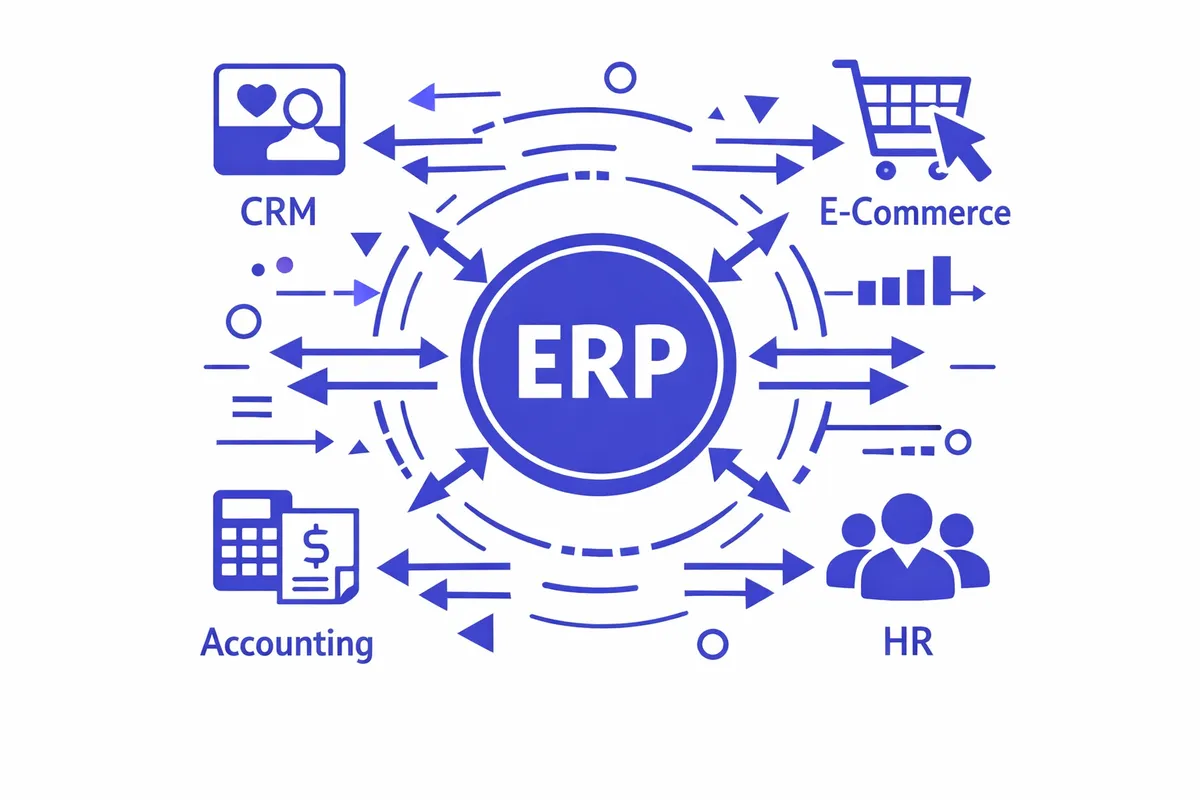
Every engagement begins with a full technology audit covering every system your Loop operation uses, every data flow currently active between them, and every manual reconciliation step an integration would eliminate. For a LaSalle Street financial services firm, that audit might cover a portfolio management system, a client reporting platform, a CRM, multiple entity books in the ERP, and regulatory reporting tools that all need to exchange data accurately. For a Wacker Drive consulting group, it covers project management, time tracking, billing, CRM, and ERP. Every connection point is documented before a single integration is designed.
From the audit, we produce an integration architecture that specifies which systems connect, in which direction, at what frequency, and with what transformation logic. The Loop's professional services environment requires particular attention to financial data accuracy. We design field-level mapping that handles the format differences between systems, apply transformation rules that preserve accounting integrity, and build reconciliation checks that verify data consistency across systems after each sync. For multi-entity environments, we design intercompany accounting logic that eliminates manual elimination entries at period close.
Error handling is a mandatory part of the architecture, not an afterthought. When a sync fails between a practice management system and ERP, the failure mode matters as much as the success mode. Failed records are captured with full context, queued for retry with exponential backoff, and surfaced to operations teams through monitoring dashboards. Compliance-sensitive integrations receive additional audit logging that records every data transformation for review purposes.
Industries We Serve in the Loop
Law Firms and Legal Practices: LaSalle Street and the broader Loop legal corridor house some of Chicago's largest and most specialized law firms. We integrate practice management systems, billable time platforms, trust accounting tools, and disbursement tracking with ERP to produce accurate financial reporting without manual reconciliation.
Banks and Financial Services: The Loop's financial services sector, concentrated around LaSalle Street and the Board of Trade Building, requires ERP integration that handles multi-entity accounting, intercompany transactions, and regulatory reporting data flows. We connect trade systems, client reporting platforms, and portfolio management tools with ERP for firms that need current and accurate financial data.
Consulting and Professional Services: Consulting groups and professional associations along Wacker Drive and Michigan Avenue manage project accounting, client billing, and entity-level reporting across tools that need to work as a connected system. We integrate project management, CRM, time tracking, and billing platforms with ERP to produce the consolidated reporting that Loop firms require.
Commercial Real Estate: The Loop's commercial real estate sector manages property portfolios, lease accounting, and tenant billing across platforms that require ERP integration to support accurate portfolio reporting. We connect lease management systems, property accounting tools, and tenant billing platforms with core ERP.
Hotels and Hospitality: The hotels and event venues operating near Millennium Park and the Chicago Theatre manage property management systems, point-of-sale, event management, and accounting across platforms that generate significant integration complexity. We build connections that consolidate revenue data across departments into ERP for accurate period reporting.
Professional Associations and Nonprofits: The Loop hosts numerous professional associations and Chicago-based nonprofits that manage membership data, event revenue, grant accounting, and fund-level reporting. We integrate membership management systems, event platforms, and grant tracking tools with ERP for organizations that need consolidated financial reporting.
What to Expect Working With Us
System Audit and Discovery: We document your complete Loop technology stack, evaluate the API quality of each platform, identify data quality and format issues, and map the specific integration points that will deliver the highest operational value. For financial services and legal clients, we give particular attention to compliance and audit trail requirements during discovery.
Architecture and Design: We produce integration architecture documentation that includes data flow diagrams, field mapping specifications, transformation logic, error handling strategy, and reconciliation design. For multi-entity environments, intercompany accounting logic is specified in full detail before development begins.
Build and Testing: We build with monitoring and error handling included from the start, test against production-realistic data volumes and transaction patterns, and run independent reconciliation checks for all financial and billing integrations. Compliance-sensitive integrations receive audit logging by default.
Launch and Stabilization: We deploy with monitoring active, provide post-launch stabilization support during the first billing and reporting cycle, and deliver documentation that enables your finance and IT teams to monitor and maintain the integrations going forward.