How We Build Email Marketing for the Loop
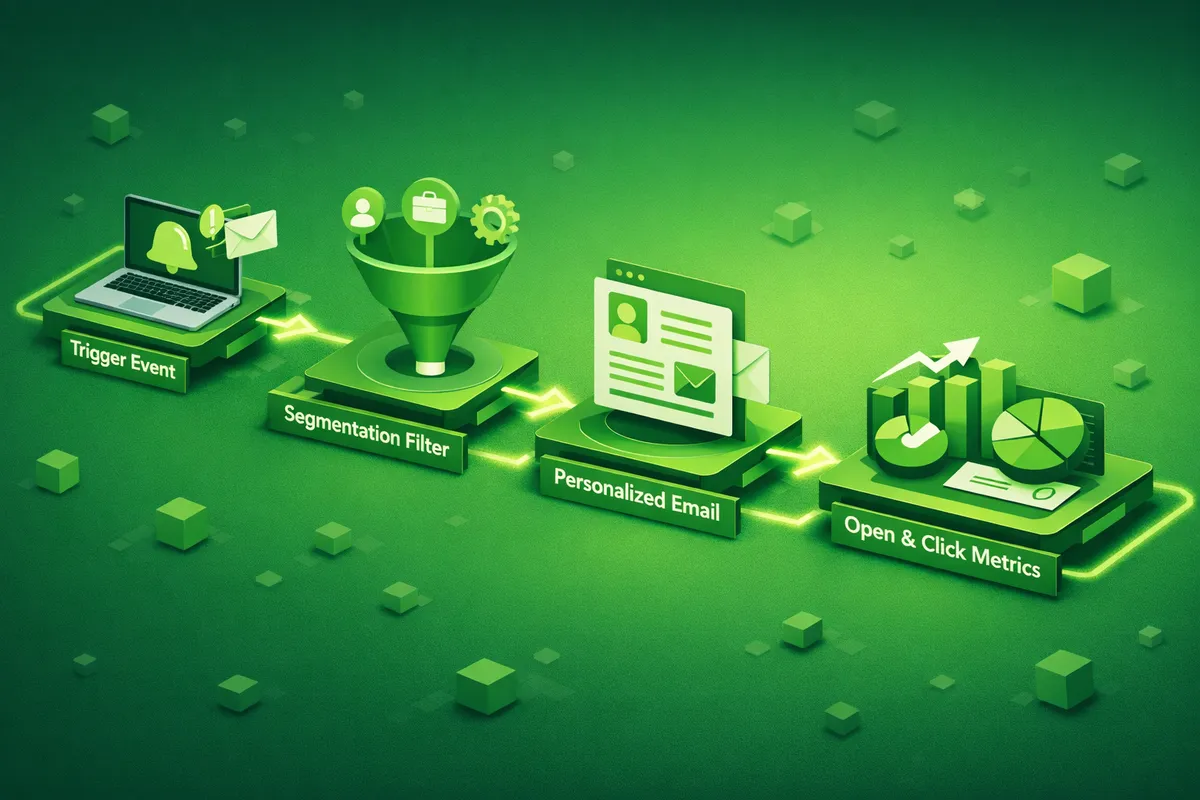
Email marketing for Loop organizations begins with a contact database audit and segmentation design. We assess the quality, completeness, and organization of the existing database, identify the distinct contact segments that should receive different content and communication frequency, and design the segmentation architecture that makes targeted communication possible. A LaSalle Street litigation firm might segment into active clients by practice area, former clients segmented by the time since last engagement, prospective clients by industry, and referral sources by relationship type. Each segment has a different content objective and a different optimal frequency.
Content architecture follows the segmentation design. Active clients need matter updates and client alerts on developments relevant to their specific situations. Prospective clients need thought leadership that demonstrates the firm's expertise in the areas most relevant to their industries. Referral sources need content that reinforces the firm's category authority and keeps the relationship warm between in-person meetings. Content architecture defines what each segment receives, at what frequency, and for what communication objective.
Compliance integration is built into the program design for regulated Loop industries before any communication goes out. Attorney advertising rules under the Illinois Rules of Professional Conduct apply to law firm email communications. FINRA Rule 2210 governs investment advisor communications with existing and prospective investors. We build the compliance review and approval workflows into the email production process: content is drafted, reviewed against applicable standards, revised as needed, and approved before distribution. Records of approval are maintained in the organization's compliance archive. Compliance is not an add-on to the program for regulated Loop industries; it is load-bearing infrastructure.
Technical deliverability work ensures that email communications from Loop organizations reach inboxes rather than spam folders. Domain authentication, sending reputation management, list hygiene, and bounce processing are maintained as ongoing program infrastructure.
Industries We Serve in the Loop
Law firms along LaSalle Street benefit from email programs that distribute client alerts on regulatory and legal developments to the practice-area-appropriate contact segments, send substantive newsletters that maintain the firm's visibility with prospective clients and referral sources, and manage event invitation and follow-up sequences for firm-hosted events near Millennium Park and the Chicago Cultural Center. All content is reviewed against Illinois Bar advertising guidelines before distribution. Client alert content, which informs rather than promotes, faces fewer advertising constraints than promotional content and should form the backbone of any law firm email program.
Investment management and financial advisory firms on Wacker Drive depend on email communication to maintain investor relations cadence between formal meetings and reports. We build programs that distribute market commentary and investment perspective to existing and prospective investors, manage the communication sequences for new investor onboarding, and maintain the quarterly touch cadence that keeps the firm present in an investor's consideration set. All content is reviewed against FINRA Rule 2210 standards for fair and balanced investor communication.
Hotels and event venues along State Street and near Millennium Park use email marketing to convert one-time guests into repeat clients and to maintain ongoing relationships with the corporate event planners who drive group booking volume. We build programs that manage post-event follow-up sequences, maintain corporate planner relationships with venue updates and availability communications, and drive direct booking inquiry through targeted seasonal campaigns that bypass OTA commissions.
Theater and entertainment venues on Randolph Street convert their single-ticket audiences into subscribers through targeted email communication that reaches buyers at the right moment in the subscription decision cycle. We build programs that send next-season preview campaigns timed to when subscription decisions are made, maintain audience engagement between productions with behind-the-scenes and upcoming programming content, and drive corporate event inquiry through targeted communications to the event planner contacts that every theater develops over time.
Consulting and professional services firms along Wacker Drive and Madison Street maintain their visibility with prospective clients between initial conversations and active engagements through thought leadership email programs. We build programs that distribute industry-specific analysis to the prospect segments where the firm's expertise is most relevant, manage proposal follow-up sequences that keep prospective clients engaged during decision periods, and maintain referral source relationships through relevant content on a consistent schedule.
Professional associations near the Chicago Cultural Center depend on email to maintain the member communication cadence that drives engagement, event attendance, and renewal. We build programs that send regular membership communication on a predictable schedule, manage multi-touch conference registration and pre-event engagement sequences, and execute membership renewal campaigns that reach members before they lapse rather than after.
What to Expect Working With Us
1. Contact database audit and segmentation design. We assess the quality and completeness of the existing database, identify the distinct contact types and their communication objectives, and build the segmentation architecture that makes targeted communication achievable. Database quality improvement is part of the engagement, not a prerequisite to starting it.
2. Content architecture and editorial calendar. We design the content program for each segment, define communication frequency and content types, and produce an editorial calendar that makes consistent production achievable within the organization's internal production constraints. Loop professional organizations have demanding production environments; the calendar is built around what can actually be sustained.
3. Platform configuration and compliance integration. We configure the email marketing platform, build the segment lists and automated sequences, and integrate the compliance review and approval workflow appropriate to the organization's regulatory environment. FINRA and Illinois Bar compliance workflows are built before any communication goes to a contact.
4. Performance monitoring and program optimization. We monitor open rates, click rates, and downstream business development outcomes by segment and content type, and optimize the program based on what is driving the results the organization hired us to produce. Email marketing for Loop professional organizations is measured in business development outcomes, not just open rate improvements.