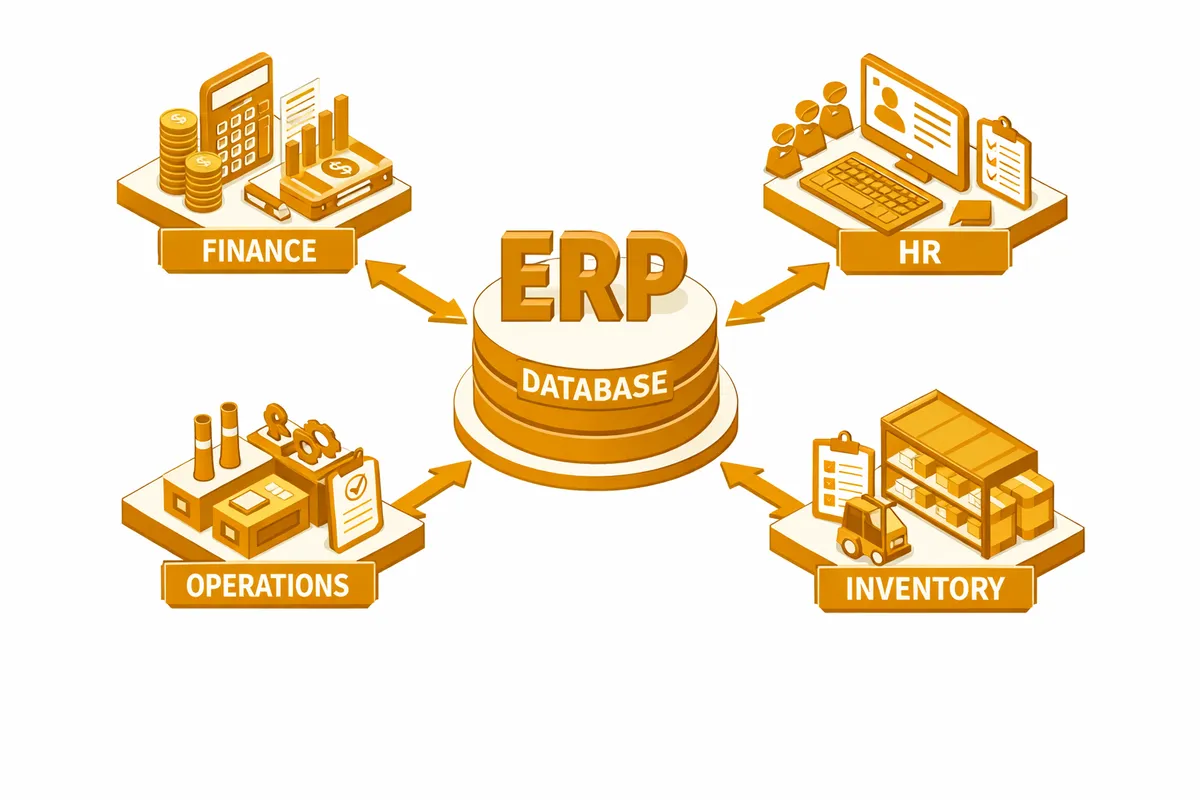
How We Build Custom ERP for the Loop
Every engagement begins with two to three weeks of structured discovery: workshops with your operations, finance, and leadership teams mapping every workflow, every data handoff, and every reporting requirement across your business. For Loop professional services firms, this includes reviewing how work flows from client intake through delivery, billing, and collections, and identifying every point where manual reconciliation is currently required.
From discovery, we design the module structure, data model, integration architecture, and phased delivery plan. For a Loop law firm, the module structure typically includes matter management, billing and collections, trust accounting, compliance documentation, and partner reporting. For a consulting firm, it includes project delivery, resource management, financial reporting, and client relationship management.
Implementation is phased, delivering your highest-impact modules first. Your team has working, valuable software within fourteen to twenty weeks. Subsequent phases add capabilities without disrupting the operational foundation already in place. For the Loop's professional services firms, this often means starting with the billing and matter management core, then adding compliance reporting, then integrating the CRM and business development layer.
Industries We Serve in the Loop
Law firms on LaSalle Street managing multiple practice groups need ERP that integrates matter management, multi-rate billing, trust accounting, compliance documentation, and partner profitability reporting into a single system. Off-the-shelf platforms require extensive customization to handle legal billing complexity. A purpose-built system handles it natively.
Consulting and professional services firms on Wacker Drive running simultaneous client engagements need ERP that connects project delivery, resource allocation, and financial reporting so leadership can see project profitability, consultant utilization, and revenue pipeline in one view rather than reconciling reports from separate tools.
Banks and financial services organizations on State Street and Madison Street handling regulatory compliance, client reporting, and internal operations need ERP that accommodates their specific compliance requirements and client data architecture without the compliance risk that comes with forcing a generic platform to handle specialized workflows.
Professional associations and nonprofit organizations near Millennium Park managing membership, event programming, advocacy work, and chapter relationships need ERP that integrates member management, event management, and financial reporting across program areas in a system built around association operations rather than corporate operations.
Hotels and hospitality operations serving the Loop's daytime and convention business near the Chicago Theatre and the Chicago Cultural Center need ERP that integrates property management, event and group sales, food and beverage operations, and financial reporting across departments and revenue streams.
Commercial real estate firms and developers active on Michigan Avenue and Randolph Street need ERP that manages property portfolios, lease administration, tenant relationship management, maintenance operations, and owner and investor reporting in an integrated platform designed for property operations at scale.
What to Expect Working With Us
1. Discovery and scope. Two to three weeks of structured workshops with your operations, finance, and leadership teams. We map every workflow, every data handoff, and every reporting requirement across your business before designing anything.
2. Architecture and phased plan. We design the module structure, data model, integration architecture, and phased delivery plan. You review and approve the plan before any development begins.
3. Phased implementation. Your highest-impact modules go live first. Working, valuable software within fourteen to twenty weeks. Subsequent phases add capabilities without disrupting the operational foundation.
4. Launch and ongoing support. Post-launch monitoring, operational validation, and a warranty period for bug fixes. Optional maintenance retainers for feature additions, integration updates, and ongoing operational evolution as your firm grows.