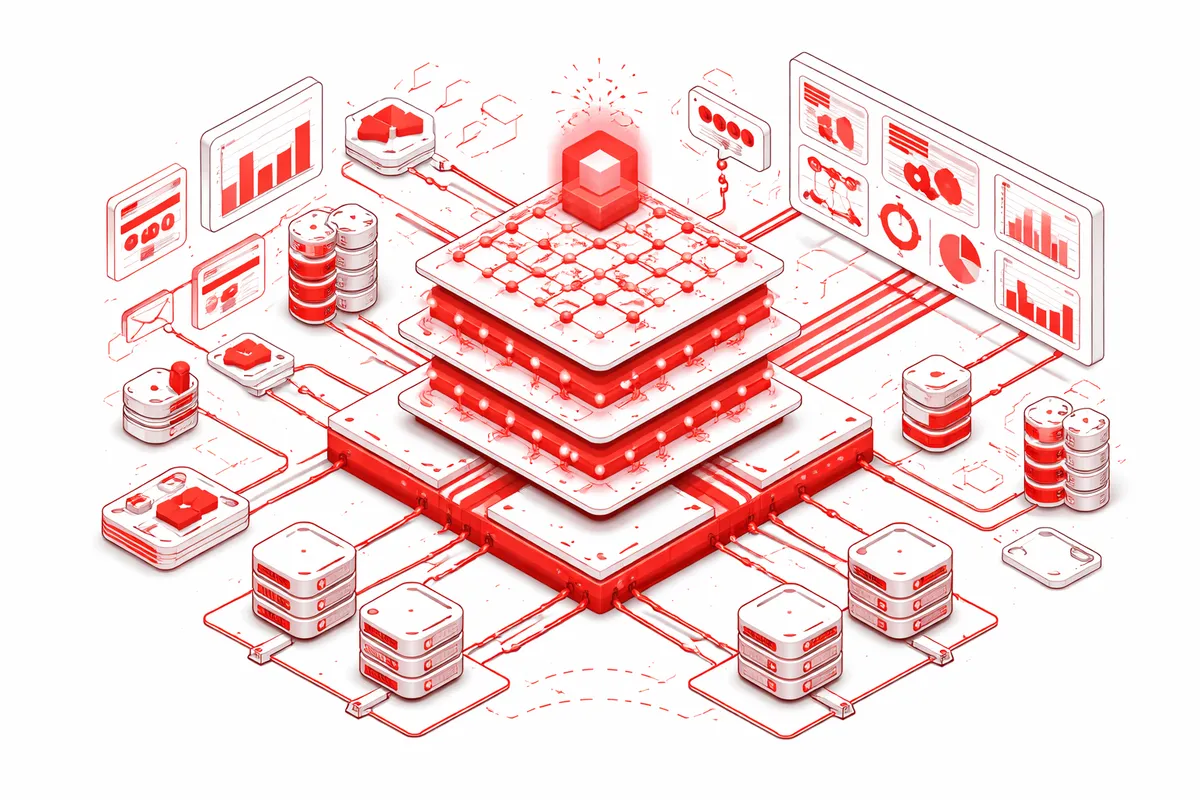
How We Build Custom AI Solutions for the Loop
Custom AI solution development for Loop organizations begins with a problem definition and feasibility assessment. We define the specific problem the custom solution should address, assess whether a custom solution is warranted versus an available commercial tool, and evaluate the data availability and quality required to build a solution that performs better than the commercial alternative. For a LaSalle Street law firm, this might mean assessing whether the firm's contract history is sufficient to train a custom clause extraction model that outperforms generic contract AI.
Architecture design follows the feasibility assessment. We design the specific AI components the solution requires, the data pipeline that feeds them, the interface that connects the solution to the professionals who will use it, and the security architecture that meets the organization's data governance requirements. For regulated industries, the architecture includes the compliance controls, audit logging, and human review requirements that the regulatory environment mandates.
Development and validation builds the solution, trains the AI components on the organization's specific data, and validates performance against held-out test data. The validation phase confirms that the custom solution outperforms available commercial alternatives on the specific tasks it was designed for, which is the standard that justifies the custom development investment.
Industries We Serve in the Loop
Law firms on LaSalle Street benefit from custom AI solutions for contract analysis trained on the firm's specific transaction history, matter classification systems trained on the firm's matter taxonomy, discovery review tools calibrated to the firm's privilege and relevance standards, and legal research tools that retrieve from the firm's own brief and memoranda archive.
Investment management and financial advisory firms on Wacker Drive benefit from custom AI solutions for portfolio analytics trained on proprietary performance data, client reporting systems that generate narrative commentary calibrated to the firm's client communication standards, and risk assessment tools that incorporate the firm's specific underwriting criteria and market view.
Commercial banks and financial institutions with Loop operations benefit from custom AI solutions for credit assessment models trained on the institution's own loan portfolio, fraud detection systems calibrated to the institution's specific transaction patterns, and regulatory reporting tools that extract and format data to the specific requirements of each reporting framework the institution files.
Consulting and professional services firms along Wacker Drive and Madison Street benefit from custom AI solutions for knowledge retrieval from the firm's proprietary methodology and deliverable archive, proposal win probability models trained on the firm's historical win-loss data, and engagement risk assessment tools calibrated to the firm's project risk framework.
Professional associations near the Chicago Cultural Center benefit from custom AI solutions for member classification and engagement prediction trained on the association's membership history, content relevance classification systems calibrated to the association's specific topic taxonomy, and research synthesis tools that process the specific literature and policy documents relevant to the association's advocacy agenda.
Corporate headquarters in Loop towers benefit from custom AI solutions for internal knowledge management that retrieves from proprietary operational documentation, document classification systems trained on the organization's specific document taxonomy, and process optimization tools trained on the organization's operational data.
What to Expect Working With Us
1. Problem definition and feasibility assessment. We define the specific problem, assess whether a custom solution is warranted, and evaluate the data availability required to build a solution that outperforms commercial alternatives. We will recommend a commercial tool where one exists that adequately addresses the problem.
2. Architecture design and compliance review. We design the AI components, data pipeline, user interface, and security architecture. For regulated industries, the architecture is reviewed by the organization's legal, compliance, and IT teams before development begins.
3. Development, training, and validation. We build the solution, train the AI components on the organization's specific data, and validate performance against commercial alternatives. The validation confirms the business case for the custom development investment.
4. Deployment, integration, and ongoing maintenance. We deploy the solution, integrate it with the organization's existing systems, and provide ongoing maintenance as the underlying AI capabilities evolve and the organization's data and requirements change.