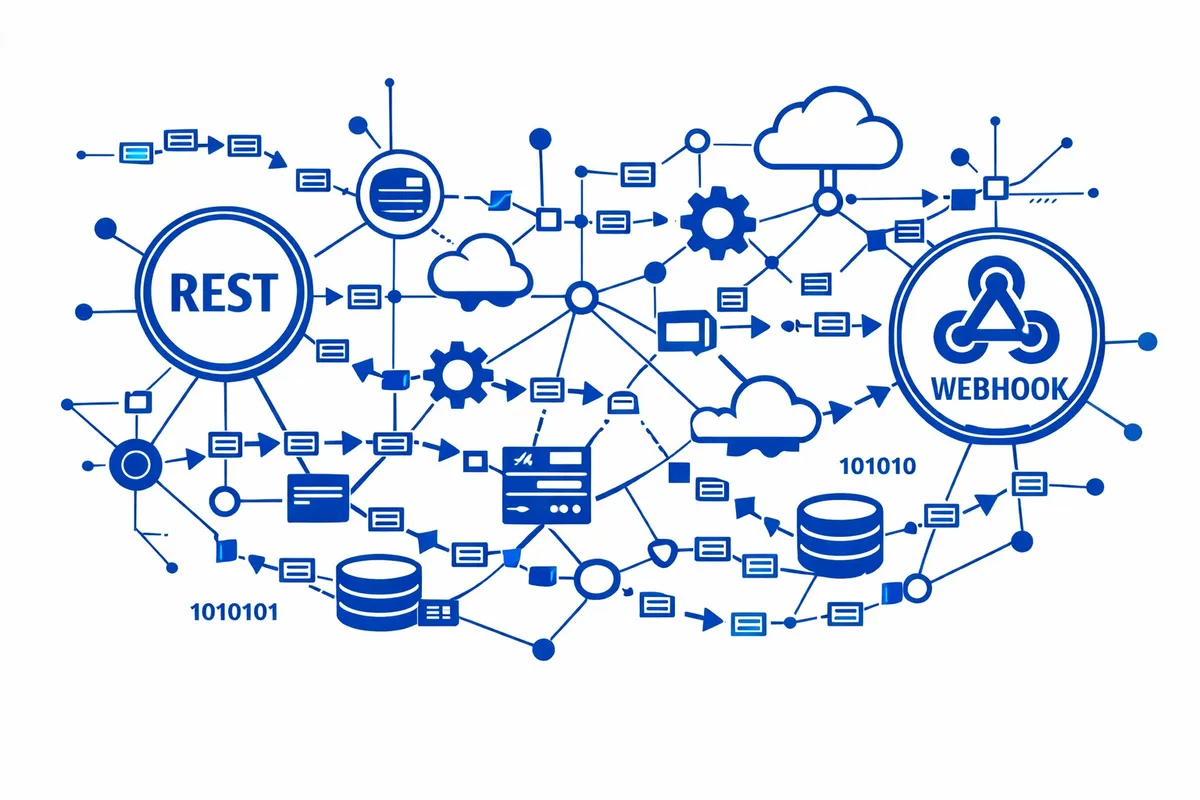
How We Build APIs for the Loop
We begin by mapping the data flows your business actually needs, not the theoretical integrations your software vendors advertise. For a law firm near the Chicago Cultural Center on Randolph Street, that might mean a three-hour session with the managing partner, the billing administrator, and the IT director to trace exactly where data currently moves manually, how often, with what transformation, and what goes wrong when it does not. That session produces a data flow diagram that becomes the API specification.
From the specification, we design the API architecture: which systems are sources, which are consumers, what data passes between them, what the authentication and authorization model looks like, and how errors surface and recover. For Loop financial firms, security is not a feature added at the end. It is a first-order constraint. Every API we build for firms handling client assets or confidential legal matter data includes encryption in transit and at rest, token-based authentication with appropriate scoping, rate limiting to prevent accidental or deliberate abuse, and audit logging that meets the record-keeping requirements of legal and financial services regulation.
Development follows a staged approach. We build and test each integration endpoint against a staging environment before connecting to live systems. We test failure modes as rigorously as success paths: what happens when the source system is down, when it returns unexpected data, when the destination system's rate limit is reached. An API that fails gracefully and notifies the right person is fundamentally different from one that fails silently and lets data drift out of sync.
Industries We Serve in the Loop
Law firms and legal operations teams along LaSalle Street use custom APIs to connect their practice management and billing systems to document management platforms, client reporting dashboards, and accounting software. The data flow between these systems is well-defined and consistent, making it an ideal API candidate. The result is a single source of truth for matter economics that billing staff and partners can access without running manual reconciliation reports.
On the financial services side, asset managers and investment advisers near Wacker Drive need APIs that connect portfolio accounting systems to client reporting platforms, performance attribution tools, and regulatory submission portals. These integrations must handle high transaction volumes accurately and maintain complete audit trails. We have built APIs for Loop investment firms that process tens of thousands of position records daily and meet GIPS compliance requirements for performance reporting.
Commercial real estate operators managing office and retail properties between Madison Street and Randolph Street use APIs to connect lease management systems to accounting platforms, work order systems, and investor portals. When a new lease is executed in the lease management platform, the API automatically creates the corresponding accounting records, sets up billing schedules, and notifies the property manager and asset manager through their respective systems without a single manual step.
The theaters on Randolph Street and civic venues near the Chicago Cultural Center use APIs to connect ticketing platforms to accounting systems, donor management databases, and email marketing tools. A ticket purchase in one system automatically triggers a record in the donor database, a revenue posting in the accounting system, and a segmentation update in the marketing platform. That data chain, if managed manually, involves three separate export-import cycles per transaction.
Hotels along Michigan Avenue near Millennium Park build APIs to connect their property management systems to revenue management platforms, channel managers, and accounting software. Dynamic pricing logic that updates rates across booking channels requires real-time data flows that no manual process can replicate.
Professional associations headquartered near the Chicago Cultural Center use APIs to connect member databases to event registration platforms, payment processors, and communication tools. Membership data is the central fact about these organizations; an API ensures every system that touches members is working from current data.
What to Expect Working With Us
1. Data flow mapping and specification. Before writing a line of code, we document exactly what moves where, in what format, on what schedule, with what error handling. For Loop firms with complex existing system landscapes, this phase often surfaces integration requirements that were not visible in initial conversations. The specification is a contract between us and a guide for your internal teams.
2. Security-first architecture review. Every API touching financial or legal data gets a security architecture review before development begins. Authentication model, authorization scoping, encryption implementation, audit log design, and compliance alignment with the relevant regulatory framework for your industry. This review prevents costly security rework late in the project.
3. Staged build with parallel validation. We build in stages and validate each stage against real data before proceeding. You see working integrations early, not a big reveal at the end. Each stage includes failure mode testing, not just happy path validation.
4. Documentation and monitoring handoff. Every API we build comes with complete technical documentation and a monitoring setup that alerts your team when error rates spike or data flows stall. You own the code, the documentation, and the monitoring. We are available for ongoing support but you are not dependent on us for operational continuity.