How We Build AI Model Training for the Loop
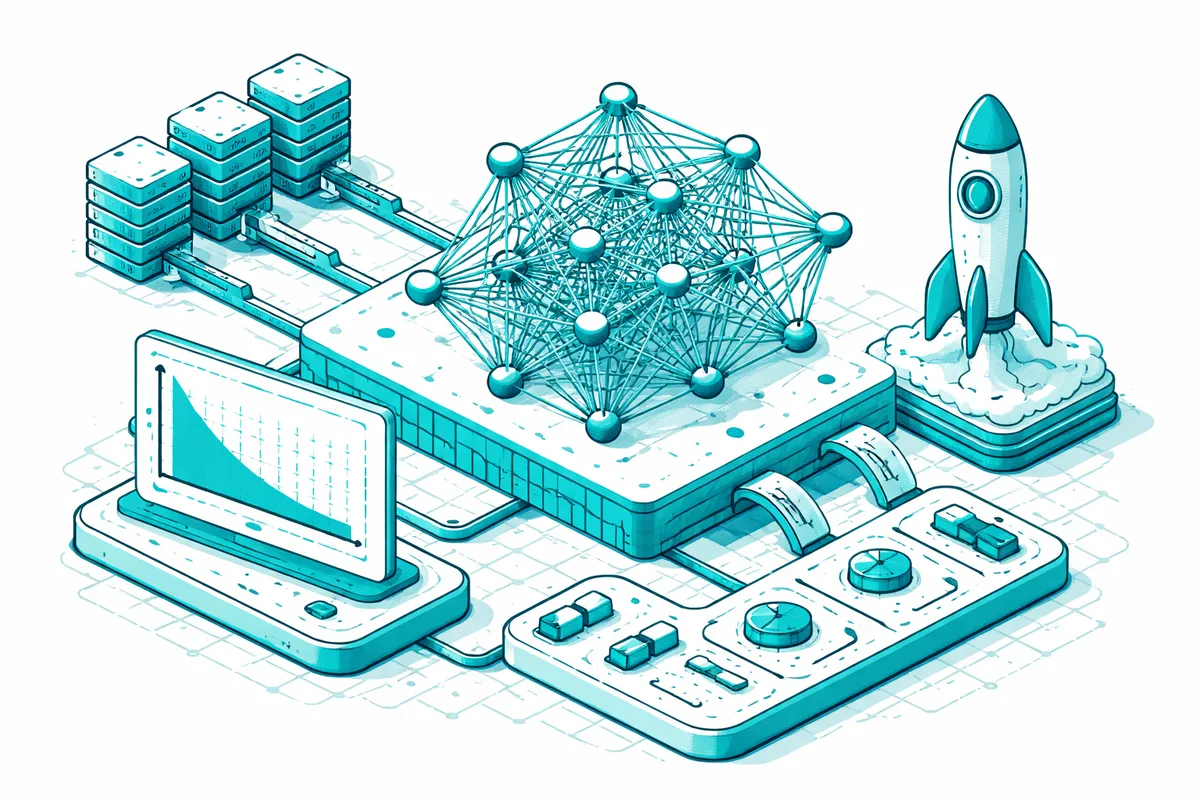
Model training for Loop organizations begins with a data assessment and strategic opportunity session. We identify the proprietary data assets the organization holds, assess their quality and volume, and map the AI capability opportunities that this data enables. For a LaSalle Street law firm, the assessment covers matter data, brief archives, memoranda, and settlement and verdict records. For a Wacker Drive investment firm, it covers portfolio history, transaction records, and client relationship data. The assessment produces a prioritized map of training opportunities.
Data preparation follows the assessment. Training data for complex professional service models requires careful preparation: cleaning, structuring, labeling, and organizing the historical data into the format required for training. For legal and financial data, this preparation also addresses privacy and confidentiality requirements, ensuring that client-specific information is appropriately handled before it enters the training process.
Model development and validation trains the custom model on the prepared data, evaluates its performance against held-out test data, and confirms that the model performs meaningfully better on the organization's specific tasks than available general-purpose alternatives. For Loop professional service organizations, the validation comparison against commercially available tools is an important output that justifies the custom training investment.
Industries We Serve in the Loop
Law firms on LaSalle Street can train models for document relevance classification, contract clause extraction and classification, legal research issue identification, brief argument quality assessment, and settlement probability prediction. Models trained on the firm's historical matter data perform better on these tasks than general legal AI because they have learned from the firm's own analytical outputs.
Investment management and financial advisory firms on Wacker Drive can train models for portfolio risk assessment, client churn prediction, investment performance attribution, and market pattern recognition. Models trained on proprietary portfolio history and client relationship data produce more accurate and relevant predictions than general financial AI for the specific investment context and client base of each firm.
Commercial banks and financial institutions with Loop operations can train models for credit assessment, fraud detection, customer attrition prediction, and loan performance forecasting. Models trained on the institution's own loan portfolio data and transaction history incorporate the specific risk factors relevant to the institution's business and market.
Consulting and professional services firms along Wacker Drive and Madison Street can train models for proposal win probability prediction, engagement risk assessment, client satisfaction prediction, and knowledge retrieval from the firm's proprietary methodology and deliverable archives. These models improve the quality and efficiency of the firm's delivery and business development functions.
Professional associations near the Chicago Cultural Center can train models for member engagement prediction, content relevance classification, and event attendance prediction. Models trained on the association's membership and engagement history produce more accurate predictions than general association management AI.
Corporate headquarters and institutional entities based in Loop towers can train models for internal knowledge retrieval, document classification, process optimization, and workforce planning analytics. Models trained on the organization's proprietary operational data outperform general enterprise AI for the specific operational context of the organization.
What to Expect Working With Us
1. Data assessment and strategic opportunity mapping. We assess your organization's proprietary data assets, identify the AI capability opportunities they enable, and prioritize the training opportunities by expected return and feasibility.
2. Data preparation and privacy governance. We prepare the training data, address privacy and confidentiality requirements appropriate to the organization's regulatory environment, and structure the data for the training process.
3. Model development, training, and validation. We develop and train the custom model, validate its performance against test data, and compare its performance against available general-purpose alternatives to confirm the value of the custom training.
4. Deployment and ongoing improvement. We deploy the trained model, connect it to the organization's workflows, and manage periodic retraining as new data accumulates and the model's performance benefits from additional training data.