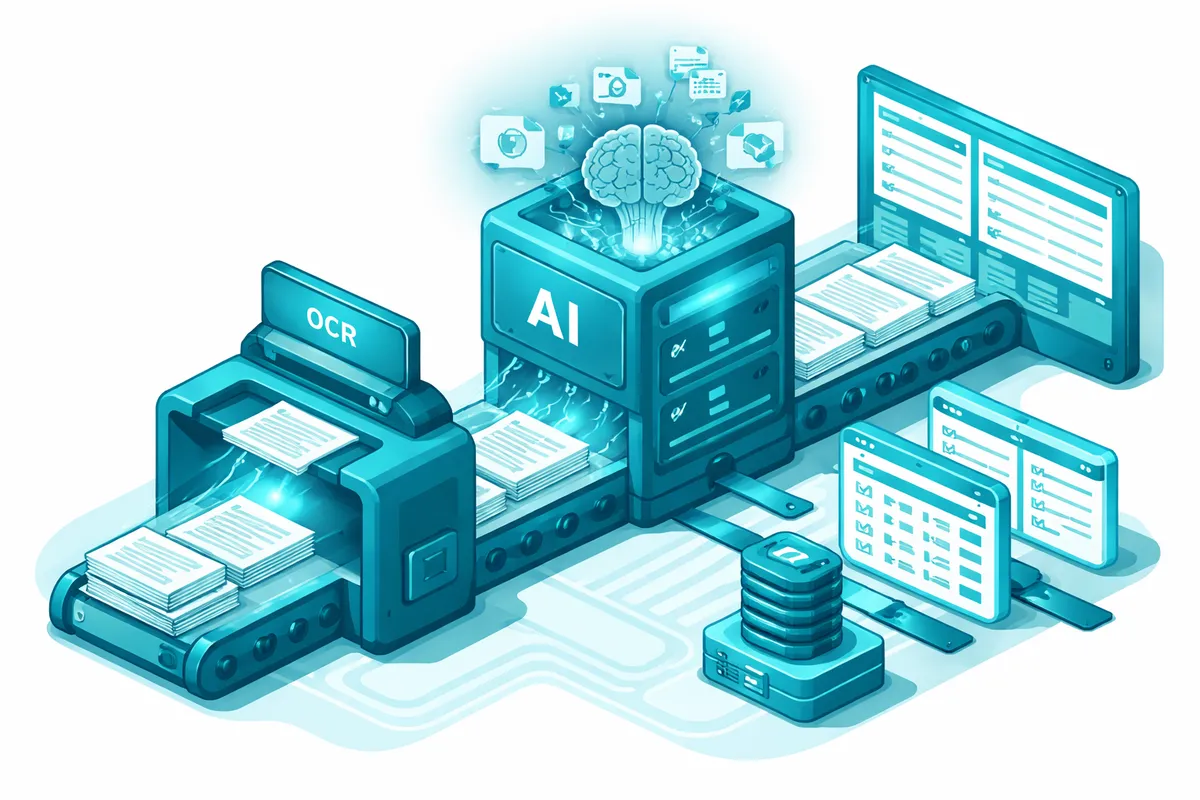
How We Build AI Document Processing for the Loop
Document processing for Loop organizations starts with a document inventory and workflow mapping session. We catalog the document types that flow through the organization, the volume of each type, the information extraction requirements for each, and the downstream decisions and actions that each document triggers. For a LaSalle Street law firm, that inventory might cover discovery documents, contracts, regulatory filings, and client correspondence. For a Wacker Drive financial firm, it might cover subscription agreements, compliance submissions, trade confirmations, and investor communications.
Extraction model configuration follows the inventory. Each document type requires extraction models trained on representative samples from the organization's actual document corpus. A contract review model trained on the specific contract types and clause structures that a LaSalle Street law firm handles produces more accurate extraction than a general-purpose contract model. A compliance document extraction model trained on the specific regulatory forms submitted by a Wacker Drive financial firm extracts the relevant fields more accurately than a generic form extraction model.
Workflow routing connects the extraction output to the downstream decisions and actions. Extracted information from discovery documents flows into the matter management system with issue classifications and relevance flags. Extracted information from compliance filings flows into the compliance tracking system with filing date, submission status, and exception flags. The routing is configured and reviewed before the system handles production documents.
Industries We Serve in the Loop
Law firms on LaSalle Street benefit from AI document processing for discovery review, contract review, regulatory filing review, and due diligence document analysis. AI discovery review that classifies documents by relevance and issues reduces the attorney time required for document-intensive litigation matters. Contract review AI that extracts key terms and flags non-standard provisions accelerates the contract review cycle.
Investment management and financial advisory firms on Wacker Drive benefit from AI document processing for subscription agreement review, investor correspondence classification, regulatory filing review, and compliance document extraction. AI that extracts structured data from subscription agreements and routes it to the investor onboarding system reduces the manual processing time per investor relationship.
Commercial banks and financial institutions with Loop offices benefit from AI document processing for loan document review, credit agreement extraction, covenant monitoring, and regulatory examination response. AI covenant monitoring that extracts financial covenants from credit agreements and tracks borrower compliance against those covenants reduces the risk of missed covenant violations.
Consulting firms along Wacker Drive and Madison Street generate and receive large volumes of client deliverables, proposals, and project documents. AI document processing that classifies incoming RFP documents, extracts key requirements, and routes them to the appropriate practice teams accelerates the proposal development cycle.
Professional associations near the Chicago Cultural Center receive member submissions, conference papers, and governance documents that require review and classification. AI document processing that pre-classifies submitted materials and routes them to appropriate reviewers reduces the administrative burden on small association staff.
Corporate real estate and property management firms with Loop offices process lease documents, tenant applications, and property maintenance records that benefit from AI extraction and routing. AI that extracts key lease terms, flags upcoming renewal dates, and routes maintenance requests to the appropriate vendors reduces the manual tracking burden on property management staff.
What to Expect Working With Us
1. Document inventory and workflow mapping. We catalog every document type, assess volume and extraction requirements, and map the downstream workflows that each document type triggers.
2. Extraction model configuration and training. We configure and train extraction models on representative samples from your organization's actual document corpus, validate accuracy, and obtain approval before production deployment.
3. Workflow routing and system integration. We connect the extraction output to the downstream systems and workflows, configure routing rules and exception handling, and test the complete workflow end to end.
4. Production deployment and accuracy monitoring. We deploy to production with monitoring that tracks extraction accuracy and exception rates. We refine the models based on production data to improve accuracy over time.