UI/UX Design in Logan Square
UI/UX Design for businesses in Logan Square, Chicago. We know the neighborhood, the customers, and what it takes to compete locally.

Our UI/UX Design Work in Chicago
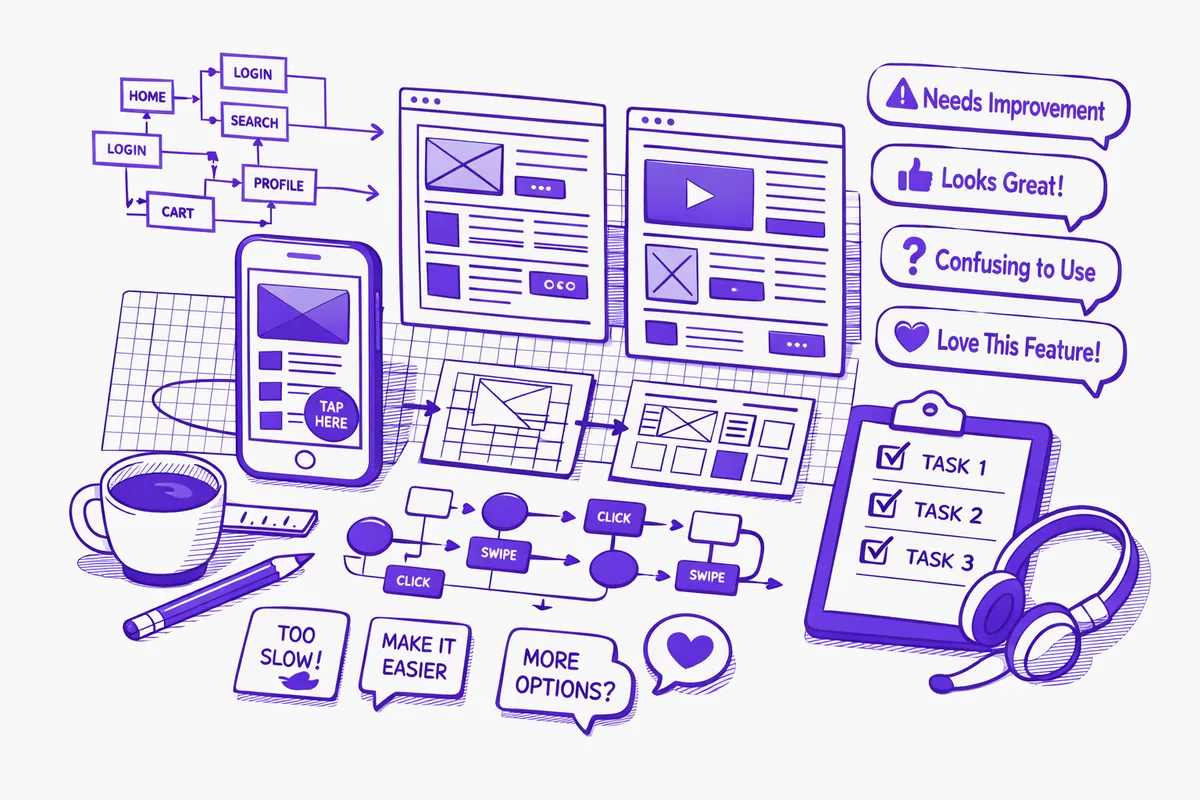
- User research: moderated interviews, contextual inquiry, and usability testing with Chicago-area users
- User journey mapping and pain point analysis across full product workflows
- Information architecture and navigation design for complex applications
- Wireframing and low-fidelity prototyping for rapid concept validation
- High-fidelity interface design and interactive Figma prototypes
- Mobile app design for iOS and Android across all screen sizes
- Web application and SaaS product design with enterprise-grade detail
- Design systems and shared component libraries for product teams with multiple developers
- Interaction design and micro-animation specifications
- Accessibility design meeting WCAG 2.1 AA compliance standards
- Healthcare application design with HIPAA workflow integration
- Fintech and financial application UX with compliance-aware design
- Developer handoff documentation with annotated Figma components and specifications
Industries We Serve in Chicago
Software and SaaS Companies: Chicago's technology corridor from River North through the West Loop houses hundreds of SaaS companies competing for enterprise and mid-market customers. We design product experiences that reduce demo-to-close friction, improve trial-to-paid conversion, and lower churn by making core functionality accessible without training overhead.
Fintech and Financial Services: The concentration of financial technology firms along LaSalle Street and in the West Loop creates demand for financial UX that balances security requirements with ease of use. We design interfaces for payment platforms, investment tools, lending applications, and financial reporting products that earn the trust of sophisticated financial users while meeting regulatory presentation standards.
Healthcare and Medical Technology: Chicago's healthcare ecosystem spanning Northwestern, Rush, the University of Chicago Medical Center, and MATTER's digital health portfolio requires clinical-grade UX. We design patient portals, clinical workflow tools, telehealth platforms, and healthcare administrative applications that minimize training time and prevent the interface errors that create real downstream consequences.
E-Commerce and Retail Platforms: Chicago's retail market, from the Mag Mile brands to the growing direct-to-consumer companies operating out of the metro, needs e-commerce experiences that convert. We design checkout flows, product discovery systems, and loyalty program interfaces that reduce abandonment and increase basket size.
Logistics and Supply Chain Technology: Chicago's position as the country's logistics hub, anchored by O'Hare and the freight corridor, supports a cluster of supply chain technology companies whose products are used by warehouse and transportation professionals under real time pressure. We design these tools for the context of use.
Enterprise Software and Internal Tools: Large Chicago employers, from the financial institutions along LaSalle Street to the healthcare systems on the North Shore, operate internal tools used by thousands of employees. Poorly designed internal tools impose enormous productivity costs. We design internal applications with the same rigor applied to consumer products.
Non-Profit and Civic Technology: Chicago's active civic technology community, including organizations operating on the South and West Sides, needs digital tools that serve diverse communities across literacy levels and device access. We design inclusive applications that work for all users.
What to Expect
Discovery and Research: We begin every engagement by understanding your users and your business context. This means reviewing existing analytics and support data, interviewing current or target users, mapping the current user journey, and identifying the specific points where experience breaks down. For Chicago's healthcare and fintech clients, this phase also maps compliance requirements that will shape design decisions.
Information Architecture and Wireframing: With research complete, we design the structure before the surface. Information architecture defines how content and features are organized. Wireframes establish flow and layout without the distraction of visual design. We review wireframes with stakeholders and conduct lightweight usability testing before committing to high-fidelity work.
High-Fidelity Design and Prototyping: We build pixel-precise interface designs in Figma, including the interactive prototype that lets stakeholders and test users experience the product before any code is written. This phase includes design system creation so every component is consistent and documented for developer use.
Testing and Iteration: We test prototypes with real users who match your target demographic. Testing surfaces issues that designers and stakeholders cannot find alone because they know the product too well. We incorporate findings into the final designs before handoff, so the development team builds what is known to work.
Ready to Improve Your Product's User Experience?
Your users deserve an experience that feels effortless. Chicago's competitive product market punishes friction and rewards clarity. Running Start Digital designs interfaces that earn adoption, reduce support overhead, and create the product satisfaction that drives word-of-mouth growth across Chicagoland's demanding market. Schedule a consultation to discuss your product, your users, and where UX improvements will have the highest impact on your business outcomes.
Frequently Asked Questions
UX design addresses how a product works: the flow users take to accomplish goals, the information architecture that organizes features and content, and the research that validates decisions against real user behavior. UI design addresses how a product looks: visual hierarchy, color systems, typography, iconography, and the visual components that make the product coherent and usable. Both are necessary and inseparable in practice. Good UX with poor UI creates products that function but feel unfinished. Good UI with poor UX creates products that look beautiful but frustrate users. We deliver both, developed in parallel as a unified discipline.
We begin by understanding who your users are and what they are trying to accomplish. Research methods depend on the product stage: qualitative interviews with current or target users, contextual inquiry where we observe users in their actual work environment, competitive analysis comparing approaches across comparable products, and usability testing of existing designs or prototypes. In Chicago's healthcare and fintech sectors, research often surfaces compliance and workflow constraints that significantly shape design decisions. Chicago's density and population diversity make recruiting representative user samples faster than in most markets.
A focused UX engagement for a single feature or user flow, from research through final designs, takes 4 to 8 weeks. A comprehensive product design engagement covering full application design, design system creation, and usability testing takes 3 to 5 months. We structure work in phases so you receive validated designs for the highest-priority sections first, allowing development to begin before the complete design is finished. Rush timelines are possible for specific scopes with adjusted process.
Yes. We design for the full range of screen sizes and interaction modes your users will employ. For consumer applications, mobile-first design is typically the right approach because most users access on phones. For enterprise and B2B tools in Chicago's Loop and West Loop businesses, desktop or web application design often takes precedence because users work on laptops and monitors at their desks. Many Chicago products require both, and we design unified experiences that feel coherent across all contexts rather than treating them as separate projects.
Yes. We frequently partner with in-house or contracted development teams, providing designs, design systems, and detailed specifications that enable efficient implementation. We structure deliverables for developer handoff using annotated Figma files with component documentation, spacing specifications, and interaction notes. We remain involved during implementation to address questions and review built interfaces against design intent, preventing the design drift that commonly occurs when designers hand off and disappear.
Healthcare UX design requires treating compliance requirements as design constraints from day one rather than bolting them on at the end. HIPAA-compliant applications need session timeouts, role-based access controls, and audit logging built into the user flow. We design these requirements into the experience so they reinforce the sense of a trustworthy, secure product rather than creating friction that erodes usability. Chicago's healthcare ecosystem, from MATTER's portfolio companies to the digital health initiatives at Northwestern Memorial and Rush University Medical Center, requires healthcare-native UX thinking that the general design market cannot provide.
Ready to get started in Logan Square?
Let's talk about ui/ux design for your Logan Square business.