Our Supply Chain Automation Work in Logan Square
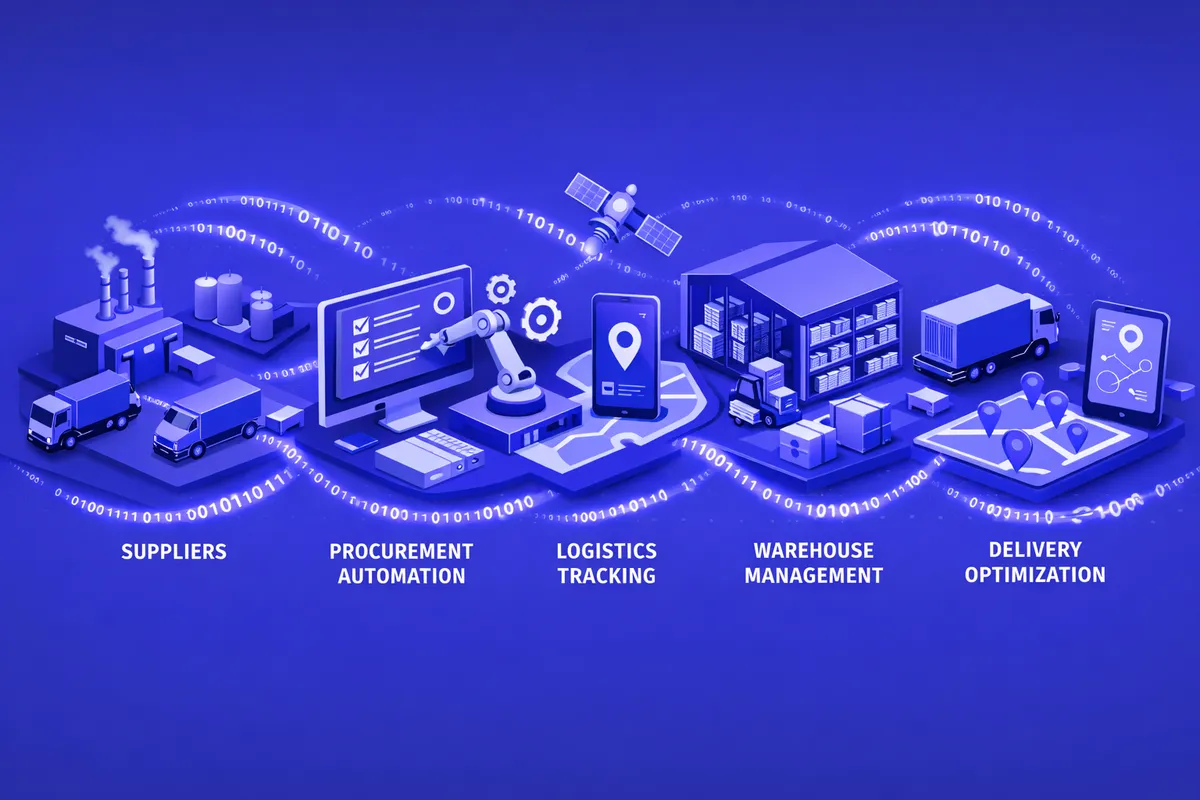
We build automation across the supply chain workflows that matter most for Logan Square businesses:
- Supply chain process audit identifying every manual step that automation should replace
- Procurement workflow automation: demand-triggered purchase order generation, supplier communication, and order acknowledgment management
- Supplier portal development for businesses with multiple suppliers who need a structured way to receive orders and confirm delivery schedules
- Inventory automation: reorder triggers calibrated to demand patterns and supplier lead times, safety stock calculation, and real-time inventory updates on receiving
- Wholesale order management automation: order intake, confirmation, picking, packing, and shipping notification in a connected workflow
- Demand forecasting using sales history, seasonal patterns, and account-level purchasing data to drive procurement decisions
- Lot tracking and traceability for food producers with food safety compliance requirements
- Logistics coordination: carrier booking, shipment tracking, and delivery confirmation workflows
- Supplier performance tracking: on-time delivery rates, fill rates, and quality acceptance data that informs supplier relationship management
- Integration with inventory management systems, accounting platforms, and wholesale order management tools
Industries We Serve in Logan Square
Food and Beverage Producers. Logan Square food brands managing ingredient sourcing, production scheduling, and distribution channel management need supply chain automation that handles the specific operational requirements of food production. Perishable ingredient management, lot tracking, and the precision that wholesale account relationships require all benefit from automation that replaces manual coordination with connected, monitored workflows.
Independent Restaurants and Restaurant Groups. The restaurants on Milwaukee Avenue and throughout Logan Square that manage their own ingredient purchasing have supply chain automation opportunities in procurement, receiving, and inventory management. Connecting purchasing data to inventory management eliminates the manual reconciliation that kitchen managers currently do alongside everything else they are managing.
Food Distributors and Wholesalers. Businesses distributing food products across Chicago and the Midwest need supply chain automation that handles order management, route planning, delivery confirmation, and the customer communication that wholesale accounts expect as a baseline. Distribution businesses operating at meaningful volume cannot coordinate these workflows manually without significant error rates.
Producers with Multiple Channel Complexity. Logan Square businesses selling through farmers markets, direct-to-consumer e-commerce, wholesale accounts, and retail placements simultaneously have multi-channel inventory management challenges. Supply chain automation that maintains a single inventory pool and allocates it across channels based on priority rules prevents the overselling and channel conflicts that manual management creates.
What to Expect
Process Audit. We document every supply chain workflow from procurement trigger to delivery confirmation, identifying every manual step, every information gap, and every failure mode in the current process. The audit produces a prioritized automation roadmap.
Integration Architecture. Most supply chain automation requires connecting multiple systems: your inventory platform, your accounting software, your ordering system, and your suppliers' or customers' systems. We design the integration architecture before any automation is built.
Build and Monitor. We build automations with monitoring built in from the start. When something breaks in an automated supply chain workflow, the failure should be visible immediately, not discovered when a downstream consequence reaches a customer.