How We Build Booking Systems for Logan Square Businesses
Rapid Deployment for Growing Businesses
Our implementation timeline is built for Logan Square's reality. These businesses cannot shut down to implement a new system. They need a booking platform that goes live alongside their current operations and gradually absorbs booking volume from disconnected channels.
Week one focuses on the highest-volume booking channel. For most Logan Square restaurants, that is the primary reservation platform. For fitness studios, it is class scheduling. For barber shops, it is appointment booking for the busiest providers. We configure the system for that one channel, migrate existing bookings, train the relevant staff, and go live.
Week two adds the secondary channels. Private event inquiries, special bookings, and walk-in management layer onto the system. Staff who were handling these through email, DMs, and phone calls now route them through the unified platform. The reconciliation work disappears because there is nothing to reconcile when everything enters one system.
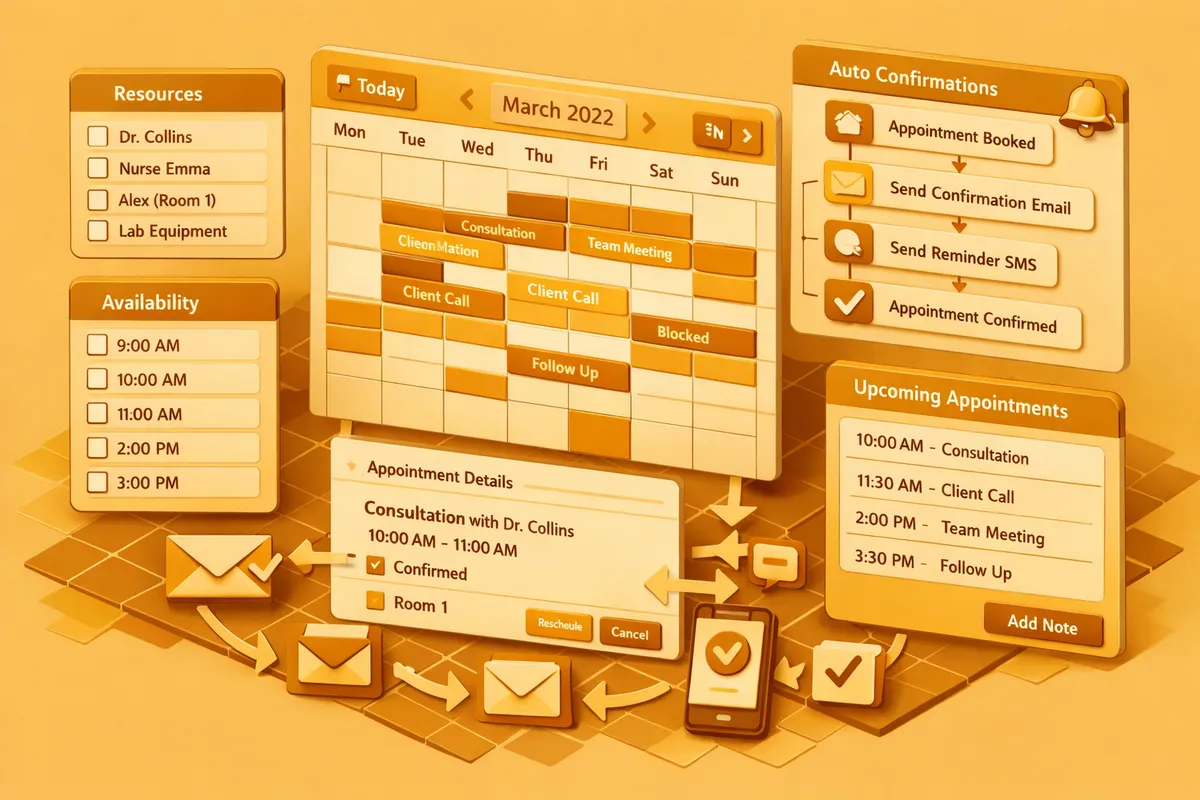
Week three connects the remaining channels and activates the automated communication sequences. By this point, every customer interaction flows through one calendar, every confirmation and reminder sends automatically, and the staff has three weeks of experience with the new system. Booking errors have already dropped. Staff time spent on scheduling has already decreased. The data from those three weeks provides the baseline for ongoing optimization.
Venue and Event Booking for Logan Square's Experience Economy
Logan Square businesses increasingly sell experiences alongside products. Breweries host events. Restaurants offer cooking classes. Yoga studios run retreats. Woodworking shops teach workshops. Record stores host listening sessions. The booking system needs to handle all of these experience types alongside the business's regular operations.
We configure event booking with the flexibility that Logan Square's creative businesses need. Each event type has its own booking flow: registration with participant count, ticket pricing with early bird and group rates, capacity management, pre-event communications with logistics and preparation details, and post-event follow-up. Events share the venue calendar with regular operations, so a brewery hosting a Friday evening vinyl session blocks those tables from regular reservation availability.
For recurring events like weekly trivia, monthly supper clubs, or seasonal workshops, the booking system manages series enrollment. A customer can sign up for every Wednesday trivia night for the quarter, or select individual dates. Series pricing incentivizes commitment while individual pricing keeps the events accessible to new participants.
Waitlist Management for High-Demand Periods
Logan Square restaurants and bars experience demand that exceeds capacity on weekends and during neighborhood events. Without a waitlist system, those excess customers leave. With an intelligent waitlist, they wait comfortably and convert into served guests.
The virtual waitlist lets walk-in customers join from their phone by scanning a QR code at the door or checking the restaurant's website. They receive an estimated wait time that updates dynamically based on actual table turns. When their table is ready, they get an instant notification. They can wait at the bar, browse the nearby shops on Milwaukee Avenue, or sit on the patio of the coffee shop next door. The host manages the combined reservation and waitlist queue in one view with accurate timing for both.
Waitlist analytics reveal demand patterns that inform capacity decisions. If Friday evenings consistently produce a 90-minute waitlist from 7 to 9 p.m., the restaurant might consider adjusting turn times, adding a second seating for shorter-format dining, or implementing reservations for those peak hours. The data drives the decision rather than guesswork.
Industry Solutions Across Logan Square
Restaurants and Bars on Milwaukee and Kedzie
Logan Square's restaurant scene spans from intimate BYOB spots to full-service restaurants with bar programs, from taco shops to tasting-menu destinations. Each format has different booking needs, but all benefit from unified reservation management.
Intimate restaurants with 30 to 50 seats need precise reservation management because one no-show represents a significant percentage of total covers. We implement confirmation workflows that dramatically reduce no-shows: booking confirmation within seconds, a 24-hour reminder with easy confirmation or cancellation, and a same-day reminder two hours before the reservation. Deposit requirements for parties of six or more protect against large-party no-shows that are especially costly for small restaurants.
Restaurants with private dining rooms manage two booking streams simultaneously. The main dining room accepts reservations through the standard flow. The private dining room processes inquiries through a dedicated pipeline with event details, menu selection, pricing, contract generation, and deposit collection. Both share the same staff and kitchen calendar, so the private event's timing and size are factored into the main dining room's capacity for that service.
Breweries and bars that host events need booking that handles taproom reservations, event tickets, private party inquiries, and food truck coordination in one system. The taproom calendar blocks tables during events. Event ticket sales enforce capacity limits. Private party booking captures all the details needed for staffing and setup. The owner sees all upcoming activity in one dashboard instead of checking five different tools and message threads.
Wellness Studios on Logan Boulevard
Logan Boulevard's residential character attracts wellness businesses that serve the neighborhood's young professional and family demographic. Yoga studios, meditation centers, acupuncture clinics, and holistic health practitioners book clients through a mix of scheduling apps, phone calls, and word-of-mouth referrals.
We build booking systems for Logan Boulevard wellness businesses that match the neighborhood's community-oriented culture. New client onboarding workflows collect health history, set expectations for the first visit, and communicate the studio's approach before the client walks in. Returning client booking is frictionless, with favorite classes, preferred instructors, and regular time slots making rebooking a one-tap process.
For acupuncture clinics and holistic practitioners who require intake documentation, the booking system collects health questionnaires before the first appointment. The practitioner reviews the intake before the session rather than spending the first 15 minutes of a 60-minute appointment on paperwork. Follow-up scheduling books at checkout, and recall reminders maintain the treatment cadence the practitioner recommends.
Community class pricing, sliding scale options, and donation-based classes all configure within the booking system. A yoga studio offering a free community class on Sunday mornings manages enrollment through the same system as its paid classes, tracking attendance and converting community class participants into paid memberships through targeted follow-up.
Barber Shops and Salons
Logan Square's barber shops have evolved from walk-in-only operations to businesses that blend appointment scheduling with walk-in availability. The neighborhood's barbershop culture values the communal, walk-in experience, but demand has grown beyond what pure walk-in operations can handle efficiently.
We build hybrid systems that preserve the walk-in culture while adding the efficiency of appointments. Barbers who prefer a scheduled workflow book appointments through the system. Barbers who prefer the walk-in flow manage a digital queue. Customers see both options: available appointment times for specific barbers or the current walk-in wait time. The shop maintains its vibe while reducing the 45-minute Saturday waits that send potential customers to the shop down the street.
Creative Businesses and Workshops
Logan Square's creative economy includes screen printing shops, woodworking studios, pottery workshops, music rehearsal spaces, and photography studios. Each offers bookable experiences alongside their core business.
Workshop booking manages class registration with capacity limits, material fees, skill level requirements, and pre-class communications about what to bring and what to expect. A woodworking workshop books participants into a Saturday class with tool rental, wood selection, and project guide details all communicated before they arrive. A screen printing studio books custom print sessions with design upload, color selection, and garment quantity during the booking process.
Studio and rehearsal space rental books by the hour with equipment inventories, access instructions, and security deposit processing. A band booking a Saturday rehearsal selects their time slot, specifies equipment needs, pays the rental fee, and receives access codes and studio rules automatically.
What to Expect Working With Us
1. Rapid booking assessment. We identify your highest-impact booking channel and design the first phase of implementation around it.
2. Phased deployment over two to three weeks. Primary channel goes live in week one. Secondary channels add in week two. Full system with automation activates in week three.
3. Event and experience booking. For Logan Square businesses that sell experiences alongside products, we build event booking workflows that manage registration, ticketing, capacity, and communications.
4. Waitlist and demand management. For high-demand periods, we implement virtual waitlists and demand analytics that help you make capacity decisions based on data.
5. Ongoing optimization. Monthly reporting tracks booking performance across all channels. Quarterly strategy reviews adjust the system for new offerings, seasonal changes, and growth.