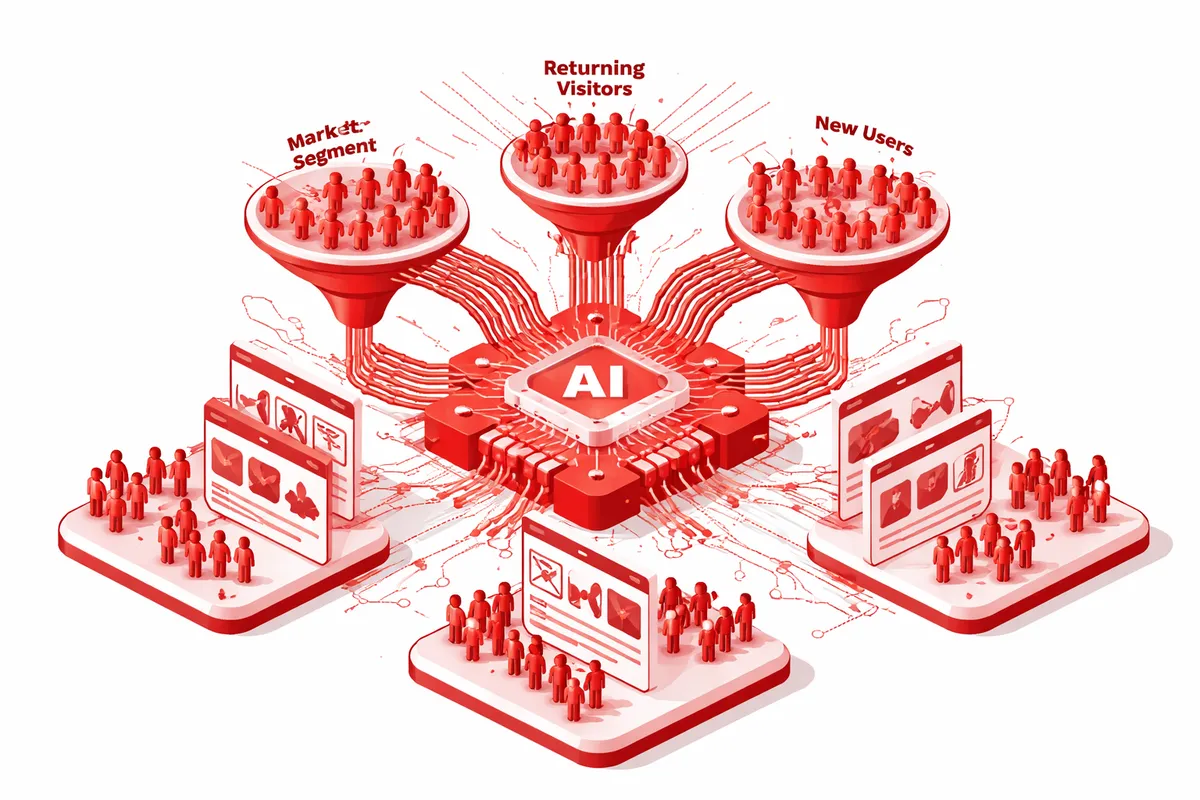
How We Build AI Content Personalization for Logan Square
We connect personalization engines to the data sources your business already uses: email platform, point-of-sale system, reservation tool, website, and social channels. For Milwaukee Avenue restaurants, this typically means integrating with OpenTable or Resy for reservation data, Toast or Square for purchase history, Mailchimp or Klaviyo for email, and Instagram for social engagement signals.
Once connected, we build audience segments that reflect the actual customer composition of a Logan Square business. The taxonomy varies by business type, but a typical restaurant deployment produces segments including first-time visitors, brunch regulars, weeknight regulars, event attendees, family dining customers, and high-frequency loyal customers. Bilingual segments are built in from the start, not added later.
Content templates are then built for each segment, with variables that pull in real data: the customer's name, their last visit date, menu items they have ordered before, and upcoming events that match their interest patterns. The system assembles messages from these templates at send time, creating content that reads as individually written without requiring manual production for each recipient.
Timing optimization runs after the first 60 to 90 days when behavioral data is sufficient to identify each segment's peak engagement windows. A brewery's craft beer enthusiast segment may open emails at 9 PM on Thursdays. The family segment may open on Saturday mornings. Sending both segments at 10 AM Tuesday, which is when the marketing manager has time to send the newsletter, leaves performance on the table.
Industries We Serve in Logan Square
Restaurants and taquerias on Milwaukee Avenue and along Kedzie Boulevard use AI personalization to drive repeat visits from a customer base that has abundant dining alternatives within a half-mile radius. The Logan Square restaurant scene's density means loyalty is earned message by message. Personalized content that reflects each customer's actual dining history, favorite menu categories, and event attendance patterns consistently outperforms generic email blasts by 25 to 35 percent on open and click metrics. A customer who orders the same dish repeatedly gets content featuring that dish. A customer who has attended two live music dinners gets the next one before it sells out.
Breweries and taprooms near Kedzie and Fullerton use personalization to keep their community engaged between visits, where the gap between visits can stretch to two or three weeks. Tap release emails go to fans of the specific style being released. Event invitations go to past event attendees. Mug club members get a distinct content track with exclusives and early access. The beer garden family crowd gets summer-specific content about food offerings, kids' activities, and weekend hours that are irrelevant to the weeknight craft beer regulars.
Creative agencies, design studios, and marketing firms near Logan Boulevard use personalization to nurture client prospects across long sales cycles. A design firm can serve different portfolio highlights to a restaurant prospect versus a real estate development prospect, displaying the work most relevant to each audience's industry. Proposal follow-up sequences are personalized by project type, timeline, and the specific conversation that preceded the proposal.
Record stores, galleries, and specialty retail on Milwaukee Avenue use personalization to build the kind of individual relationship that keeps independent retail competitive against online alternatives. Customers who have bought in a specific genre or category receive new arrival notifications before they go to general announcement. Loyal customers receive early access to events and limited releases. The system makes a two-person independent retailer feel as attentive as a shop with twice the staff.
Fitness studios and wellness providers near Palmer Square use personalization to address the cycle of class attendance that defines member retention. Members who have attended twice in the past month receive different content than members who have not been in for three weeks. Reactivation sequences target lapsed members with specific class recommendations based on their attendance history rather than generic "we miss you" messages that every gym sends.
Professional services and creative freelancers along the boulevard use personalization to stay relevant to a client base that is not shopping weekly. A photographer or copywriter whose clients hire quarterly or annually stays visible through personalized content that references the client's industry, recent projects together, and seasonal work patterns that suggest when the next engagement might be timely.
What to Expect Working With Us
1. Audience data audit and segmentation architecture. We connect to your email platform, POS, reservation system, and social accounts to map Logan Square's distinct customer groups. The demographic mix here requires more granular segmentation than most Chicago neighborhoods. We typically identify six to ten meaningful segments in a Logan Square restaurant or brewery deployment, compared to three or four in a more homogeneous market.
2. Bilingual segment and content development. Bilingual content capability is standard for Logan Square deployments. We build Spanish and English content templates simultaneously, not as a translation afterthought. Customers in Spanish-language segments receive content that was written for that audience, not English copy run through a translation engine. Taste-based segments for food and beverage customers are built around the actual behavioral patterns your data reveals.
3. Campaign launch aligned to Milwaukee Avenue rhythms. Your personalized campaigns launch with scheduling aligned to Logan Square's dining and social calendar: farmers market season, summer boulevard events, holiday food programming, and the weekly patterns that drive Tuesday-through-Sunday commerce on Milwaukee Avenue and Kedzie.
4. Multilingual performance tracking and optimization. We monitor engagement separately for English and Spanish content tracks and refine based on what resonates with each audience. Monthly reports show bilingual campaign performance, segment growth trends, and where behavioral signals suggest new segmentation opportunities. The system improves continuously as it accumulates customer data.