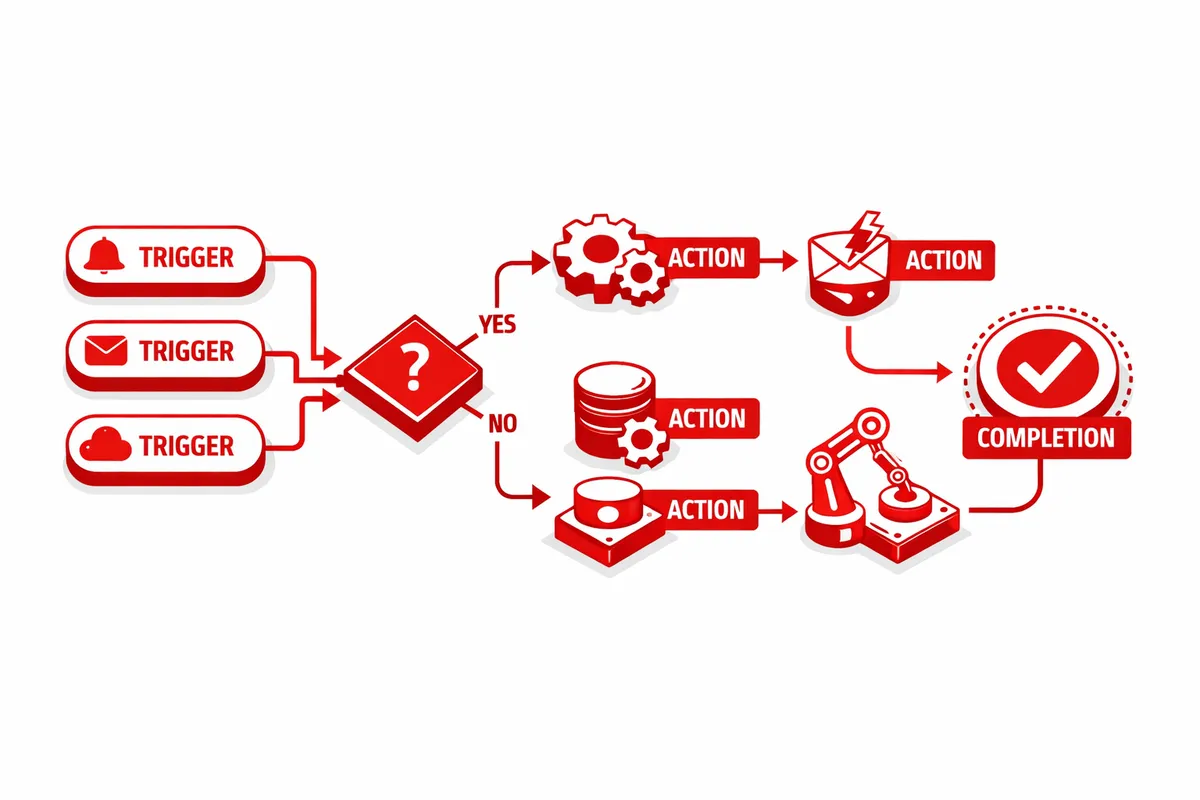
How We Build Workflow Automation for Little Village
Building automation for Little Village businesses starts with an operations audit that maps every manual communication task in your business. How do appointment reminders currently happen? How do you follow up after a large order? How do you handle inquiries that come in after hours? That map shows us where the manual burden is highest and where automation will deliver the most immediate relief.
Language configuration is non-negotiable in Little Village. Every automation we build for businesses serving a Spanish-speaking customer base is configured and tested in Spanish. That means the message text, the timing language, the button labels in any digital interface, and the response prompts are all reviewed for natural, respectful Spanish before the automation goes live. We don't run automations for Little Village businesses in English-only configurations.
We work with tools your business already uses. Square for point-of-sale, Google Calendar for scheduling, WhatsApp Business for customer communication, Mailchimp for email, and standard SMS platforms. For most Little Village businesses, the automation infrastructure doesn't require new software purchases. It requires connecting the tools already in place and building the logic that makes them work together.
We document every automation in plain language in both English and Spanish. The owner knows what runs, what triggers it, and how to adjust it. Family members who help manage the business can read the documentation and make routine changes without calling us.
Industries We Serve in Little Village
Panaderias and food businesses on 26th Street benefit from order confirmation automations for large and custom orders, pickup reminders the day before a customer's cake or catering order is ready, and re-engagement sequences for customers who placed a holiday order but haven't returned. Those sequences run in Spanish for Spanish-speaking customers and capture repeat business that otherwise depends on the customer remembering to call.
Quinceanera boutiques and formal wear retailers manage complex, multi-step order and fitting workflows that are natural candidates for automation. We build fitting appointment reminders, alteration pickup notifications, payment installment reminders, and post-event follow-up sequences that capture reviews and referrals from families at the moment of maximum satisfaction.
Auto shops and repair businesses on Pulaski Road benefit from vehicle-ready notifications, post-repair follow-up messages to confirm satisfaction, and service recall reminders for oil changes or inspections due by mileage or time. Those automations reduce the front-desk call volume and demonstrate the post-sale care that builds long-term customer relationships.
Family grocery stores and tiendas on Cermak Road can use automation for catering inquiry responses, special order confirmations, and seasonal promotion broadcasts to their regular customer list. A WhatsApp broadcast to regular customers announcing a seasonal product availability, automated to send on a defined trigger, drives sales that wouldn't happen otherwise.
Immigration and professional service providers near Our Lady of Tepeyac benefit from appointment confirmation automations, document request follow-ups, and case status notification sequences. Those automations reduce the manual phone time that consumes provider capacity and ensure every client is kept informed without requiring a personal call for every update.
Community health clinics near La Villita Park and Piotrowski Park manage appointment volumes that require reliable reminder systems. Automated appointment reminders in Spanish, sent 48 and 24 hours before the appointment, reduce no-show rates and improve the utilization of clinical capacity without additional administrative staffing.
What to Expect Working With Us
1. Operations audit. We map your current manual communication tasks in detail: what happens when an appointment is booked, how orders are confirmed, what follow-through looks like after a completed service. That map is the foundation for automation prioritization.
2. Bilingual automation design. We draft every automation in Spanish and English before building anything. You review and approve the message content, timing, and logic before we build. We don't launch any automation in a language you haven't reviewed.
3. Build and test with realistic scenarios. We test every automation against the real conditions of Little Village business operations: customers who prefer Spanish, customers who respond late, customers who don't respond at all. Edge cases are handled before the automation goes live.
4. Documentation and family training. We provide documentation in Spanish and English and train whoever manages the system, which in a family business might be the owner, a spouse, a sibling, or an older child who handles the technology. The system should be manageable by the family without outside help after handoff.