How We Build UI/UX Design for Little Village
Spanish-first architecture begins at the information architecture stage, not the translation stage. We establish the language hierarchy before wireframing: Spanish is the default language, English is available but secondary, and the design system is built to accommodate Spanish text lengths and reading conventions throughout every component. This matters because Spanish text is on average 20 to 30 percent longer than equivalent English text, which means navigation labels, button text, and form field labels designed for English will break layouts when Spanish content is added. Building Spanish-first from the beginning prevents this.
User research for Little Village products is conducted in Spanish, with participants recruited through Little Village's business and community networks: the Chamber of Commerce corridor on 26th Street, the community around Our Lady of Tepeyac, and the neighborhood networks along California Avenue and Pulaski Road. We conduct research in the language participants are most comfortable with, which is the only way to understand what they actually experience when using a digital product. Research conducted in English with Spanish-speaking users who are less comfortable with English produces different findings than research conducted in Spanish, and the difference is not cosmetic.
Mobile optimization for Little Village products reflects the reality that the neighborhood's commercial customers and community members access digital tools primarily on smartphones. The 26th Street shop owner reviewing orders between customers, the parent scheduling a clinic appointment from La Villita Park, and the wholesale buyer checking inventory from a delivery van are all doing so on a phone. We design for this context as the primary one, not as a mobile adaptation of a desktop-first design.
Industries We Serve in Little Village
Quinceanera retailers and specialty fashion businesses along 26th Street and the Pulaski Road corridor are building catalog, inquiry, and appointment tools that need to serve families planning a significant cultural event. Product browsing and filtering, appointment scheduling for fittings, package configuration, and vendor coordination interfaces designed in Spanish-first bilingual architecture for the families who drive Little Village's quinceanera commerce.
Family grocers and panaderias serving the residential community along Cermak Road and Kedzie Avenue are expanding into digital ordering and delivery. Inventory management, customer-facing browse and cart flows, and delivery scheduling designed for the operational reality of a family grocery that knows its neighborhood deeply and needs digital tools to extend that knowledge to customers who cannot come in person.
Auto shops and service businesses near the industrial corridors off Elston Avenue and along Pulaski Road serve a customer population that has strong networks for word-of-mouth referrals. Appointment scheduling, service status updates, and customer communication tools that convert that referral trust into digital relationships, with Spanish-language communication as the default for Little Village's auto service customer base.
Immigration services and community legal practices serving Little Village's immigrant population need interfaces that communicate trustworthiness and clarity in situations where clients may be managing significant stress. Intake forms, document upload flows, appointment scheduling, and case status interfaces designed with the specific clarity requirements of legal and immigration contexts, bilingual from the ground up, with no ambiguous labels or confusing navigation that could erode the trust that immigrant service clients need to have in the tools their providers use.
Community clinics and health services near Piotrowski Park and La Villita Park serve patients who navigate complex health systems often without English-language support. Patient intake, appointment scheduling, follow-up communication, and health education interfaces designed for Spanish-speaking patients across age and literacy levels, with accessibility built in from the beginning rather than retrofitted after the English version is complete.
The Little Village Chamber of Commerce corridor's retail and restaurant businesses are building loyalty, discovery, and community commerce tools that can serve the neighborhood's commercial ecosystem. Restaurant reservation and ordering tools, retail loyalty programs, and community discovery platforms designed for the specific commercial culture of 26th Street: family-run, community-oriented, and Spanish-first.
What to Expect Working With Us
1. Discovery and Spanish-first scoping. We establish the bilingual architecture requirements before any design work begins. This means determining default language, bilingual content scope, text length planning, and how the design system will accommodate Spanish-first content throughout. For Little Village products, this scoping conversation shapes every downstream decision and prevents the expensive rework that comes from treating Spanish translation as an afterthought.
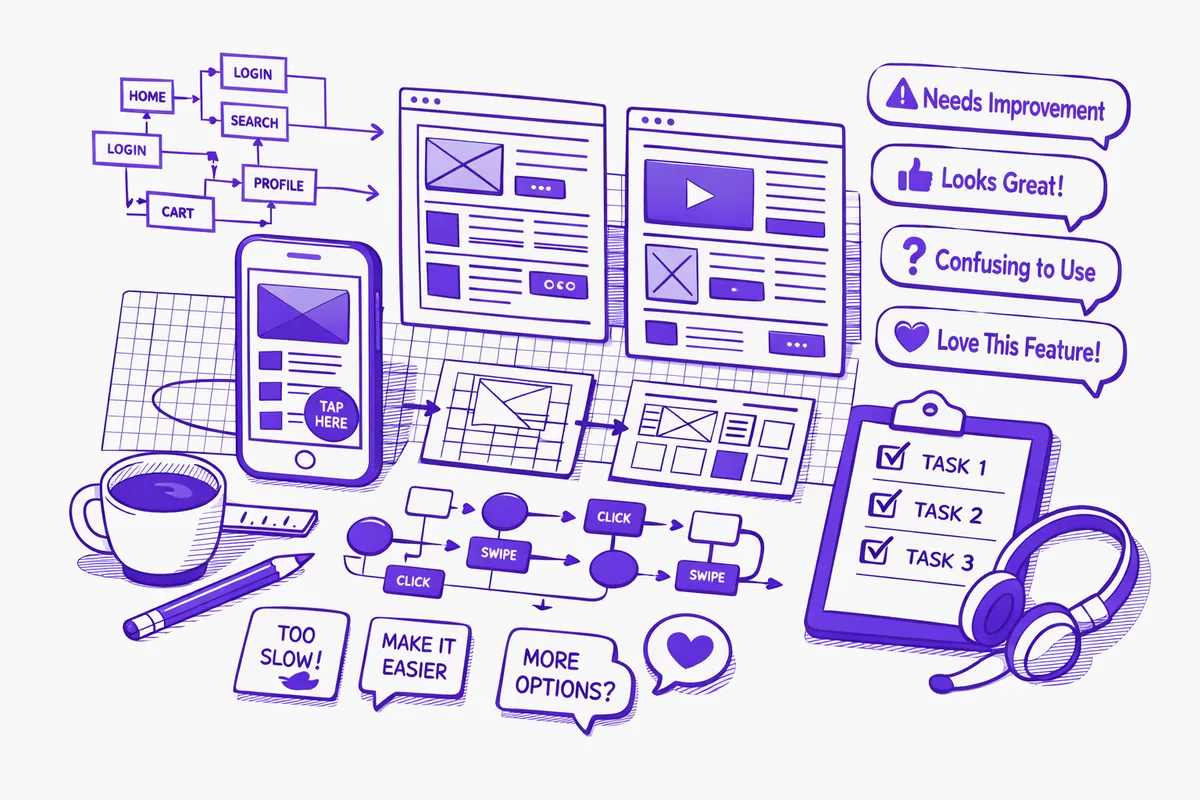
2. Information architecture and bilingual wireframing. Navigation structures, content hierarchies, and component frameworks designed to work in Spanish from the start. Wireframes are reviewed by Spanish-fluent stakeholders and, where possible, by actual Little Village community members before high-fidelity design begins. Structure problems are far cheaper to fix in wireframes than in finished interfaces.
3. High-fidelity design and Spanish-first prototype. Figma designs with complete Spanish and English states, interactive prototype tested in both languages with participants from Little Village's community. Design system documentation includes bilingual component specifications and text length guidelines for the engineering team building the product.
4. Community usability testing and iteration. Testing sessions with Spanish-speaking participants from Little Village's business and residential community, including older adults and users with varying digital literacy. Findings are documented in detail and incorporated before development handoff. We stay involved through implementation to ensure the bilingual experience is maintained as the product is built.