How We Build Supply Chain Automation for Little Village
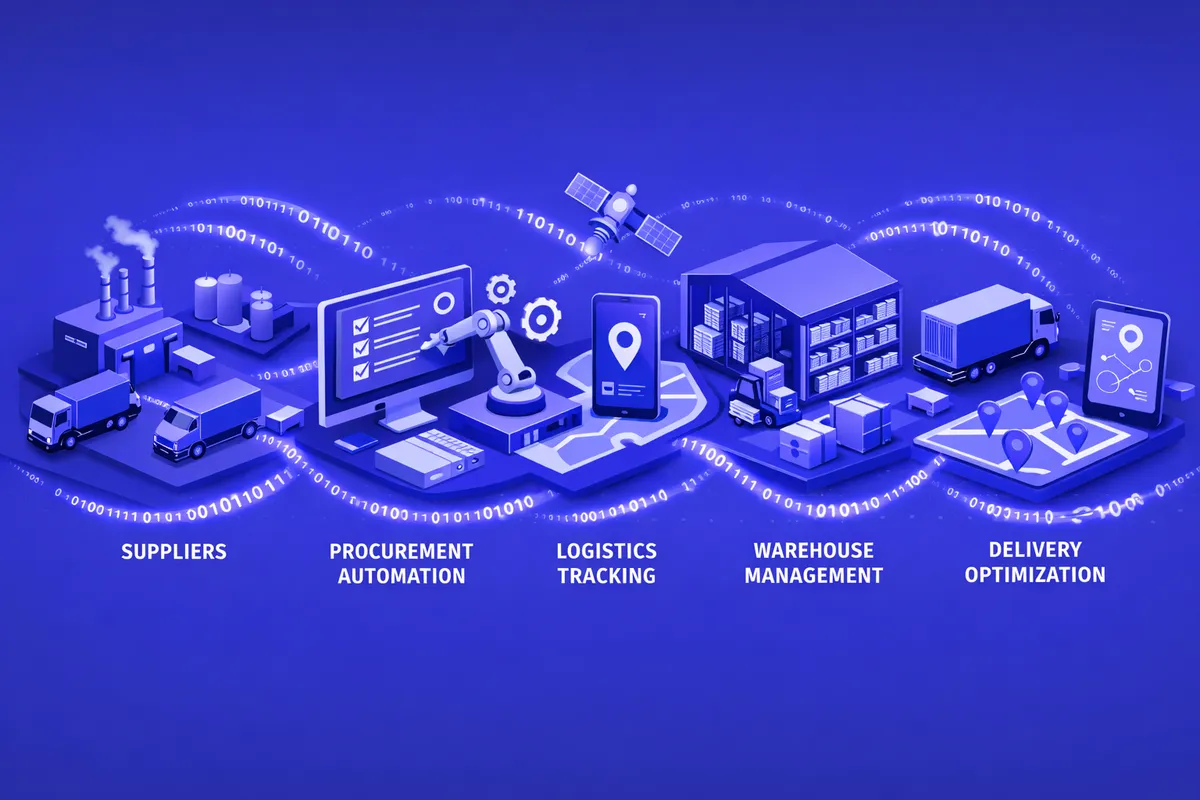
Supply chain automation starts with a vendor and product inventory: who you buy from, what you buy, how often, in what quantities, and at what lead times. For Little Village businesses, that inventory often reveals a more complex procurement picture than the owner had explicitly mapped. A family grocer might have relationships with twelve vendors for different product categories, each with different ordering schedules and lead times. A restaurant might source from five vendors with weekly ordering cycles that create a Monday morning administrative burden every week.
We map those vendor relationships and define the ordering rules that drive each one: what reorder threshold triggers an order for each item, what quantity to order when the threshold is hit, what lead time to account for in the reorder point calculation, and what documentation the vendor expects with each order. Those rules become the automation logic.
For Little Village businesses where vendor communication happens in Spanish, we configure purchase order templates and vendor communication in Spanish. An automated purchase order sent to a Spanish-speaking vendor in English creates friction that a Spanish-language document eliminates. Vendor relationships built in Spanish should be managed in Spanish through the automation layer as well as through personal contact.
We build automation incrementally, starting with the highest-volume vendor relationships and the items with the highest stockout cost. The first automations are validated manually: you review the generated orders before they send, confirm the quantities are correct, and approve the process before it runs automatically. Full automation happens after the logic is validated, not before.
Industries We Serve in Little Village
Family grocers and specialty food retailers near the Little Village Arch manage the most complex supply chain in the corridor: hundreds of SKUs, multiple vendors across produce, packaged goods, specialty items, and prepared foods, with different lead times and minimum order quantities for each. Automation that tracks inventory against par levels, generates purchase orders when items hit reorder thresholds, and alerts the buyer to items approaching out-of-stock before they actually run out replaces a manual process that consumes significant staff time weekly and fails predictably when volume is high.
Panaderías and tortillerías along Cermak Road source specific ingredients in regular quantities and face direct customer impact when any ingredient is unavailable. Automated reorder triggers for high-velocity ingredient SKUs ensure that the ordering process is not dependent on a single staff member remembering to check stock before the weekly order deadline. For panaderías with seasonal volume peaks around Día de los Muertos and the holiday season, automation ensures that order quantities scale with anticipated demand rather than staying flat at typical weekly levels.
Mexican restaurants and catering operations on 26th Street running both regular service and catering programs need supply chain visibility that connects catering bookings to ingredient ordering. When a large catering event is confirmed for a specific date, the ingredients for that event should be included in ordering calculations from the moment the booking is confirmed, not discovered as a last-minute need three days before the event. Automated supply chain tools that connect the catering calendar to ordering logic eliminate that last-minute scramble.
Quinceañera retailers and dress importers near Pulaski Road source inventory from vendors with longer lead times than local food suppliers. Automated tracking of dress inventory against the current active order pipeline ensures that a confirmed customer order does not sit on a sold-out size that was not caught in inventory. Automated vendor communications for restocking high-demand sizes, triggered by inventory level and correlated with the upcoming season's booking volume, replace the manual process of noticing a problem after a customer has already been disappointed.
Auto parts distributors and repair shops along Kedzie Avenue with parts inventory relationships spanning dozens of suppliers benefit from automation that tracks parts usage rates per job type, generates reorder requests to the appropriate supplier when parts hit minimum quantities, and matches incoming delivery manifests against outstanding purchase orders. Parts shortages that delay vehicle completion cost customer relationships. Automated reorder management prevents those shortages from occurring because they are caught before the last unit is used.
Community organizations with program supply needs near Piotrowski Park that manage supplies for community health programs, food distribution programs, or educational programs benefit from automated tracking of supply levels against program schedules. A food distribution program that knows its next distribution date and its current supply level can generate a reorder calculation automatically rather than relying on a coordinator to manually track supply against schedule.
What to Expect Working With Us
1. Vendor and product mapping. We document every vendor relationship, product category, typical order quantities, lead times, and current ordering process. The output is a clear picture of where automation will have the most impact and where the current process has the most failure points.
2. Reorder threshold configuration and testing. We set up reorder thresholds and order quantity calculations for each product category, then run the logic against historical sales data to validate that the thresholds would have prevented the stockouts that occurred during the testing period. You approve the thresholds before they drive live orders.
3. Bilingual vendor communication templates. Purchase order templates and vendor communication messages are configured in Spanish for vendors you communicate with in Spanish, and in English for English-language vendor relationships. The language of automated vendor communication matches the language of the relationship, not the default of the software.
4. Graduated automation rollout. Full automation goes live after a manual review period during which you approve every generated order before it sends. Once the logic has produced several weeks of correct results, the review requirement is removed and the orders send automatically. You retain the ability to pause or override automation at any time.