How We Build RAG Systems for Little Village
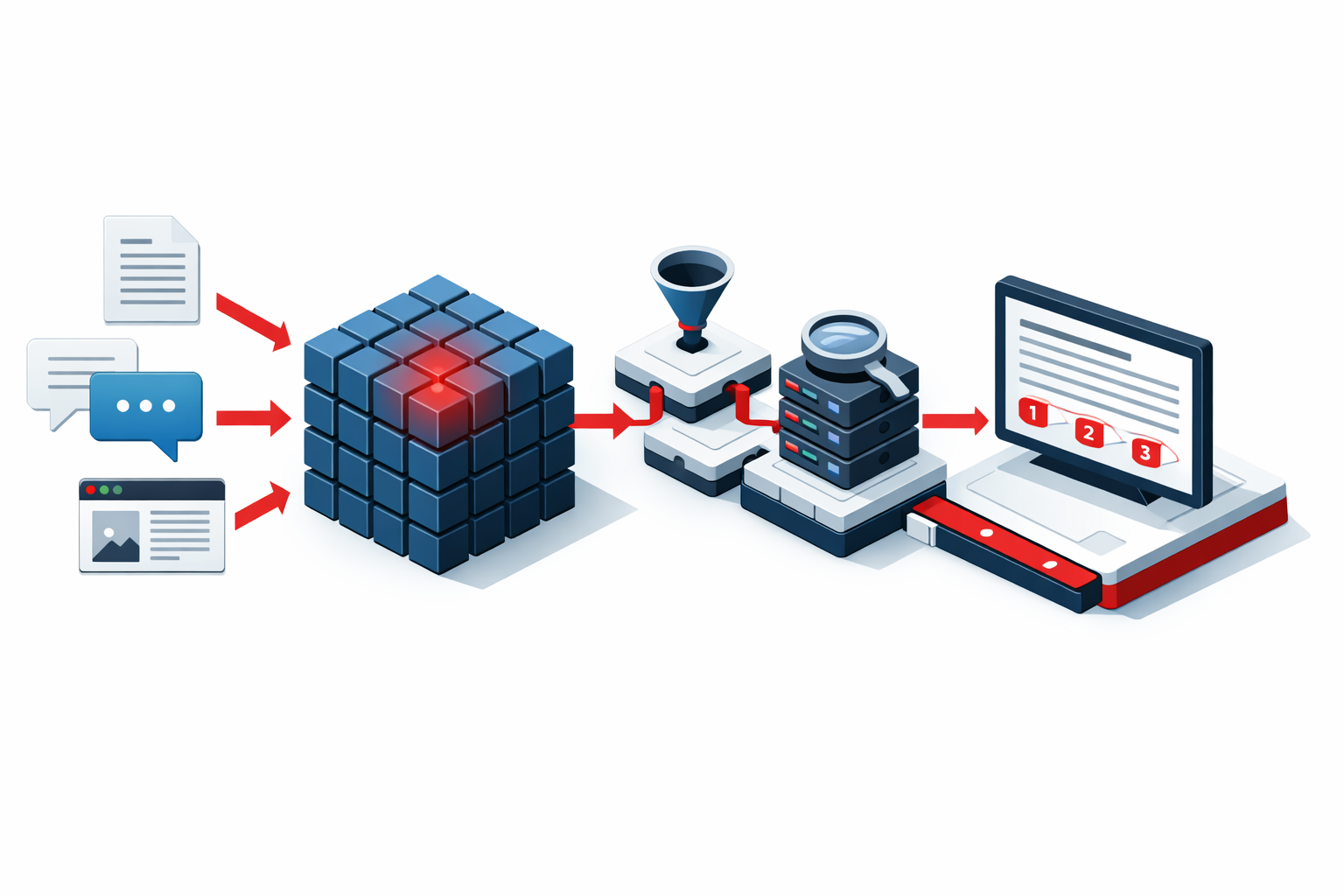
RAG development starts with a document inventory: we identify the specific documents and knowledge sources that should be indexed, assess their current format and quality, and determine the priority for inclusion in the knowledge base. For most Little Village businesses, the highest-value RAG sources include operational procedures, customer records, product or service information, historical pricing and order records, and regulatory compliance documentation.
From the inventory, we design the RAG architecture: how documents will be processed and indexed, how queries will be interpreted, how retrieval will identify the most relevant documents, and how the AI will synthesize the retrieved information into a coherent answer. For bilingual knowledge bases, the architecture includes language handling that retrieves from Spanish and English documents appropriately based on the query language and document language.
Implementation includes document processing, indexing, query interface design, and testing. Testing is conducted with questions that represent the actual queries the system will receive in production: we confirm that the system retrieves the correct documents, synthesizes accurate answers, and cites the documents it used. For bilingual systems, testing explicitly includes Spanish-language queries against Spanish-language documents.
The user interface for RAG systems ranges from a simple chat window where staff can ask questions in natural language to an integrated query function within existing business software. We design the interface based on how the system will actually be used by the people in the business.
Industries We Serve in Little Village
Legal and immigration services near Pulaski Road benefit from RAG systems that make the firm's accumulated case knowledge searchable and accessible. An attorney who can ask "what has our firm's experience been with cases involving this specific visa category" and receive a synthesized answer from actual case records is better equipped to advise new clients and develop case strategy than one who relies on recall or manual file review. For firms with bilingual case files, Spanish-English RAG is essential.
Quinceañera boutiques and event businesses near the Little Village Arch benefit from RAG systems that index customer preference records, dress availability information, vendor catalogs, and consultation notes. A staff member who can ask the system about a returning customer's preferences, past dress styles, or measurement history provides personalized service that customers notice and that drives loyalty.
Community health practices near Our Lady of Tepeyac Parish benefit from RAG systems that index clinical protocols, patient education materials, and regulatory compliance documentation. Clinical staff who can quickly retrieve the specific protocol relevant to a patient presentation, or the specific compliance requirement applicable to a new regulatory question, provide more accurate and efficient care and administration.
Auto repair businesses on Pulaski Road and Cermak Road benefit from RAG systems that index repair manuals, parts compatibility databases, and historical service records. A technician who can ask about the specific repair procedure for a vehicle model, or check the service history of a vehicle in the shop, completes work faster and more accurately than one who searches multiple manual sources.
Wholesale and specialty food businesses near Kedzie Avenue and California Avenue benefit from RAG systems that index supplier catalogs, pricing history, and product quality records. A buyer who can query historical supplier performance before placing an order, or check previous pricing for a specific product before accepting a quote, makes better procurement decisions than one who relies on memory or manual record review.
Restaurants and taquerías on 26th Street benefit from RAG systems that index recipe records, supplier specifications, and operational procedures. For restaurants with documented recipes and sourcing standards, a RAG system that allows kitchen staff to quickly retrieve the specific preparation procedure for a dish or the sourcing specifications for a critical ingredient maintains consistency and quality across staff changes.
What to Expect Working With Us
1. Document inventory and RAG design. We inventory the documents and knowledge sources to be indexed, design the RAG architecture including bilingual document handling, and review the design with you before any technical implementation begins.
2. Document processing and knowledge base build. We process the documents, build the index, and configure the retrieval and synthesis components. For bilingual knowledge bases, Spanish and English document processing is configured and tested explicitly.
3. Interface design and user testing. We design the query interface, conduct user testing with the staff who will use the system, and confirm that the system retrieves and synthesizes information correctly for the queries that matter most to the business.
4. Deployment and ongoing knowledge base maintenance. We deploy the RAG system and establish a process for adding new documents to the knowledge base as they are created. RAG systems become more valuable as the knowledge base grows, and maintenance processes ensure the index stays current.