How We Build Multi-Agent Systems for Little Village
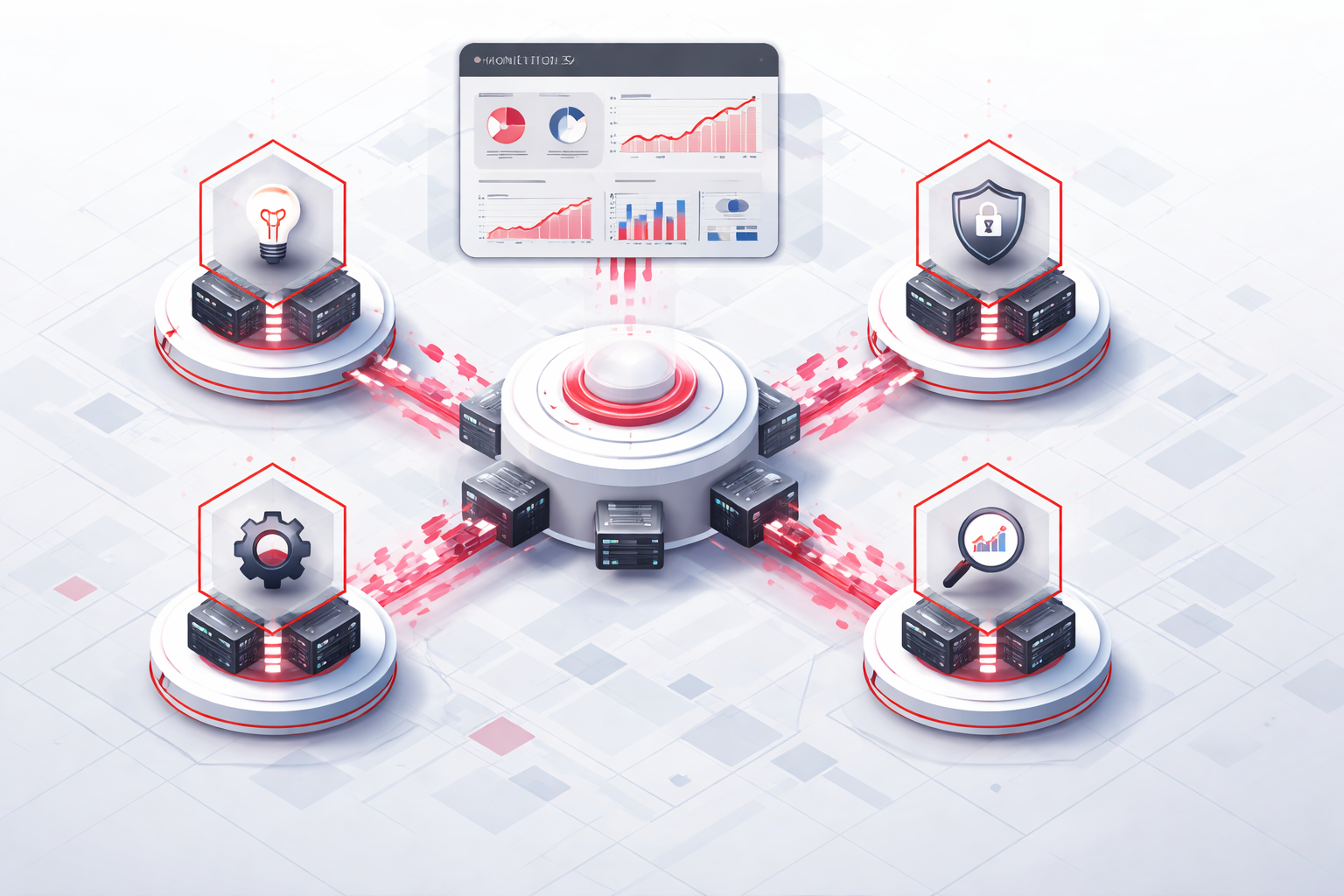
Multi-agent system design starts with a process map of the workflows that need to be coordinated. For each workflow, we identify the specific task the agent responsible for it needs to perform, the information it needs from other workflows, and the information it needs to share with other workflows. The map reveals the communication structure between agents: which agents need to share information in real time, which can share on a schedule, and which only need to communicate when specific conditions are met.
From the process map, we design the agent architecture: the individual agents, their specific responsibilities, the information-sharing protocols between them, and the orchestration layer that coordinates agent activity and handles the situations that require a human decision. For Little Village businesses, we design orchestration that keeps human judgment in the loop for the decisions that require it, such as pricing exceptions or customer complaint handling, while automating the decisions that do not.
Implementation is phased: individual agents are built and tested before they are connected to the multi-agent coordination layer. Testing at both the individual agent level and the system level confirms that agents behave correctly in isolation and that coordination between agents works as designed. For bilingual systems, language routing and language-appropriate agent behavior are tested explicitly before launch.
Industries We Serve in Little Village
Quinceañera boutiques and event businesses near the Little Village Arch have multi-agent system opportunities in the full customer journey: a consultation scheduling agent, an order management agent, an alteration coordination agent, and a customer communication agent that work together to manage the customer from first inquiry to event day without manual coordination between workflows. The agents share customer information, milestone statuses, and timing constraints so the customer experience is seamless and staff can focus on the in-person interactions that require human presence.
Restaurants and taquerías on 26th Street and California Avenue have multi-agent opportunities in operations: a demand forecasting agent, an inventory management agent, and a purchasing agent that work together to ensure the restaurant has the right ingredients at the right time without over-purchasing. When the forecasting agent predicts a high-demand weekend based on local events near Piotrowski Park, it signals the inventory agent to check current levels and the purchasing agent to adjust the week's order accordingly.
Auto repair businesses on Pulaski Road and Cermak Road have multi-agent opportunities in service management: a scheduling agent, a parts availability agent, a customer communication agent, and a technician assignment agent that coordinate to ensure every scheduled service has the parts available, the right technician assigned, and the customer informed of timing. When the parts availability agent identifies that a needed part is not in stock, it coordinates with the scheduling agent to adjust the appointment timing and with the communication agent to notify the customer.
Legal and immigration services near Pulaski Road have multi-agent opportunities in case management support: a document processing agent, a deadline tracking agent, a client communication agent, and a case status agent that coordinate to ensure every active case is moving forward, every deadline is being tracked, and every client communication touchpoint is being handled. The coordination between these agents prevents the dropped deadlines and missed communications that damage client relationships in high-stakes legal matters.
Health practices near Our Lady of Tepeyac Parish have multi-agent opportunities in patient management: a scheduling agent, a reminder sequence agent, a referral tracking agent, and a billing status agent that work together to manage the patient relationship across multiple care touchpoints. When a patient is referred to a specialist, the referral tracking agent coordinates with the scheduling agent to confirm the specialist appointment was made and with the communication agent to follow up if it was not.
Wholesale and distribution businesses near Kedzie Avenue managing complex supplier and customer relationships have multi-agent opportunities in supply chain coordination: a demand forecasting agent, a supplier communication agent, a logistics coordination agent, and a customer fulfillment agent that work together to ensure orders are placed, filled, and delivered accurately at scale.
What to Expect Working With Us
1. Process mapping and system design. We map the workflows that need to be coordinated and design the agent architecture, including individual agent responsibilities, information-sharing protocols, and orchestration layer design. Design is documented in plain language for your review before any development begins.
2. Phased agent development and testing. We build individual agents, test them against real business scenarios, and connect them to the coordination layer in phases. System-level testing confirms that agent coordination works correctly before full launch.
3. Launch with human-in-the-loop checkpoints. We launch multi-agent systems with clear human escalation points for the decisions that require judgment. Initial operation includes monitoring to confirm system behavior matches the design.
4. Ongoing optimization and agent expansion. We monitor multi-agent system performance, optimize agent behavior based on actual operational results, and identify opportunities to expand the system as the business's automation maturity grows.