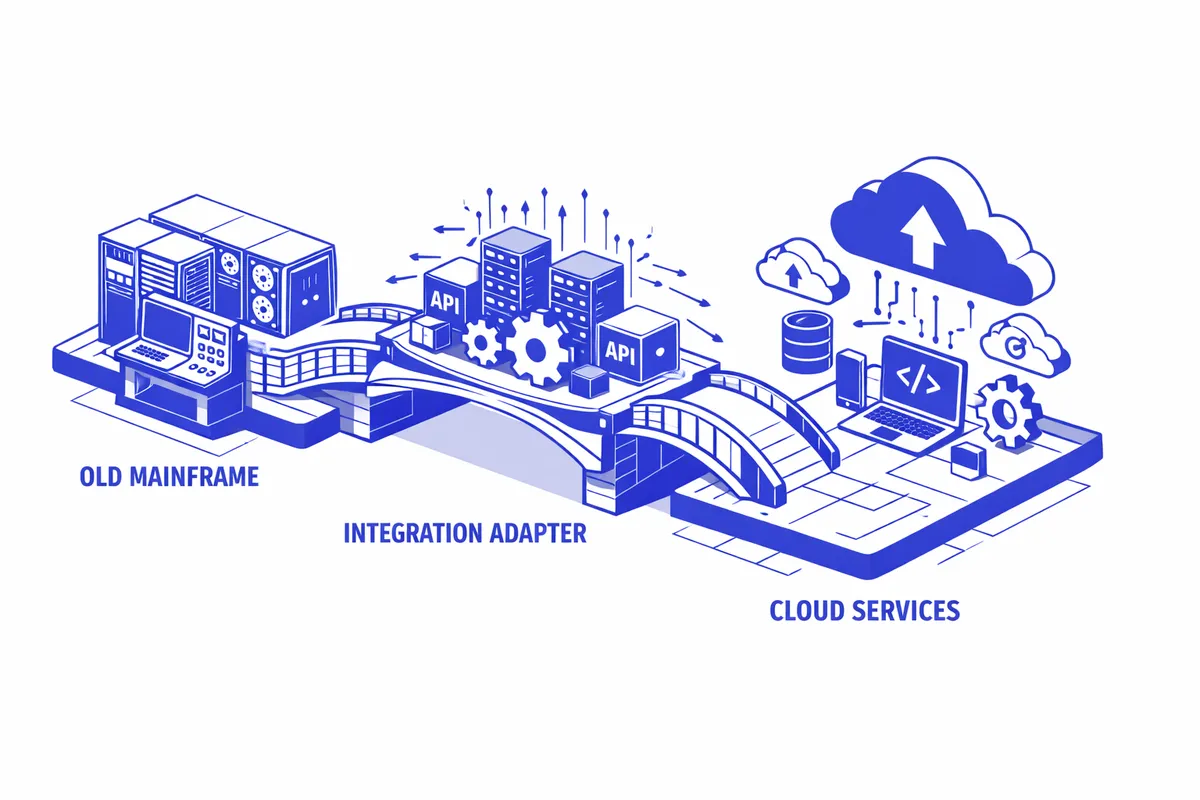
How We Build Legacy System Integration for Little Village
Legacy integration work begins with understanding exactly what the old system does and what it holds. We sit with the person at your business who knows the system best, often the owner or a long-term employee, and document every function your team relies on. We then examine what data the system stores, what format that data is in, and what options exist for extracting it.
Most legacy systems we work with in Little Village fall into a few categories: older point-of-sale systems with proprietary database formats, accounting software that predates cloud-based tools, custom-built databases created for a specific business need, and industry-specific software that was the standard for a sector ten years ago and has not been updated significantly since. Each category has its integration patterns, and we apply the appropriate approach based on what we find.
The integration work itself involves writing extraction scripts or connectors that pull data from the legacy system on a defined schedule, transforming that data into the format the receiving system expects, and loading it into the destination without corrupting either system's records. For bidirectional integrations where data needs to flow both ways, we build conflict resolution logic so that changes in one system do not overwrite legitimate changes made in the other.
For Little Village businesses where the legacy system is also the primary Spanish-language data store, character encoding and language handling are part of the integration work from the start. Spanish text with accent marks stored in an older format needs to be handled correctly as it moves to modern systems that use different encoding standards.
Industries We Serve in Little Village
Family grocers near the Little Village Arch often have inventory and pricing systems built over many years that contain product data, vendor history, and pricing records that represent significant institutional knowledge. Legacy integration connects that product database to a modern POS system and e-commerce platform so the accumulated data becomes usable in current operations without the risk and cost of migrating everything to a new platform from scratch.
Auto shops and parts dealers along Kedzie Avenue running older shop management software that holds vehicle service histories going back a decade or more can connect that history database to modern scheduling and customer communication tools. A customer who has been coming to your shop for eight years on Kedzie Avenue should have their full service history visible when they call, even if that history lives in a legacy system. Integration makes that visibility possible without requiring a full system replacement.
Mexican restaurants with established operations on 26th Street that have been managing catering and event records in older booking software or spreadsheet-based systems can connect those records to modern CRM and customer communication platforms. The customer relationships built over years of event catering are preserved while the tools used to manage them are upgraded.
Quinceañera retailers and bridal shops near Pulaski Road with order history databases spanning decades of client relationships can connect those older records to modern customer portals and marketing automation tools. A client who had their quinceañera at your shop ten years ago and now has a daughter approaching quinceañera age should receive a targeted communication. Legacy integration makes that outreach possible without requiring a full database migration.
Immigration services offices on California Avenue that have been managing case records in older practice management software can connect those records to modern client communication tools and reporting systems. Client data accumulated over years of practice is the firm's most valuable asset. Integration preserves that asset while allowing the firm to use modern communication and reporting tools that older software does not support.
Community organizations near Piotrowski Park with program data stored in older database systems required by early funders can extract and connect that data to current reporting tools. Grant reporting that required manual data extraction and spreadsheet compilation from a legacy database can be automated through integration that pulls the required data on a schedule and formats it for the funder's current reporting requirements.
What to Expect Working With Us
1. Legacy system audit and documentation. We meet with the person who knows your legacy system best and document exactly what it does, what data it holds, and what your team depends on it for. We examine the technical options for data extraction and connection before recommending an approach.
2. Extraction method selection and testing. Based on what we find, we select and test the extraction approach that is most stable for your specific legacy system. We test against a copy of your data before connecting to the live system to ensure the extraction does not disrupt your current operations.
3. Integration build and validation. We build the integration in stages, validating each data type before moving to the next. You confirm that the data arriving in the destination system matches what you expect from the source before we enable automated ongoing transfers.
4. Monitoring and drift management. Legacy systems sometimes change unexpectedly, particularly when they receive OS updates or when hardware is replaced. We monitor the integration for data quality drift and notify you when something changes in the source system that requires adjusting the extraction logic.