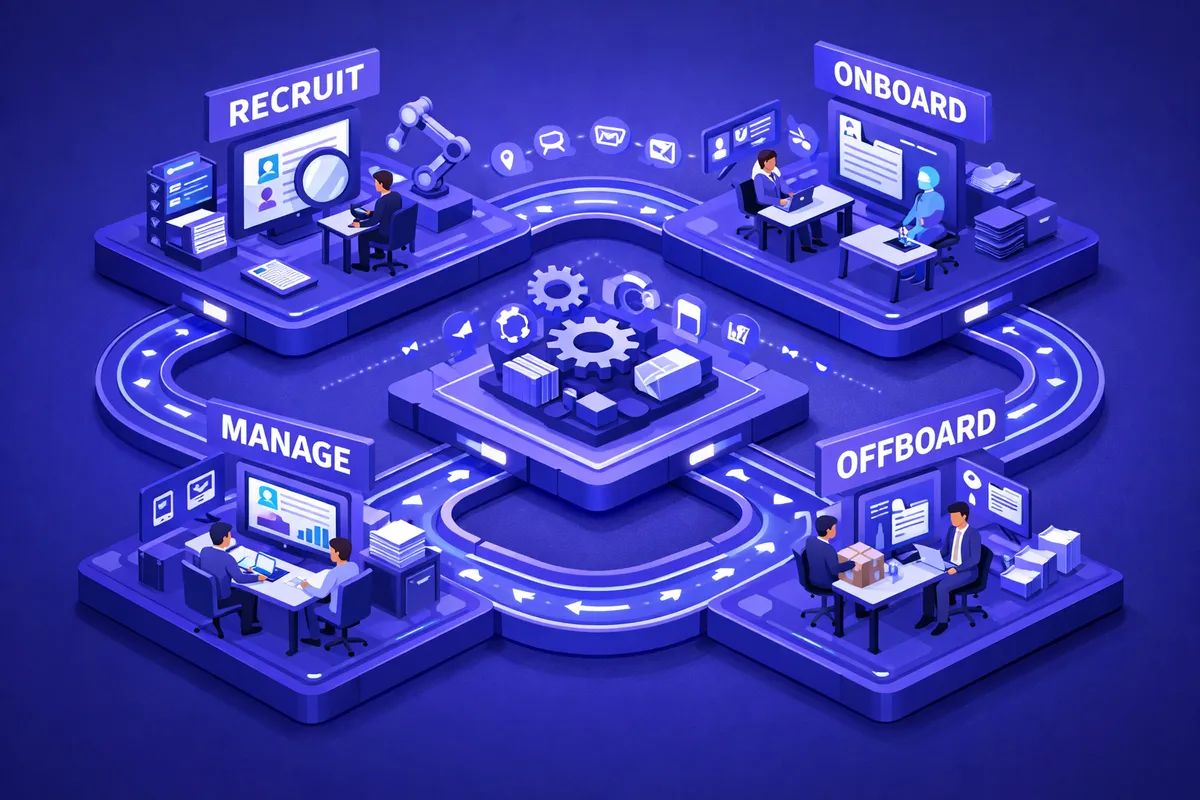
How We Build HR Automation for Little Village
Little Village employers need HR automation that is practical for an immigrant-owned business environment, not a system designed for a corporate HR department. We begin with a discovery process conducted in a way that meets you where you are: understanding your current workforce management practices, the compliance areas creating the most risk, and the administrative work consuming the most time.
Spanish-language workflow configuration is a standard component of every Little Village build. We configure employee-facing onboarding and self-service workflows to deliver in Spanish for workers whose primary language is Spanish. Document templates are translated. Policy acknowledgment workflows communicate in the correct language. For employers in Pilsen, on the adjacent Southwest Side, or serving the same workforce pool, this capability applies across the broader Mexican American commercial corridor.
I-9 management automation is typically the first build priority for Little Village employers. We configure tracking for every employee with a work authorization document, including expiration dates and re-verification deadlines, with reminders at 90, 60, and 30 days. Records are maintained in a format that supports employer compliance review. For employers who have managed I-9s informally, this system creates the documentation infrastructure that protects against audit exposure.
Payroll integration connects HR automation to the payroll systems most common among Little Village small businesses: Gusto, ADP Run, and Square Payroll. Automated accrual tracking for Chicago's paid sick leave ordinance runs continuously, handling the calculation burden that manual spreadsheets handle inconsistently for hourly and variable-hour workers.
Industries We Serve in Little Village
Mexican Restaurants and Panaderias: The 26th Street food corridor employs kitchen staff, service workers, and counter staff with shift scheduling complexity, tipped-wage compliance, and high onboarding volume from frequent turnover. Automated onboarding in Spanish, Chicago paid sick leave compliance tracking, and scheduling integration reduces the administrative burden for owner-operators managing the floor alongside HR responsibilities.
Quinceanera Retailers and Specialty Boutiques: The retail corridor near the Little Village Arch employs sales staff, seamstresses, and alterations professionals with part-time and full-time employment structures, seasonal demand spikes during quinceanera season, and benefits compliance requirements. Automated onboarding and scheduling handles the demand fluctuation without requiring manual administration at each hiring cycle.
Auto Shops and Contractors: Auto body and repair shops along Pulaski Road and California Avenue employ mechanics and service staff with hourly compensation, overtime tracking requirements, and tool allowance documentation. Automated time tracking and payroll integration handles the overtime calculations and compliance documentation that manual administration misses under volume.
Family Grocers and Bodegas: Independent grocery operations serving the Little Village residential community employ stocking staff, cashiers, and deli workers with Chicago paid sick leave obligations and scheduling complexity across operating hours. Automated accrual tracking and scheduling integration reduces the administrative burden for store managers.
Immigration Services and Community Clinics: Community service providers along Cermak Road and California Avenue employ case managers, healthcare workers, and administrative staff with nonprofit-specific HR workflows and compliance requirements. Automation delivers the same efficiency for community service employers as for commercial businesses, handling onboarding, compliance tracking, and benefits enrollment systematically.
Family Grocers and Food Businesses: The family-run food businesses serving the Little Village community, from tortillerias near Our Lady of Tepeyac to the panaderias along 26th Street, employ production and counter staff with part-time and variable schedules. Chicago's paid sick leave accrual runs on hours worked, which means a bakery with six part-time employees has six separate accrual calculations to manage per pay period. Automation handles all six without additional administrative work.
What to Expect Working With Us
1. Discovery and Compliance Assessment: We document your workforce structure, current HR practices, and compliance obligations. For Little Village employers, we specifically assess I-9 management, paid sick leave tracking, and onboarding language accessibility as the three highest-priority areas. We identify the compliance gaps creating the most regulatory exposure and the administrative processes consuming the most owner-operator time.
2. Bilingual Configuration and Workflow Design: We configure onboarding workflows, policy delivery, and employee-facing self-service in Spanish for workforces where Spanish is the primary language. Document templates are translated. Acknowledgment workflows confirm receipt in the correct language. I-9 management is configured with expiration tracking and reminders for every temporary work authorization holder.
3. System Integration and Payroll Connection: We connect HR automation to your payroll platform and scheduling tools. For Little Village businesses using Gusto, Square Payroll, or ADP Run, integration is a standard build component. Chicago paid sick leave accrual runs automatically through payroll integration, eliminating the manual calculation that creates compliance gaps.
4. Launch, Training, and Post-Launch Support: We train your administrative staff in Spanish where requested and provide documentation in the language your team uses. We provide 30 days of post-launch support. For Little Village employers implementing HR automation for the first time, we take a hands-on approach to launch that ensures your team is comfortable operating the system before we step back.