How We Build Employee Portals for Little Village
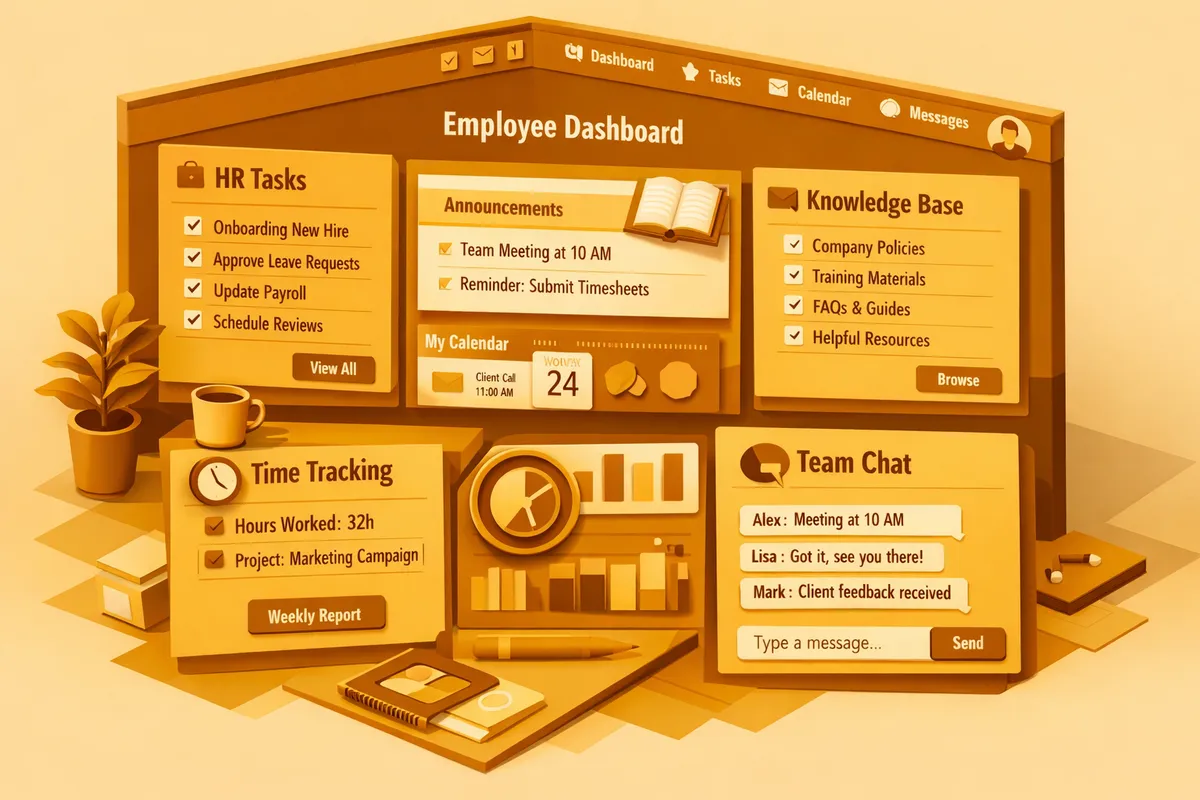
The first design decision for any employee portal in Little Village is language: which employees will use it, and in what language do they work? For most corridor businesses, the answer is a Spanish-first interface with English available as a secondary option. We build the portal in Spanish as the primary language, not as a translation of an English original. Navigation labels, status messages, notifications, and document titles are written in Spanish first and reviewed by a fluent Spanish speaker before deployment.
We then design around the specific features your business needs. Scheduling and shift management is almost always the highest-value first feature: the ability for employees to see their schedule, request changes, and receive updates through a channel other than a phone call from the owner. Document access, particularly for onboarding documents, training materials, and compliance records, is the second most common high-value feature for corridor businesses.
Mobile-first design is non-negotiable. The majority of the Little Village workforce accesses digital tools on smartphones, often mid-range Android devices, on mobile data connections. The portal loads quickly on slower connections, works without installing an app, and displays correctly on small screens. A portal that requires a laptop to use is not accessible to the workforce it is meant to serve.
We build simple administrative dashboards for owners and managers that let them manage the portal without technical support. Updating a schedule, adding a new employee, uploading a document, or sending a notification to a specific team member are all tasks the owner can handle directly without calling us.
Industries We Serve in Little Village
Mexican restaurants and taquerias along 26th Street staff kitchen and front-of-house teams on rotating schedules that change with event catering commitments and seasonal volume. An employee portal gives kitchen staff access to their weekly schedule, shift swap requests, and any schedule changes as soon as they are made by the manager. During Día de los Muertos catering season, when staffing decisions change frequently, having a single source of truth for the current schedule prevents the double-bookings and missed shifts that result from managing scheduling through informal communication.
Quinceañera retailers and event service providers near Pulaski Road staff up during peak season and need to track certifications, training completion, and role-specific qualifications for seasonal employees. A portal with document management capabilities lets managers track which employees have completed fittings training, which have access to the custom order management system, and which certifications are due for renewal. That tracking happens passively through the portal rather than requiring the owner to maintain a separate spreadsheet.
Auto shops and service centers on Kedzie Avenue use employee portals to manage technician scheduling, track ASE certifications and renewal deadlines, distribute shop policy updates and safety documents, and process time-off requests through a documented channel. In a shop environment where a technician's specialty certifications determine which jobs they can be assigned, having a portal that surfaces certification status for each employee eliminates the manual tracking that shop managers currently do in their heads or on paper.
Family grocers and specialty food retailers near California Avenue with multiple departments and shift structures benefit from portals that separate scheduling by department, track food handler certification expiration dates, and let employees confirm their upcoming shifts without requiring floor manager involvement. Grocery operations with early morning receiving shifts and late-night closing shifts need scheduling communication that reaches employees outside of standard business hours, which a portal notification system handles automatically.
Immigration services and legal offices on Cermak Road with small but specialized teams use portals to manage continuing education tracking, distribute updated procedure documents, and maintain compliance records. For legal offices where staff responsibilities require specific training and where documentation of that training matters for professional standards compliance, a portal that tracks and surfaces that information saves significant administrative time.
Community organizations near Piotrowski Park with grant-funded programs need to track staff time against specific program budgets, distribute program-specific training materials, and maintain volunteer records alongside employee records. Employee portals for nonprofits in the corridor often include timesheet functionality tied to program codes so time tracking generates the documentation their funders require without a separate reporting step.
What to Expect Working With Us
1. Workforce language and device audit. We document the language preferences and device types of your actual workforce before making any design decisions. The portal is built for the people who will use it, not for a generic employee population. For most Little Village businesses, that means a Spanish-first, mobile-first design.
2. Phased rollout starting with scheduling. We recommend starting with scheduling and shift management as the first deployed feature. It delivers immediate, visible value to employees and establishes the habit of using the portal. Document management, compliance tracking, and other features are added once the core scheduling function is adopted.
3. Manager dashboard training. Owners and managers receive training on the administrative functions they will use daily: updating schedules, approving requests, sending notifications, and managing employee records. The training is conducted in the language you work in and documented for reference.
4. Adoption measurement and adjustment. In the first 60 days after launch, we monitor which features employees are using, where they are dropping off in the portal, and whether there are language or usability issues creating friction. We adjust before the first major use case arises at full scale, like the beginning of quinceañera season or a holiday staffing surge.