How We Build Customer Portals for Little Village
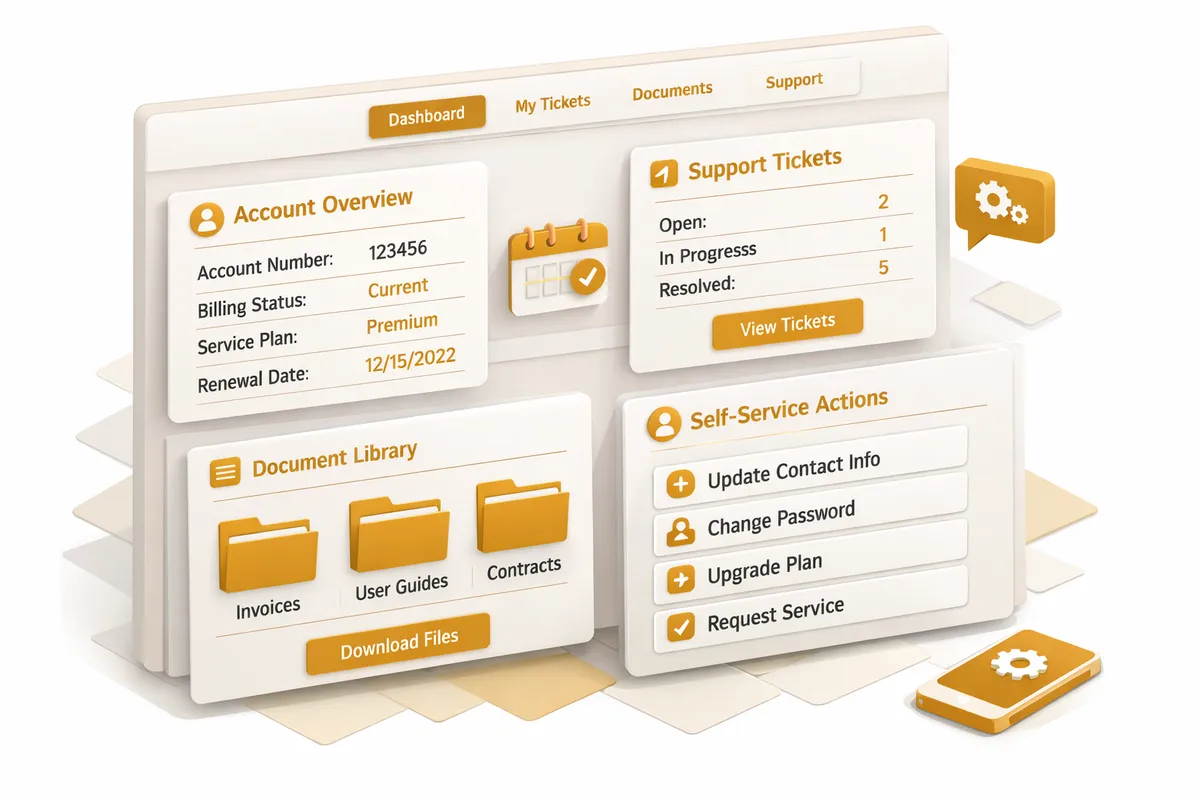
We start with the specific access use cases that drive the most customer inquiries to your staff. For most Little Village businesses, those are order or appointment status, document access, payment history and remaining balance, and account contact information. We scope the portal to those high-value use cases first rather than building a comprehensive platform before we have validated what customers will actually use.
Bilingual design is foundational for the Little Village corridor. The portal interface renders in Spanish or English based on the customer's language preference, which is set during account creation and changeable at any time. All status messages, notifications, and document labels appear in the selected language. We write portal content in natural Spanish rather than using automatic translation tools, and we review translations with bilingual staff members from the corridor when possible to catch phrasing that sounds machine-generated.
Security design reflects the nature of the information customers access. Portals handling payment information, medical records, or immigration case documents require more rigorous authentication than portals showing dress order status. We build the appropriate level of security for the information type without making the login experience unnecessarily cumbersome for customers on mobile devices.
We design portal experiences for the smartphone-first reality of the Little Village customer base. That means fast load times on mid-range devices, touch-friendly navigation, and notifications delivered via SMS or app notification rather than only through email. A portal that requires a desktop browser to use effectively is not serving this customer base.
Industries We Serve in Little Village
Quinceañera retailers and event planners along Pulaski Road serve families navigating a months-long purchase process across multiple appointments and payment milestones. A customer portal gives each family a real-time view of their order stage, upcoming appointment dates, alteration notes, and payment schedule. Families managing the logistics of a quinceañera on top of work and school schedules can check their order status at 10 PM without waiting for business hours. That access is a service quality improvement that customers notice and share.
Auto shops and service centers near Kedzie Avenue use customer portals to share repair status updates, inspection reports, service history, and approved estimate documents with vehicle owners in real time. A customer who can see that their transmission job is in progress and expected to be complete by 4 PM does not call twice to check. A returning customer who can pull up their service history before calling to schedule an appointment arrives informed and speeds up the intake process.
Mexican restaurants with catering programs on 26th Street use portals to give corporate and event clients access to their catering contract status, event timeline, menu confirmation, and payment schedule. A corporate client scheduling a company event can confirm menu selections and see their deposit confirmation through the portal rather than waiting for an email. That level of professional access is often the deciding factor when a corporate client is comparing catering vendors.
Family grocers and specialty food retailers near the Little Village Arch running loyalty programs can use a customer portal to show individual customers their point balance, available rewards, and transaction history. Regular customers who can check their loyalty status before they visit are more likely to plan a visit around reaching a reward threshold. Loyalty portals also let businesses communicate exclusive member specials without relying entirely on email open rates.
Immigration services offices on California Avenue can use client portals to share case status updates, document submission checklists, appointment schedules, and secure document exchange with clients. For clients managing stressful immigration cases, having direct access to their case status reduces anxiety and reduces the volume of status inquiry calls the office receives. Secure document upload through the portal also reduces the risk associated with sending sensitive documents by email.
Community clinics near Piotrowski Park use patient portals to provide appointment scheduling, intake form completion, care instructions, appointment history, and referral status in Spanish and English. Patients who complete intake forms before arriving reduce visit duration and administrative overhead. Patients who can see their appointment history and upcoming care recommendations through the portal have better continuity of care.
What to Expect Working With Us
1. Use-case scoping and priority ranking. We identify the specific customer inquiries that consume the most staff time and build the portal scope around eliminating those first. You do not invest in a comprehensive portal before validating that customers will use the most important features.
2. Bilingual content development. We write or review all customer-facing portal content in both Spanish and English, with native-quality phrasing in both languages. No auto-translation. We test with bilingual users from the corridor before launch to catch any language issues.
3. Mobile-first build and device testing. The portal is tested on the devices your customers actually use, including mid-range smartphones with varying levels of connectivity. Load times and navigation are optimized for mobile before desktop.
4. Staff training and adoption support. A customer portal creates value only if customers use it. We provide staff training on how to introduce the portal to customers at the point of sale, how to handle customer questions about the portal, and how to monitor adoption metrics so you can see what customers are using and adjust what you offer.