How We Build Custom ERP for Little Village
Discovery in Little Village starts with understanding the language of your operations. We conduct discovery sessions in Spanish or bilingual format with your ownership and operations teams, mapping every workflow from the perspective of the people who actually run the business day to day.
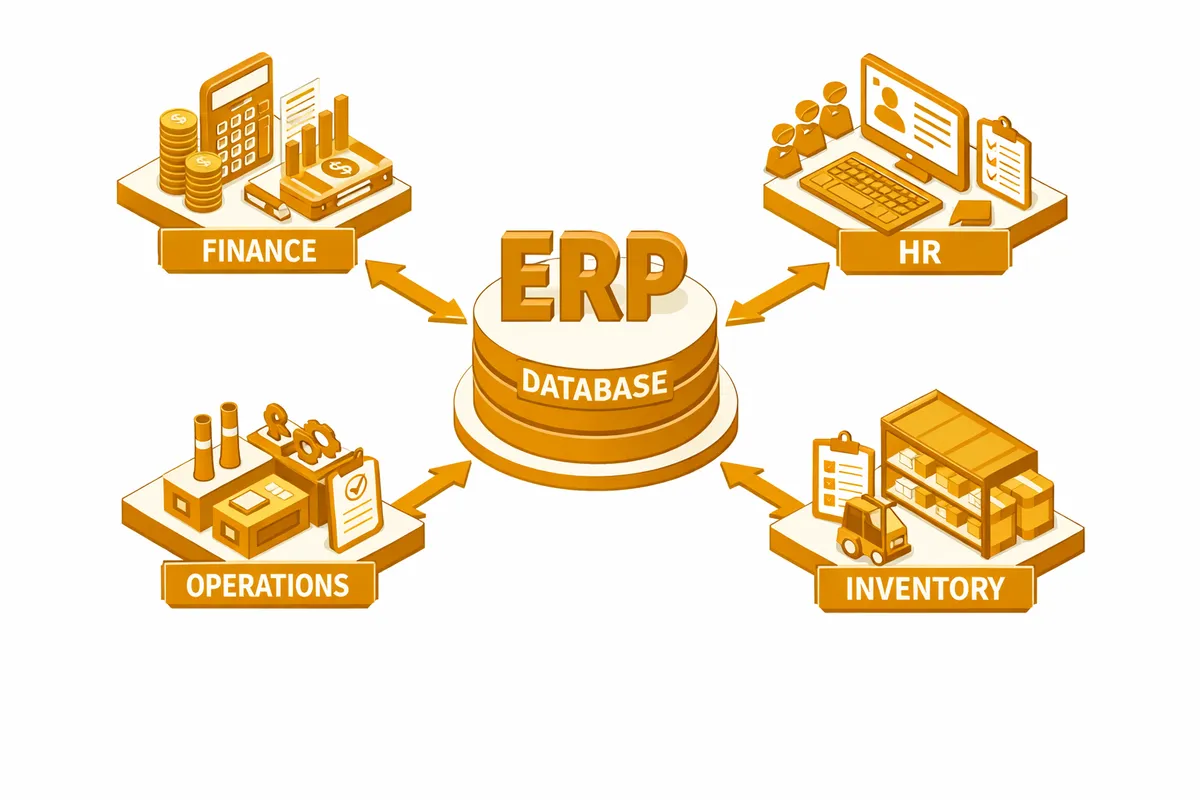
From discovery, we design the module structure and specify the bilingual interface requirements. For a panaderia or food manufacturer, the module architecture typically covers production planning, raw material purchasing, inventory management, order management for both retail and wholesale channels, and financial reporting. For a quinceañera retailer, it covers customer relationship management with multi-phase order tracking, inventory across product categories, event calendar management, and billing and payment scheduling.
Implementation is phased. The first production phase covers the highest-priority operational area, typically the part of the business where manual coordination between disconnected systems consumes the most staff time. Your team has working, bilingual software within twelve to eighteen weeks. Subsequent phases expand the platform without disrupting operations already running.
We design mobile interfaces for the operational roles that need them. Delivery drivers, production floor staff, and warehouse workers accessing the ERP from mobile devices get interfaces designed for their physical environment and their role, in the language they work in.
Industries We Serve in Little Village
Panaderias and wholesale food producers supplying restaurants and grocery accounts across the Southwest Side need ERP that connects production scheduling, raw material purchasing, inventory, and multi-channel order management. The Little Village Chamber of Commerce corridor includes several businesses at exactly this scale of operation.
Quinceañera and event retailers managing complex multi-month orders spanning product sourcing, inventory commitments, event coordination, and payment schedules need a customer management system built around the lifecycle of each order, not a simple point-of-sale transaction.
Family grocery stores and supermercados on Pulaski Road and California Avenue managing perishable inventory, multiple vendor relationships, and mixed family and hourly labor need ERP that handles the operational complexity of a full grocery operation without requiring the overhead of enterprise retail software.
Auto shops and service businesses on Cermak Road and the surrounding streets manage parts inventory, job scheduling, technician time tracking, and customer communication across tools that rarely connect. A custom ERP integrates these into one operational platform for automotive service.
Immigration services and professional practices serving Little Village's community manage multilingual client relationships, document workflows, deadline tracking, and compliance filings. A purpose-built practice ERP handles these requirements with the bilingual client communication Little Village practices need.
Community clinics and health services near Our Lady of Tepeyac and along Kedzie Avenue manage patient records, appointment scheduling, billing, staff management, and funder compliance in systems that generate significant administrative overhead. A custom ERP consolidates these operations.
What to Expect Working With Us
1. Discovery in your language. Two to three weeks of structured sessions with your ownership and operations teams, conducted in Spanish or bilingual format. We map every workflow the way your team actually runs it, not the way a generic software vendor assumes it works.
2. Bilingual architecture and module design. We design the module structure, bilingual interface specifications, and phased delivery plan. You review and approve in the language you prefer before any development begins.
3. Phased delivery. Your most critical operational area goes live first, within twelve to eighteen weeks. Each subsequent phase adds capability without disrupting the foundation already running.
4. Launch and ongoing support. Post-launch monitoring, staff training in Spanish or bilingual format, and a warranty period for issues found during the first months of use. Maintenance retainers available for feature additions as your business grows.