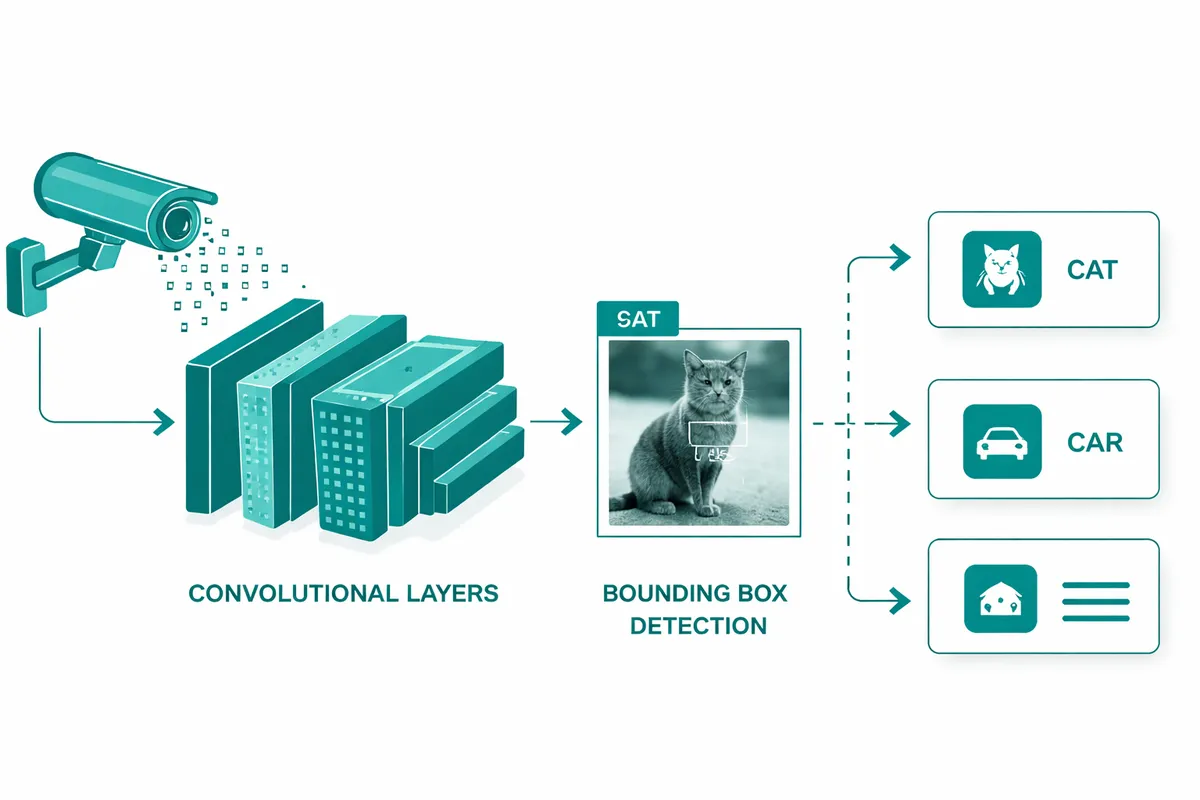
How We Build Computer Vision for Little Village
We begin with a quality standards documentation session with the owner or head of production. We capture the visual reference for "correct" across each product or process category the system will monitor. For a taqueria, this means photographing correctly prepared carnitas, properly assembled tacos, accurate portion sizes, and correct plate presentation. For a panaderia, it means photographing correctly baked pan dulce at different stages, properly packaged product, and acceptable versus unacceptable coloration ranges. For a retailer, it means photographing correctly organized inventory, properly tagged products, and the display standards the store wants maintained.
We install cameras at the monitoring points most relevant to quality and inventory control. For food production businesses, this typically means cameras over cooking stations and prep surfaces, in walk-in coolers and storage areas, and at the point where product is packaged or plated. We position cameras to capture the relevant quality signals without creating privacy concerns for staff. The focus is on the product and the process, not on individual worker surveillance.
We train the computer vision models on your specific quality standards using the reference photographs from the documentation session and examples of common deviations. Training typically requires two to four weeks of calibration against real production batches, during which we refine the model's accuracy and reduce false positives to a level that does not create alert fatigue for the production team.
We configure alert delivery through whatever channel your team monitors most consistently: a display screen in the kitchen, a text message to the manager on duty, or a notification in a messaging app. The alert format is specific and actionable: "Batch 3 carnitas: coloration above range, check heat level" rather than a generic quality warning.
Industries We Serve in Little Village
Mexican restaurants and taquerias along 26th Street use computer vision for plate consistency monitoring, ingredient quality inspection at receiving, and portion control verification. A taqueria that plates two hundred orders on a busy Friday night benefits from a system that flags plates assembled outside standard, whether due to portion variance, missing garnish, or presentation deviation, before they leave the kitchen.
Panaderias and specialty bakeries near Our Lady of Tepeyac and Piotrowski Park use computer vision for batch quality monitoring throughout the production process, expiration and freshness tracking in retail and storage areas, and packaging quality verification for wholesale accounts. A panaderia that delivers to thirty restaurant accounts cannot afford a batch of sub-standard product reaching a wholesale customer, and a computer vision system monitoring the packaging line catches quality issues before they leave the building.
Quinceanera and formal wear retailers on 26th Street use computer vision for incoming inventory inspection, checking that dress deliveries match order specifications for color, size, and condition before the customer appointment. A retailer that catches a mismatched color on a dress delivery before the fitting appointment saves the customer experience rather than discovering the discrepancy during the appointment.
Family grocers and specialty food importers on Pulaski Road use computer vision for shelf inventory monitoring, freshness tracking, and receiving inspection. A grocery that can see in real time which sections are running low and which items are approaching sell-by date reduces both stockout incidents and shrinkage from expired product simultaneously.
Auto repair shops and service centers on California Avenue use computer vision for parts inventory monitoring, ensuring that commonly needed parts are restocked before they run out rather than discovering the gap mid-service. Visual inspection tools also support technician quality checks on completed work, particularly for shops that are building a multi-technician operation where the owner is not directly supervising every vehicle.
Prepared foods businesses and caterers operating out of kitchen facilities near Cermak Road use computer vision to maintain production standards when catering events require output at a scale the owner cannot personally oversee. A caterer producing a hundred plates for a quinceanera celebration needs every plate to meet the same standard, and computer vision monitoring at the plating station provides that consistency verification.
What to Expect Working With Us
1. Quality standards documentation. We spend two to four hours with the owner or head of production documenting the visual quality standards for each product or process category the system will monitor. We capture photographic references for correct standards and common deviations. This documentation becomes the training foundation for the computer vision models.
2. Camera installation and system setup. We install cameras at the agreed monitoring points, configure network connectivity, and set up the management dashboard. Installation at a single-location food business typically takes one to two days. We position cameras to capture the relevant quality signals and test image clarity and coverage before training begins.
3. Model training and calibration. We train the computer vision models on your quality standards using the reference photographs and real production batches during the calibration period. We review alerts generated during calibration with your team to refine accuracy and reduce false positives. Most systems reach operational accuracy within three to four weeks of calibration.
4. Live monitoring and expansion. We deploy the system to live monitoring and provide your team with training on the alert interface and management dashboard. We monitor system performance in the first thirty days and make adjustments based on real-world conditions. As your business expands to additional locations, we extend the system to the new facility using the same trained models, with location-specific calibration where needed.