How We Build Business Process Automation for Little Village
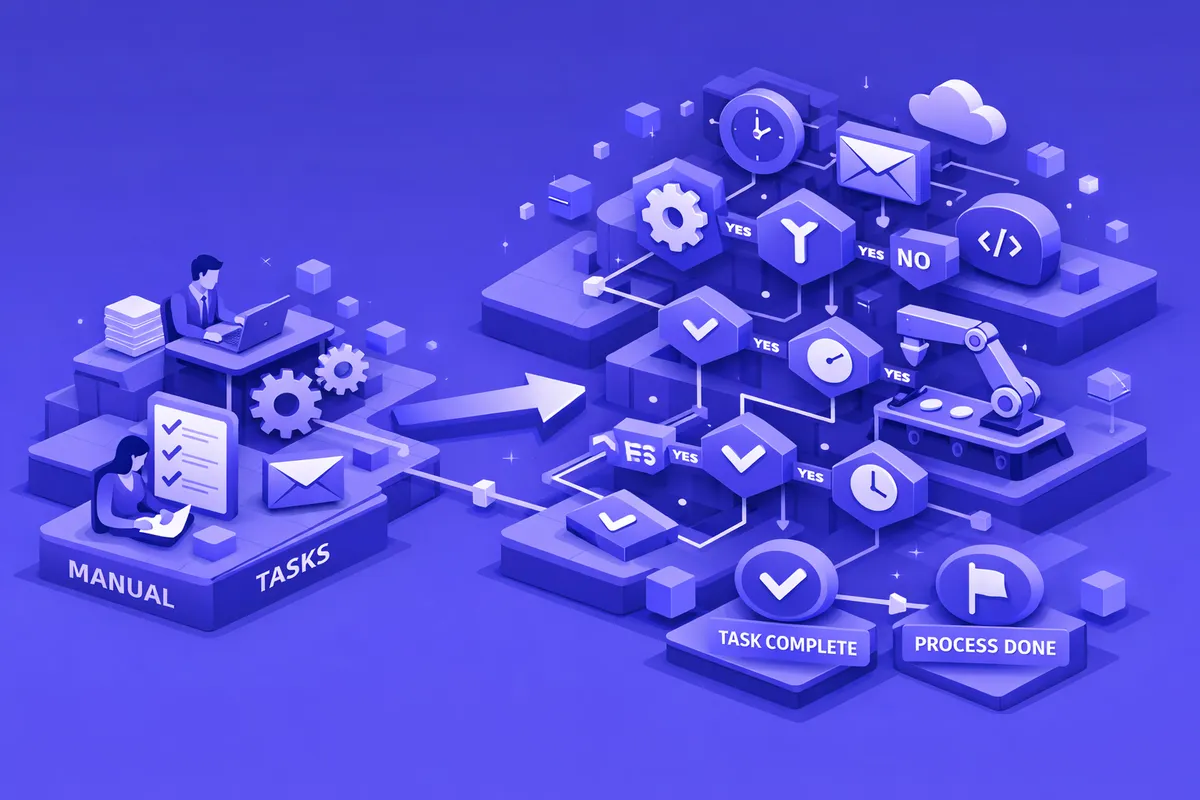
We start by mapping the repetitive tasks that consume your team's time. Not the work that requires judgment or relationship, but the sequences that happen the same way every time: send this message when a deposit clears, move this order to this stage when an appointment is completed, notify the owner when inventory drops below this threshold, send a review request three days after a transaction closes. These are the processes automation replaces.
For Little Village businesses, that mapping often happens partly in Spanish. We document your workflows in the language your team uses internally, which tends to produce a more accurate map than translating everything to English first. We also account for the specific sequences your business runs on: the quinceañera order lifecycle, the catering inquiry-to-booking pipeline, the weekly specials cycle for a grocer, the repair estimate-to-completion sequence for an auto shop near Kedzie Avenue.
We build automation using the tools that fit your current stack rather than requiring you to adopt new platforms. Where you already have a booking tool, a POS system, or a customer database, we build automations on top of those systems. Where you need a new tool to enable a specific process, we recommend the simplest option that solves the problem, not the most sophisticated option on the market. Automation that nobody on your staff can maintain or understand is automation that eventually breaks and stays broken.
Every automation includes a way for your team to see what it is doing: a log of sent messages, a dashboard of triggered sequences, an alert when something fails. You should never have to wonder whether an automation ran.
Industries We Serve in Little Village
Quinceañera retailers and planners along Pulaski Road manage the most sequenced order lifecycle in the corridor. A single order requires deposit confirmation, fitting scheduling, alteration status tracking, pickup notification, and post-event follow-up. Automating that sequence means every customer receives consistent communication at every stage without a staff member manually tracking each order's position in the timeline. At peak season volume, that consistency is impossible to maintain manually.
Mexican restaurants and taquerias on 26th Street use automation for catering inquiry follow-up, reservation confirmation and reminder sequences, online review request timing, and staff scheduling notifications. When a catering inquiry comes in and does not receive a response within four hours, an automated escalation alerts the owner directly. When a table reservation is confirmed, an automated reminder goes out 24 hours before. These sequences happen whether or not the owner is standing at the counter.
Auto shops and service centers near Kedzie Avenue benefit most from automations around repair status updates, parts arrival notifications, appointment reminders, and post-service review requests. Customers waiting for a repair on their vehicle want updates without having to call. Automating those status messages reduces incoming calls while improving customer satisfaction. Follow-up messages sent automatically three days after a repair is completed generate reviews and repeat bookings without anyone on the shop team remembering to ask.
Family grocers and specialty retailers near the Little Village Arch run weekly specials cycles that involve updating suppliers, notifying regular customers, and adjusting signage across channels. Automation can trigger supplier reorder requests when specific SKUs drop below a set quantity, send SMS notifications to loyalty program members when new specials are posted, and update the website and in-store display content simultaneously. The specials cycle that used to require manual attention every week runs itself.
Immigration services offices on California Avenue manage intake sequences that involve document checklists, appointment confirmations, case status updates, and deadline reminders. Automating these sequences reduces the administrative burden on staff while improving the experience for clients who often have anxiety around their case timelines. A client who receives an automatic status update when their application advances to a new stage calls the office less and feels more confident in the process.
Community clinics and health organizations near Piotrowski Park run appointment reminder sequences, follow-up care notifications, and preventive screening reminders that generate real health outcomes when executed consistently. Automating these sequences means every patient on the recall list receives their reminder regardless of whether the front desk staff had time to make calls that day. For clinics serving populations with barriers to consistent healthcare access, automated outreach is a public health intervention.
What to Expect Working With Us
1. Process mapping and priority ranking. We map every repetitive task your team performs and rank them by time consumed and error frequency. The highest-volume, highest-error-rate processes become your first automation targets. You leave this phase with a clear picture of what automation will actually change about your week.
2. Build on your existing tools. We configure automations using the software your team already uses wherever possible. If you have a booking tool, a POS system, or a customer list in a spreadsheet, we build on top of what you have rather than asking you to adopt a new platform before you see results. New tools only enter the conversation when your current stack genuinely cannot support a needed sequence.
3. Bilingual trigger and message configuration. For Little Village businesses communicating with customers in both Spanish and English, we configure automation triggers and message templates in both languages. A customer who books an appointment through your Spanish-language site receives confirmation in Spanish. A customer who books through the English site receives confirmation in English. The automation handles the routing without staff involvement.
4. Testing during a live period and handoff. We run every automation in a test environment before enabling it with real customer data, and we monitor the first live period closely for edge cases. After handoff, your team can see what every automation is doing and disable any sequence that is not behaving as expected. You are never locked into an automation you cannot turn off.