How We Build Autonomous Workflow Agents for Little Village
We start by mapping the workflows in your business that are repetitive, defined, and currently handled manually. For most Little Village businesses, this mapping surfaces three to six processes that account for a significant portion of administrative time: supplier invoice processing, customer inquiry follow-up, appointment reminder sequences, inventory reorder triggers, social media scheduling, and review response routing are common candidates. Each candidate is evaluated for automation feasibility and expected time savings.
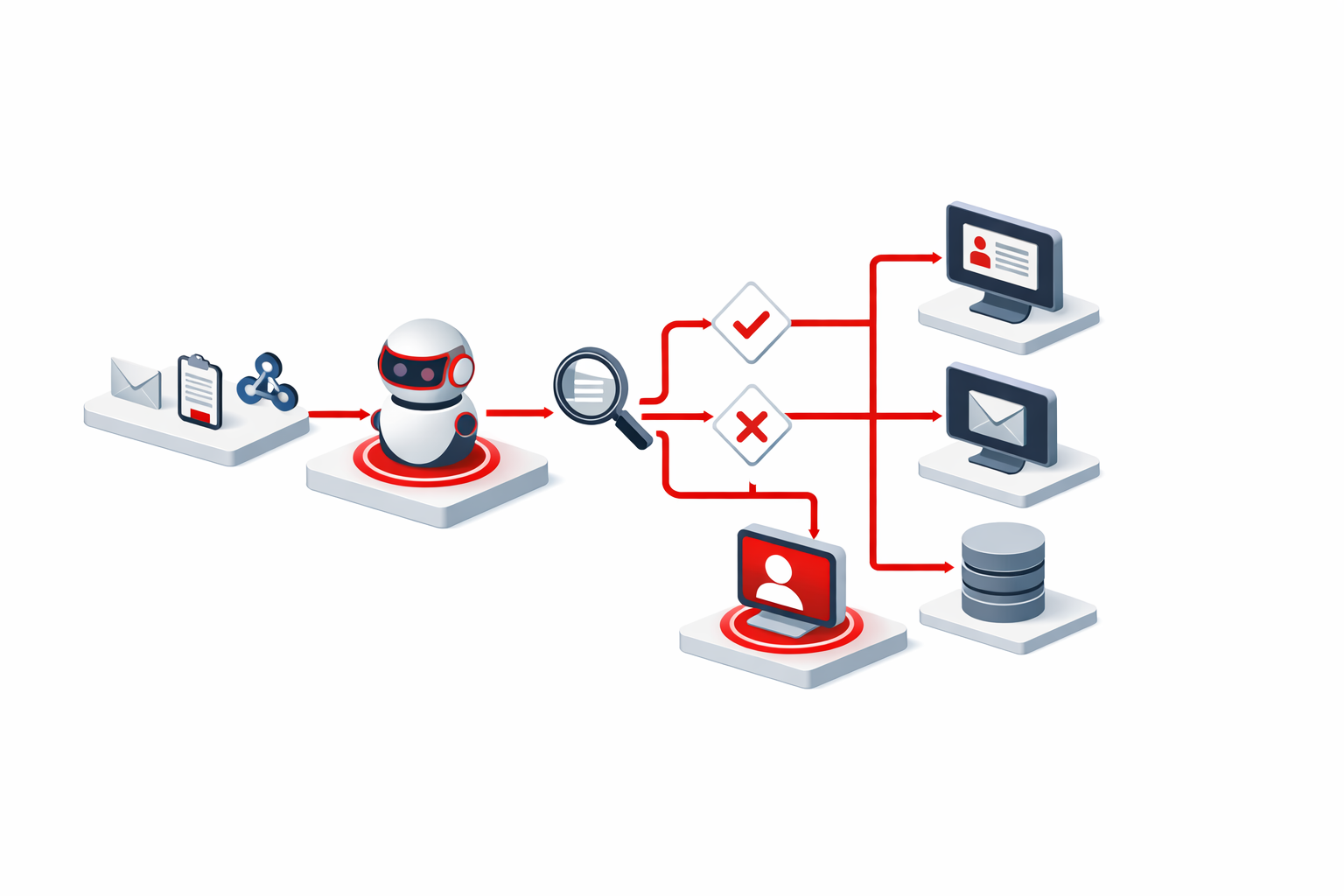
For each workflow selected for automation, we design the agent: the trigger that initiates it, the steps it executes, the decisions it can make autonomously, and the situations where it escalates to a human. Design is documented in plain language before any technical work begins. You review and approve the design, and we address questions about how the agent will behave before building it.
Agent implementation connects the tools in your existing technology environment: the email system, the scheduling tool, the POS, the accounting software, the social media platforms. Most autonomous workflows can be built on integration platforms that connect these tools without custom software development. The agent runs on the integration platform, triggering on the conditions you define and executing the steps in the approved design.
Testing is conducted against real business scenarios before launch. Every agent is tested in multiple scenarios, including edge cases and failure conditions, to confirm it behaves correctly before handling live business workflows.
Industries We Serve in Little Village
Restaurants and taquerías on 26th Street and California Avenue benefit from agents that handle daily specials posting to social media, delivery platform menu updates when items sell out, supplier invoice processing, customer review routing to the appropriate response, and catering inquiry follow-up sequences. For a busy restaurant where the owner is on the floor during service, autonomous agents that handle these workflows without requiring attention during service hours have immediate operational impact.
Quinceañera boutiques and event businesses near La Villita Park and the Little Village Arch benefit from agents that manage the consultation booking workflow: inquiry received, appointment confirmation sent in Spanish and English, reminder sent 48 hours before the appointment, and post-consultation follow-up message sent if no booking occurs within three days. Each step in this sequence is a task that currently requires manual attention from a small team.
Carnicerías and specialty grocers near Piotrowski Park and California Avenue benefit from agents that monitor inventory levels and trigger reorder requests to suppliers when specified products fall below threshold, match incoming supplier invoices to purchase orders, and flag discrepancies for human review. Inventory and invoice automation directly reduces the shrinkage and accounting errors that affect margins for perishable food businesses.
Auto repair businesses on Pulaski Road and Cermak Road benefit from agents that send service reminder messages to customers approaching their typical service interval, confirm appointments via bilingual text, route review requests to satisfied customers after completed service visits, and process supplier parts invoices. For shops where the service advisor is managing multiple vehicles simultaneously, autonomous agents for customer communication prevent the dropped follow-ups that cost repeat business.
Health and wellness practices near Our Lady of Tepeyac Parish benefit from agents that send appointment reminders in Spanish to Spanish-speaking patients, route new patient inquiries through a standard intake sequence, and deliver post-visit satisfaction surveys. Autonomous appointment reminder sequences reduce no-show rates at community health practices, which affects both patient outcomes and practice revenue.
Legal and immigration services near Pulaski Road serving Spanish-speaking clients benefit from agents that manage initial inquiry routing, document collection request sequences, and deadline reminder workflows for clients with pending cases. For immigration practices with complex case management, autonomous agents that handle the communication sequences that do not require attorney attention free the legal team for the work that does.
What to Expect Working With Us
1. Workflow mapping and prioritization. We map the repetitive, defined workflows in your business and prioritize them for automation based on time impact and feasibility. The mapping session is conducted in Spanish, English, or both, depending on your preference.
2. Agent design and review. We design each agent in plain language, documenting the trigger, steps, autonomous decisions, and escalation rules. You review and approve the design before any technical work begins.
3. Build, test, and launch. We build the agent, test it against real business scenarios, and launch it into your live operations. Launch is staged: we run the agent alongside manual processes initially to confirm it is behaving correctly before fully replacing the manual workflow.
4. Monitoring and maintenance. We monitor agents on an ongoing basis, addressing failures, updating workflows when business processes change, and identifying new automation opportunities as they arise.