How We Build API Integration Services for Little Village
Discovery for integration projects starts with a full map of the tools you are currently using and the data flows you are managing manually. We sit with your team, often at the counter or in the back office of your 26th Street business, and trace every place where information moves from one system to another by human effort. That manual transfer is what we are replacing.
We then identify which integrations will produce the most immediate operational relief. For most Little Village small businesses, the highest-value first integrations are between the POS system and inventory management, between the customer booking tool and the notification system, and between the payment processor and the accounting software. We prioritize by impact rather than technical complexity.
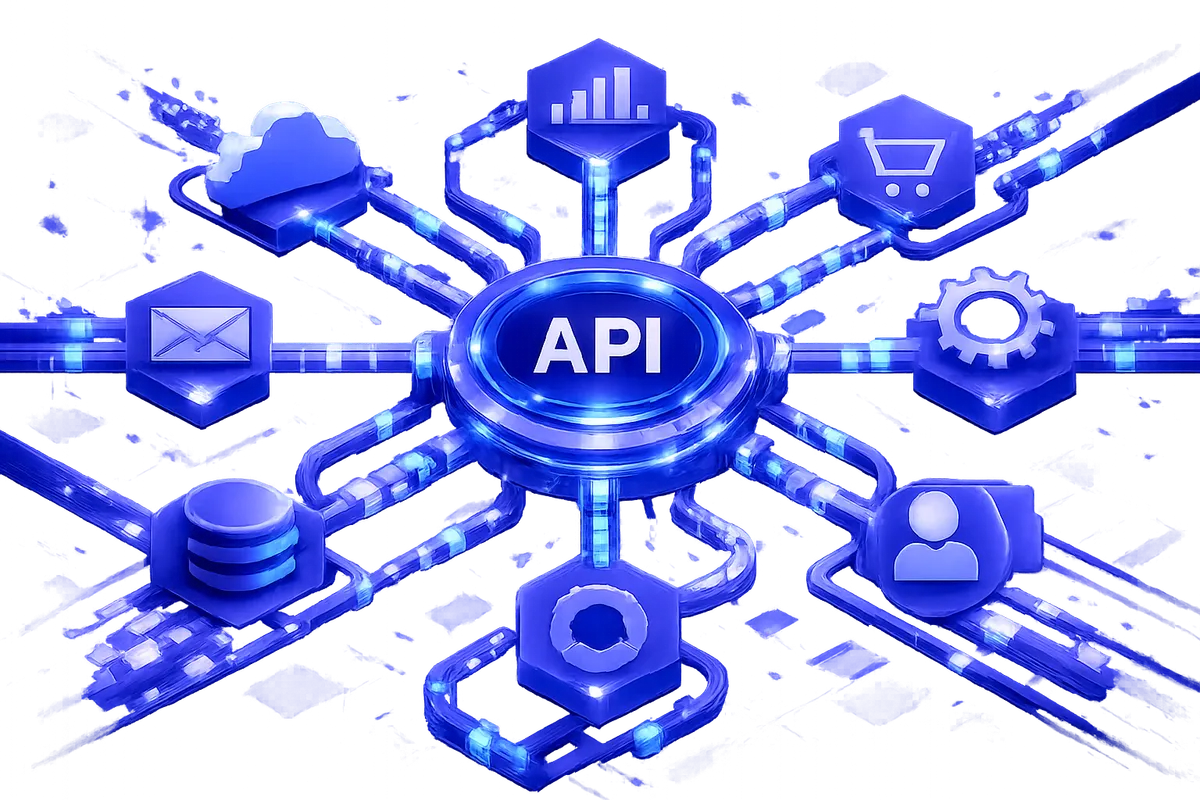
Integration work involves writing code that calls the APIs of your existing software tools, translating data between systems that use different formats, handling error cases where one system is temporarily unavailable, and logging every transaction so you can troubleshoot if something does not transfer as expected. We do not recommend replacing systems you depend on unless the integration path is genuinely blocked. The goal is to connect what you have, not to rebuild from scratch.
We test integrations against realistic data volumes, including the peak loads of quinceañera season or holiday rush periods, before we consider the work complete. An integration that works fine for ten orders a day but breaks at fifty is not done. We deliver integrations that hold under the actual pressure your business applies.
Industries We Serve in Little Village
Quinceañera retailers and event coordinators along Pulaski Road manage a complex chain of vendor orders, customer deposits, fitting appointments, alteration timelines, and pickup scheduling that touches multiple software tools. API integration connects those tools so a confirmed appointment updates inventory hold status, triggers a deposit payment request, and adds the order to the alteration queue without any manual handoff between steps. Coordinators working at peak season capacity cannot afford the overhead of doing that manually for every order.
Family-owned restaurants and taquerias on 26th Street increasingly run online ordering alongside table service, and the friction between those channels is often a direct source of revenue loss. When an online order comes in through a third-party platform but inventory is only tracked in the POS system, the result is orders for items that are sold out, manual cancellations, and frustrated customers. Integration between the ordering platform and POS keeps availability current without requiring staff intervention after every sale.
Auto shops and auto service centers near Kedzie Avenue manage parts ordering, labor scheduling, and payment processing across tools that rarely talk to each other out of the box. Integration between the parts ordering system and the scheduling tool means a technician's queue updates automatically when a part arrives. Integration between the service completion record and the payment processor sends the customer an invoice automatically. These connections eliminate the administrative overhead that keeps shop owners away from the shop floor.
Family grocers and specialty food retailers near the Little Village Arch run weekly specials cycles that require updating prices and availability across the website, in-store signage systems, and loyalty program tools. Manual updates across three systems are slow and inconsistent. Integration means a single specials update propagates everywhere simultaneously, and inventory depletion from weekend sales updates the following week's order quantities automatically.
Immigration services and legal offices on California Avenue use appointment scheduling, document management, and billing tools that each hold a piece of client information. Integration between these systems means a new client intake automatically creates records in all three places, appointment confirmations go out without manual send steps, and billing is triggered when services are completed rather than when a staff member remembers to invoice. For offices serving high volumes of clients with time-sensitive cases, that operational reliability is directly tied to client outcomes.
Community clinics near Piotrowski Park coordinate patient scheduling, electronic health records, insurance verification, and billing across systems that are often mandated by different funders or regulatory requirements. Integration between scheduling and EHR systems means patient information from a new appointment booking pre-populates the intake record. Integration between the billing system and insurance verification reduces manual eligibility checks before appointments. These connections make clinics more efficient without requiring the clinic to change the underlying systems its staff already knows.
What to Expect Working With Us
1. Systems audit and integration map. We document every tool you currently use, every manual data transfer your team performs, and the business cost of each gap. The output is a prioritized integration roadmap that starts with the highest-impact connections and works toward a fully automated data flow.
2. Build and test cycle. We build each integration in a staging environment before deploying to production, using realistic data volumes including peak-season load scenarios. You review the integration behavior before it goes live and we fix anything that does not match your expectations.
3. Cultural and calendar calibration. For Little Village businesses with seasonal peaks tied to quinceañera season, Día de los Muertos, or holiday commerce, we build load-handling and error recovery into integrations specifically for those periods. An integration that degrades under high volume is a problem you discover at the worst possible time.
4. Documentation and handoff. Every integration we build is documented: what systems it connects, what data it moves, what happens if a connection fails, and how to monitor it. You do not need us on call to know whether your integrations are working.