How We Build Analytics and Reporting for Little Village
The foundation is clean data. Most small business websites in Little Village have Google Analytics or some equivalent installed, but the installation is often incomplete: events are not tracked, conversions are not defined, Spanish-language pages are counted separately from English pages without a unified view, and nobody has looked at the setup in two years. We start by auditing what you have, removing duplicate tracking, and defining the events that actually matter for your business.
For a quinceañera retailer on Pulaski Road, the events that matter are catalog page views, product detail page views, contact form submissions, phone number clicks, and appointment booking completions. For a family grocer near the Little Village Chamber of Commerce offices, it is weekly specials page views, directions clicks, and online order initiations. We configure tracking around your actual conversion goals, not generic defaults.
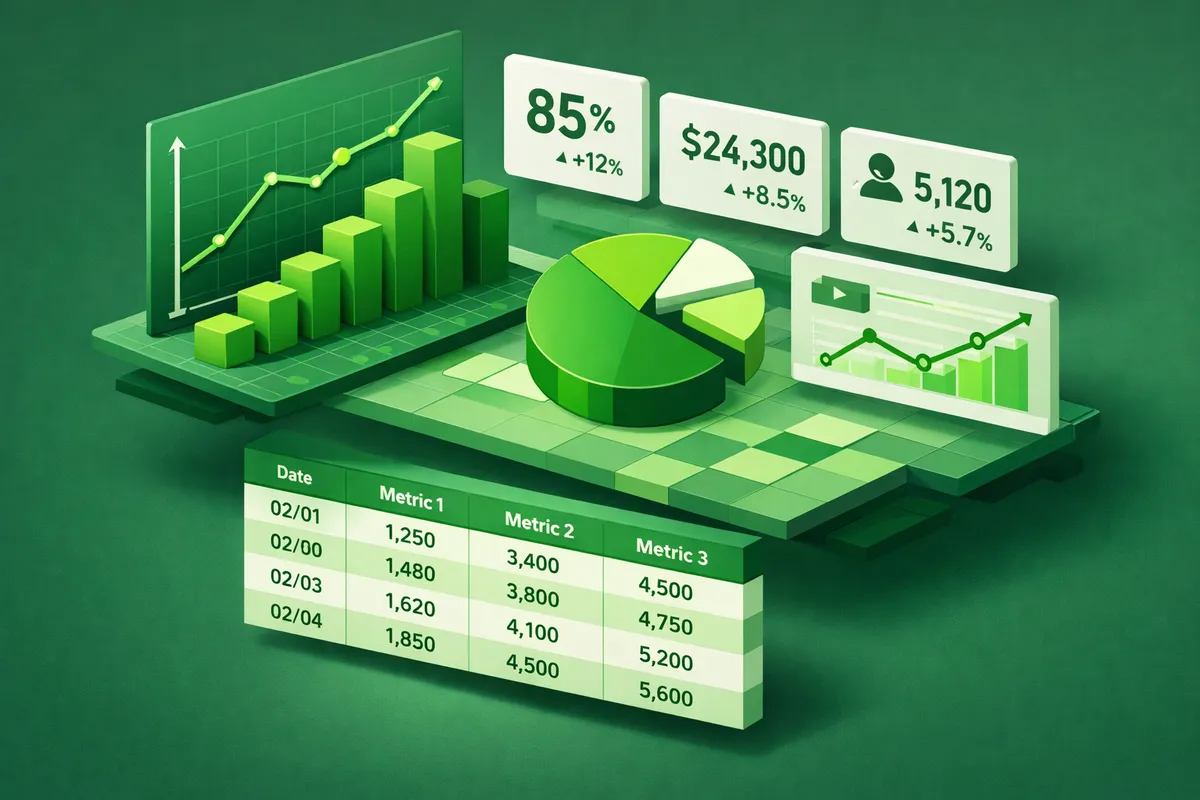
We then build a reporting dashboard that surfaces the metrics you will actually look at. We use plain language rather than analytics jargon. Instead of "organic session conversion rate," the dashboard says "customers who found you through Google and called." Instead of "bounce rate on /menu," it says "customers who looked at your menu and left without clicking anything." For bilingual businesses, we build separate reporting views for Spanish and English content so you can see which language your customers prefer for which types of information.
Monthly reports go out in the format you want: email summaries, shared Google Data Studio dashboards, or a brief call where we walk through the previous month's performance and flag what changed. You own all your data and all your reporting infrastructure.
Industries We Serve in Little Village
Quinceañera retailers and event service providers along Pulaski Road have a defined seasonal window and need precise data about when prospective clients are researching, which services they are considering, and where they drop off in the inquiry process. Analytics reveals whether your Spanish-language catalog pages are driving more contact form submissions than your English pages, and whether customers who watch your venue slideshow convert at a higher rate than those who do not. That data shapes content investment.
Mexican restaurants and taquerias on 26th Street need to know whether their online menu is actually sending customers through the door or just generating traffic that does not convert. We track the specific user actions that precede a call or directions click, segment data by day of week and time of day, and give owners a clear picture of which digital touchpoints are working. Restaurants preparing for Día de los Muertos promotions can see exactly how last year's traffic pattern built week-over-week.
Auto shops and auto service centers along Kedzie Avenue manage appointment volume across walk-ins and online bookings. Analytics tells you which services customers are searching for before they call, which pages hold their attention, and which competitor sites they visit before landing on yours. Shops that track this data can adjust their service descriptions, pricing pages, and appointment flow to capture more of that comparison shopping traffic.
Family grocers and specialty food retailers near California Avenue benefit from analytics that tracks which weekly specials drive the most online engagement, whether Spanish-language shoppers show different browsing patterns than English-language ones, and how much of their web traffic comes from neighborhood-specific mobile searches. That data directly informs which promotions to feature and how to structure the site navigation for returning customers.
Immigration services and legal aid offices on Cermak Road serve clients who often take multiple sessions to complete an inquiry process. Analytics can identify where clients abandon intake forms, which information pages they return to most often, and whether Spanish-language pages are converting inquiries at the same rate as English ones. Those insights help providers reduce friction in the processes that matter most to their clients.
Community clinics and health organizations near Piotrowski Park use analytics to understand how patients find appointment scheduling, which health information pages drive the most calls, and whether online appointment booking is converting at an expected rate. For clinics that serve both walk-in and appointment-based patients, analytics data on scheduling page behavior can reveal whether digital friction is suppressing appointment volume.
What to Expect Working With Us
1. Data audit and baseline setup. We review your existing analytics installation, fix broken tracking, define conversion events for your specific business model, and establish a clean baseline from which to measure change. For bilingual sites, we configure language-segmented reporting from day one.
2. Seasonal calibration for the Little Village calendar. We map your reporting against the cultural and commercial calendar of 26th Street: quinceañera season, Día de los Muertos, holiday shopping, and any business-specific patterns like back-to-school or spring catering season. Your monthly reports will contextualize numbers against those benchmarks rather than treating every month as equivalent.
3. Dashboard build and training. You receive a dashboard that is yours to access at any time, in plain language, without needing to interpret metric definitions. We walk you through it once and document what each view shows, so your staff can use it without depending on us for every question.
4. Ongoing reporting and anomaly alerts. We send monthly performance summaries, flag significant anomalies when they happen rather than waiting for the next report, and run quarterly reviews that compare performance against the same period in the prior year. You always know what your numbers mean and what they are telling you to do next.