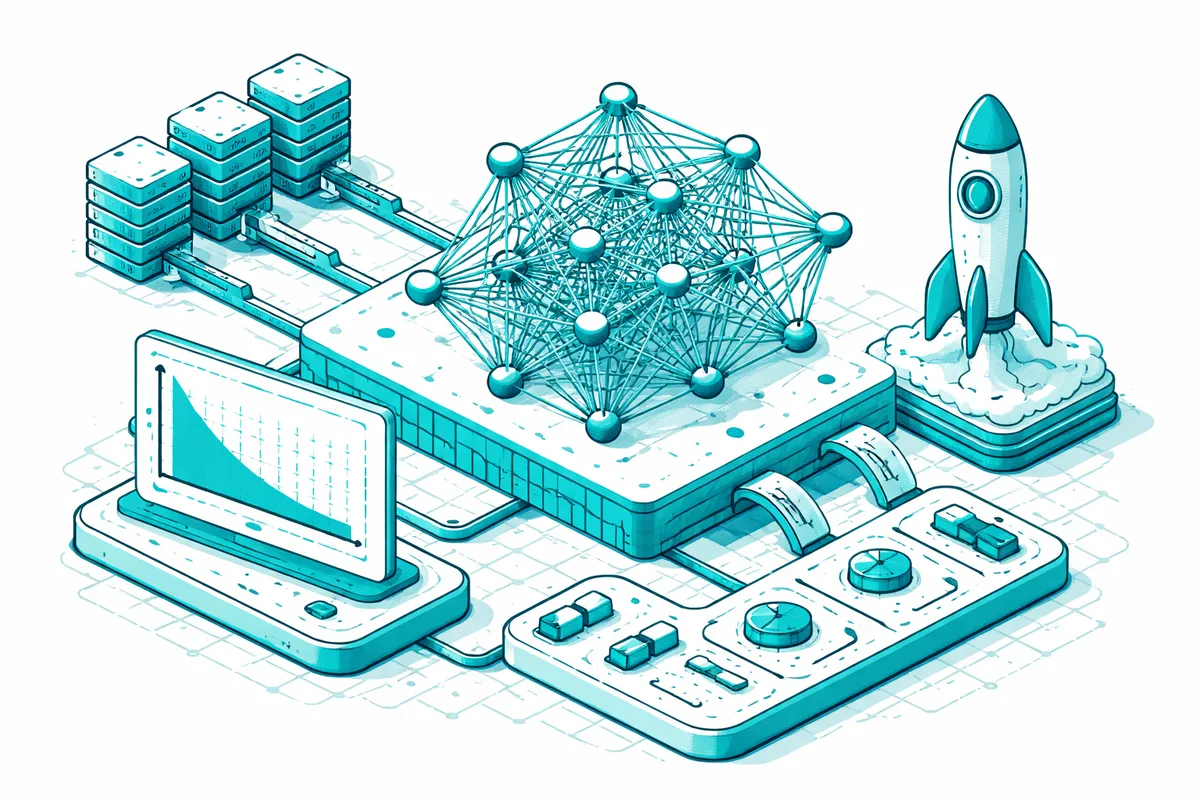
How We Build Custom AI Models for Little Village
Custom model training starts with a data assessment: we evaluate the data your business has accumulated and determine whether it is sufficient in volume and quality for the intended training purpose. A restaurant on 26th Street with three years of POS data and a customer communication history of several thousand messages has a meaningful training foundation for a demand forecasting model and a customer communication model. A newer business with six months of data may not yet have enough for meaningful custom training.
If the data assessment confirms sufficient training data, we proceed to training design: defining the specific task the model will perform, the inputs it will receive, the outputs it will produce, and the performance criteria that will determine success. For a customer inquiry model, that means defining the range of inquiry types, the language patterns to include, and the response quality standard the model must meet. For a demand forecasting model, it means defining the prediction horizon, the relevant input variables, and the acceptable error range for the business use case.
Training, validation, and deployment are handled technically with business-context oversight: we explain in plain language what the model is learning and how its performance is being measured, so business owners can engage meaningfully with the process without needing a technical background. Models are validated against a held-out portion of the business's data before deployment to confirm they perform as expected on data they have not seen during training.
Industries We Serve in Little Village
Restaurants and taquerías on 26th Street with multiple years of POS and customer data benefit from custom demand forecasting models that predict daily volume more accurately than generic tools. Accurate demand forecasting reduces food waste, improves prep planning, and avoids the twin problems of over-production and running out of popular items before the dinner rush ends.
Quinceañera boutiques and event businesses near California Avenue and the Little Village Arch accumulate customer inquiry data, consultation records, and purchase histories that can train models for sales prediction, customer segmentation, and automated follow-up qualification. A model trained on the business's own inquiry-to-booking conversion data learns which inquiry patterns predict a purchase and which are less likely to convert, allowing more targeted follow-up.
Wholesale and specialty food businesses near Kedzie Avenue managing inventory across hundreds of SKUs benefit from demand models trained on their specific product mix, customer base, and seasonal patterns. Generic demand forecasting models are calibrated to broader market averages that do not reflect the specific dynamics of a Little Village specialty food market.
Legal and immigration services near Pulaski Road accumulating years of case documents, inquiry patterns, and outcome data can train document classification and intake triage models that speed case processing. Models trained on the firm's actual case history recognize document types and issue patterns specific to the immigration cases the firm handles, performing better than generic legal AI tools.
Health practices serving the Little Village community near Our Lady of Tepeyac Parish can develop custom models for patient communication triage, appointment scheduling optimization, and outreach timing based on patient behavior patterns specific to the practice's patient population. Models trained on actual patient data respect the specific health needs and communication preferences of Spanish-speaking patients in ways that generic clinical AI cannot.
Retail and specialty shops on 26th Street with multi-year customer and inventory data can develop custom recommendation models that suggest relevant products to returning customers based on their purchase history and the purchasing patterns of similar customers. Generic recommendation engines do not know that a customer who bought a specific type of jewelry for a prior quinceañera is likely shopping for another celebration two years later.
What to Expect Working With Us
1. Data assessment and feasibility review. We evaluate your business's data to determine whether custom model training is appropriate and what training objectives are achievable. We provide a clear assessment of what is possible and what is not before any training work begins.
2. Training design and data preparation. We design the model training approach and prepare your data for training, including cleaning, formatting, and handling of Spanish and English text data. Data preparation often reveals additional insights about business patterns before any model is trained.
3. Model training, validation, and refinement. We train the model, validate its performance against held-out data, and refine it to meet the performance criteria established in the design phase. Validation results are presented in business terms, not only technical metrics.
4. Deployment and monitoring. We deploy the trained model into your business operations, integrated with the tools where it will be used. Ongoing monitoring tracks model performance over time and flags cases where retraining may be needed as business conditions change.