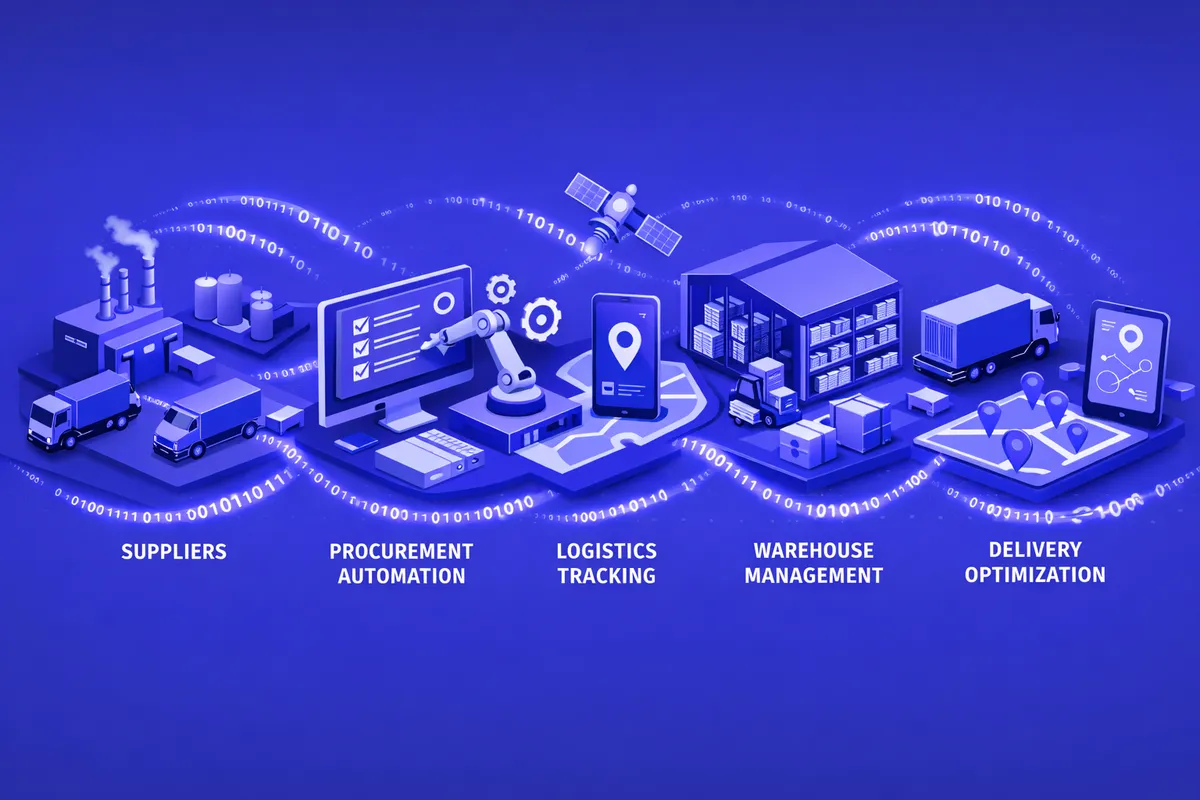
How We Build Supply Chain Automation for Lincoln Square
We map the current procurement workflow before automating anything. Who orders, from whom, how often, through what channel, with what approval process, against what inventory signal? Most Lincoln Square businesses have workflows that evolved organically rather than by design, and mapping them reveals the specific points where automation adds the most value.
For food businesses with inventory management systems already in place, we connect inventory data to a procurement trigger: when stock on hand for flour drops below a two-week supply, a purchase order draft is automatically generated for the primary supplier, pending owner review and approval. This eliminates the manual stock check and order initiation while keeping human judgment in the approval step.
We build vendor management databases that store supplier contacts, pricing, lead times, payment terms, minimum order requirements, and order history in a single accessible place. When seasonal pricing changes or a supplier updates their minimum order quantities, the information is updated once and flows to every procurement workflow that references it.
We implement invoice matching workflows that compare received invoices to purchase orders and flag discrepancies for review rather than requiring manual line-by-line checking. For businesses with high invoice volumes, this workflow alone saves significant time.
We build the reporting layer: food cost by vendor, order frequency by supplier, delivery performance tracking, and price variance alerts. These reports turn supply chain data into the operational intelligence that improves purchasing decisions over time.
For Lincoln Square food businesses sourcing specialty or heritage ingredients from European suppliers, the supply chain automation layer handles the longer planning horizon that international procurement requires. A bakery on Lincoln Avenue that orders specialty grains from a German or Austrian supplier needs to initiate orders four to six weeks before the ingredients are needed, not four to six days. Automated planning alerts based on consumption rate and lead time prevent the emergency orders and substitutions that occur when international procurement is managed by memory rather than system.
The receiving process is another workflow that supply chain automation addresses systematically. A delivery from a food distributor arrives, the driver hands over a paper invoice, and someone compares it to the order. Without a system, discrepancies are often missed or noted on paper and never acted on. We build receiving workflows that check delivery quantities against purchase orders digitally, flag short shipments and substitutions immediately, and create a digital record of every delivery that connects to the payment approval workflow.
Industries We Serve in Lincoln Square
Bakeries and specialty food producers on Lincoln Avenue manage ingredient procurement from multiple suppliers with different lead times and minimum order requirements. Supply chain automation builds the ordering system around actual inventory consumption rather than habitual order cycles.
Restaurants and cafes on Lawrence Avenue and Lincoln Avenue deal with perishable ingredient procurement that requires tight timing between order placement, delivery, and consumption. Automated reorder systems tied to POS sales data bring data discipline to a process typically managed by intuition.
Specialty food retailers and importers near Giddings Plaza who source from European and international suppliers manage the longest supply chain lead times in the neighborhood. Vendor management systems with order tracking and delivery visibility reduce the emergency last-minute order problem.
Boutique retailers and home goods shops on Lincoln Avenue manage vendor relationships with artisan producers and small brands that have irregular production cycles. Supply chain visibility helps these retailers plan inventory around vendor production schedules rather than being surprised by stockouts.
Caterers and event food businesses that scale production for the Giddings Plaza summer events and other neighborhood programming need procurement systems that can handle the variable volume of event-driven ordering alongside regular operations.
Multi-supplier service businesses in Lincoln Square that purchase materials, supplies, or components from multiple vendors benefit from vendor consolidation and procurement visibility regardless of industry. A home renovation contractor purchasing materials from multiple hardware and specialty suppliers, a florist sourcing from wholesale markets and specialty growers, or a catering business managing event supply logistics all have supply chain automation needs that a well-configured vendor management system addresses.
Food producers and artisan businesses along Lincoln Avenue who sell both retail and wholesale face supply chain complexity from both sides: they need to manage their ingredient procurement and they need to manage the supply to their retail accounts. Automation that tracks both sides of this flow, ingredient inventory in and finished product inventory out, gives these businesses a complete operational picture.
What to Expect Working With Us
1. Procurement audit. We map your current vendor relationships, ordering processes, and procurement data. We identify the highest-cost manual processes and the most valuable automation opportunities.
2. System design. We design the vendor management database, the automated reorder triggers, and the invoice matching workflow. We identify the tools that fit your business size and budget, often combining Airtable, your existing inventory system, and email automation.
3. Build and integration. We build the automation workflows, connect them to your inventory and accounting systems, and test them end to end. We verify that reorder triggers fire correctly and that invoice matching catches discrepancies accurately.
4. Training and handoff. We train you and your team on the new system and provide documentation for ongoing use. The goal is a procurement process that requires less time and produces better data than the manual process it replaces.