How We Build RAG Systems for Lincoln Square
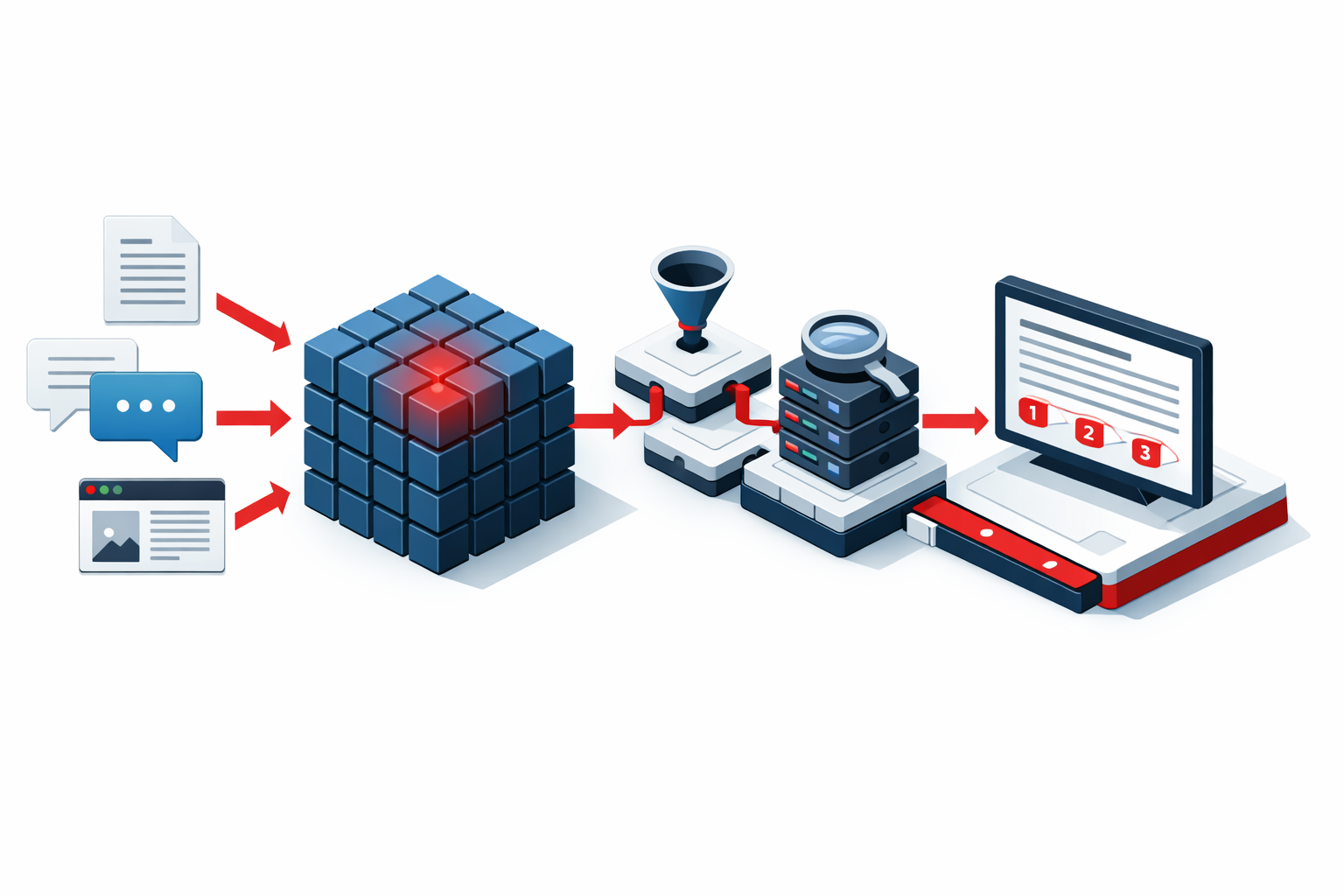
The engagement begins with a knowledge audit. We identify all of the structured and unstructured information your Lincoln Square business needs to make accessible: policy documents, product and service catalogs, FAQs, historical records, enrollment documents, pricing sheets, event calendars, and operational guides. We assess the format, currency, and completeness of each knowledge source and identify what preparation is needed before indexing.
From the knowledge audit, we design the RAG architecture: how the knowledge base is structured, what retrieval logic is used to find relevant information for each query type, how AI generation is constrained to produce accurate answers rather than hallucinated ones, and how the system connects to any live data sources that need to be current rather than static.
Knowledge preparation is often the most labor-intensive phase. Documents that were written for human readers need to be structured and cleaned for machine retrieval. A ten-year-old policy document written in paragraph format needs to be converted into a structure that allows the retrieval system to locate the specific relevant section quickly. We handle this preparation work, ensuring that the indexed knowledge base contains clean, current, well-structured information before the system is built on top of it.
The retrieval and generation layer is built and tested against representative queries from your Lincoln Square business's actual customer and staff interactions. A music school RAG system is tested against the questions parents, students, and instructors actually ask. A restaurant RAG system is tested against the reservation and menu questions customers actually submit through the website or phone. Testing reveals gaps in the knowledge base and retrieval logic failures before the system goes live.
Integration with live data sources completes the architecture for businesses where currency matters. A restaurant's RAG system connected to its reservation platform answers availability questions from live data. A boutique's RAG system connected to its inventory management platform answers stock questions from current inventory. We build these integrations when static document indexing is insufficient for the query types the business receives.
Industries We Serve in Lincoln Square
Music schools and performing arts organizations near Old Town School of Folk Music benefit from RAG systems that make the full depth of their curriculum, policy, and program knowledge accessible to staff, instructors, and parents. An AI knowledge base that contains enrollment policies, program eligibility criteria, instructor availability, recital schedules, makeup class procedures, and student history data can answer the full range of parent and instructor queries without requiring administrator intervention for every question.
Restaurants and food businesses along Lincoln Avenue and near Giddings Plaza use RAG systems to power customer-facing AI assistants that answer questions about menus, reservations, dietary accommodations, private dining options, and event calendar. A restaurant with a RAG-powered chat capability on its website captures reservation inquiries at all hours without requiring staff to monitor a chat window. The system answers from the restaurant's actual current menu and calendar, not from general knowledge about food.
Specialty retailers and boutiques on Damen Avenue and Leavitt Street use RAG systems to build customer-facing inventory assistants and internal product knowledge bases. A gift shop near Giddings Plaza whose staff can query a RAG system to instantly locate product provenance information, availability, and pricing converts more in-store consultations into purchases. A customer-facing RAG assistant on the shop's website extends that capability to online browsers.
Professional services firms on Lawrence Avenue use RAG systems to build internal knowledge bases that make case precedents, research documents, client histories, and procedural guides instantly accessible to staff. A law firm or financial advisory in Lincoln Square with a RAG knowledge base spends less staff time searching for prior work and more time doing new work.
Community organizations and nonprofits near Welles Park use RAG systems to make their program information, eligibility criteria, application procedures, and resource directories accessible to community members and staff. An organization that serves the multilingual Lincoln Square community can build RAG systems that retrieve and present information in the appropriate language for each user.
Medical and wellness practices on Lawrence Avenue and throughout the Lincoln Square corridor use RAG systems for patient intake information, service description accuracy, insurance and coverage question handling, and internal clinical protocol documentation. A wellness practice whose scheduling platform is connected to a RAG system can answer patient questions about services, practitioners, and availability with full accuracy.
What to Expect Working With Us
1. Knowledge audit and architecture design. We inventory your Lincoln Square business's information assets, assess their readiness for RAG indexing, and design the system architecture including knowledge base structure, retrieval logic, and live data integration requirements.
2. Knowledge preparation and indexing. We prepare your documents for machine retrieval, clean and structure the knowledge base, and index all approved content. This phase is often where the most value is created: a well-organized knowledge base is worth having regardless of the RAG system built on top of it.
3. System build and integration. We build the retrieval and generation layers, integrate with any live data sources, and configure the user-facing interfaces, whether a staff-facing internal tool, a customer-facing chat widget, or an API that powers other applications.
4. Testing, refinement, and launch. We test the system against representative queries from your Lincoln Square business's actual user interactions, identify and correct retrieval failures and knowledge gaps, and monitor the live system through its first weeks of operation.