How We Set Up POS Systems for Lincoln Square
We start by understanding the business operations: the menu or product catalog, the staffing model, the payment types accepted, the reports the owner needs, and the other systems the POS must connect to. A restaurant on Lincoln Avenue has different POS requirements than a boutique retailer on the same block, and both have different requirements than a fitness studio on Western Avenue.
We recommend the right platform for the specific business context. Toast is the industry standard for full-service restaurants in Lincoln Square and handles kitchen display integration, tip management, and server-specific reporting better than Square. Square is often the right choice for counter-service food businesses, bakeries, and small retailers where the simplicity and low hardware cost matter more than restaurant-specific features. Lightspeed fits retailers with large catalogs, multi-location operations, or strong inventory management needs.
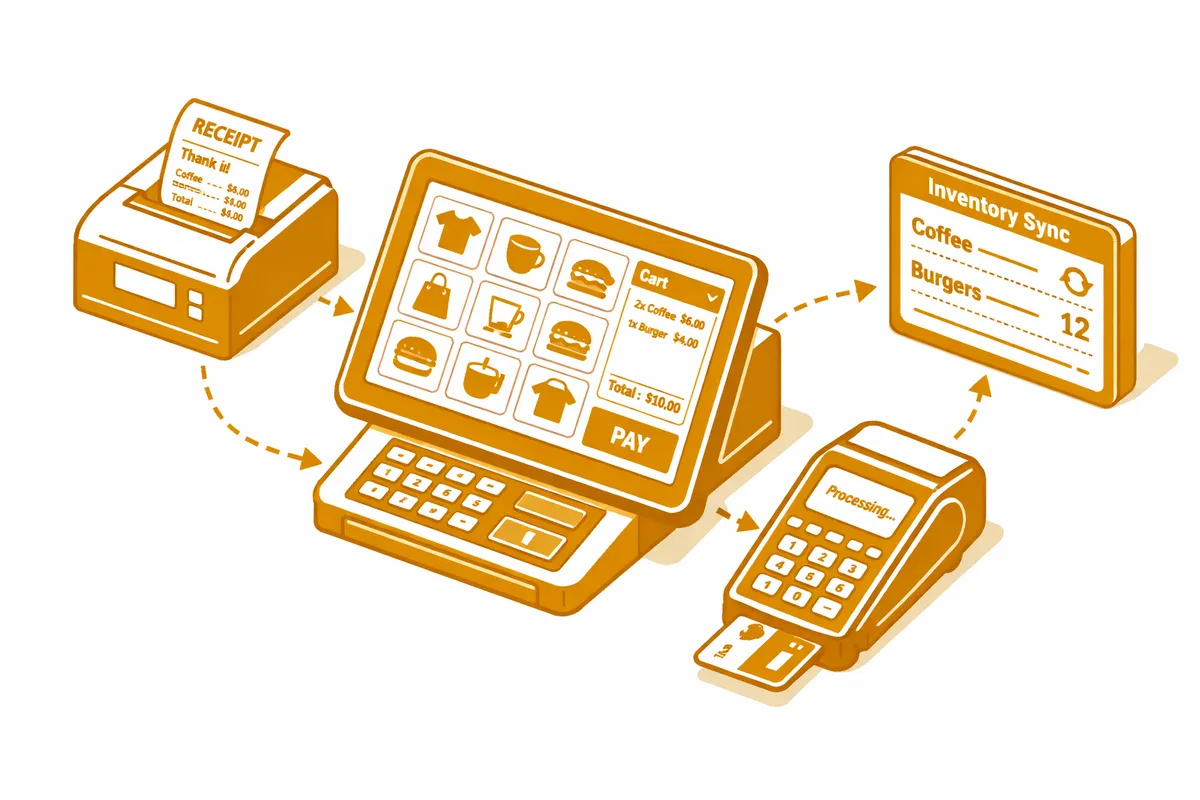
We configure the system completely before the business uses it: menu and catalog entry, modifier groups, pricing tiers, tax rates, payment processing settings, tip prompts, reporting dashboards, and staff permissions. We connect integrations to accounting software, inventory management, and online ordering platforms.
We train staff and management on daily operations, end-of-day procedures, and the reports ownership will use. We document everything so that staff turnover does not require re-training from scratch.
Menu engineering within the POS system is a specific configuration layer that most Lincoln Square restaurants do not fully utilize. POS platforms with item-level reporting can tell a restaurant on Lawrence Avenue exactly which dishes are its highest gross profit contributors, which are high-volume but low-margin, and which are low-volume and low-margin candidates for removal. That data, pulled weekly and reviewed by ownership, informs menu decisions that most restaurants make by intuition. We configure the item-level reporting and show ownership how to read it during training.
For retail businesses near Giddings Plaza and along Lincoln Avenue, the inventory management integration with the POS is often the most valuable configuration work we do. When every sale decrements inventory in real time, the business owner can see sell-through velocity by SKU, identify items approaching reorder points, and generate purchase orders informed by actual sales data rather than visual shelf inspection. This is a standard POS capability that most small retailers on the North Side do not have properly configured.
Industries We Serve in Lincoln Square
Full-service restaurants on Lincoln Avenue and Lawrence Avenue use Toast for table management, server workflow, kitchen display integration, and the detailed reporting that a dining operation needs. We configure Toast to match the actual service model: the number of tables, the course flow, the kitchen organization, and the manager reports.
Counter-service cafes and bakeries along Lincoln Avenue and near Giddings Plaza use Square for its simplicity, reliability, and lower hardware cost. We configure Square to handle the specific needs of a counter-service food business: order queuing, tip prompts, online order integration, and daily sales reporting.
Boutique retailers and home goods shops on Lincoln Avenue use Lightspeed for retail inventory management connected to the POS, online store synchronization, and the reporting that tracks which categories are driving revenue.
Fitness and wellness studios near Welles Park and Western Avenue use Square or Lightspeed for retail merchandise sales alongside their primary studio management platform, configured to integrate with their membership and scheduling system.
Music schools and specialty service businesses near the Old Town School of Folk Music use Square for simple, reliable payment processing with the reporting and accounting integration that keeps their financial records clean.
Multi-location businesses across Lincoln Square, Ravenswood, and North Center use POS platforms configured to provide unified reporting across locations while maintaining location-specific inventory and staffing.
What to Expect Working With Us
1. Operations review and platform selection. We learn your business model, your catalog, your staffing, and your reporting needs. We recommend the right platform and configuration approach for your specific operation.
2. Full system configuration. We configure every aspect of the system: catalog, pricing, modifiers, tax rates, payment settings, integrations, and reporting dashboards. We do not hand you a default install and leave configuration to you.
3. Integration setup. We connect your POS to the accounting, inventory, online ordering, and other platforms your business uses. We test every integration before the system goes live.
4. Training and documentation. We train you, your managers, and your key staff on daily operations, end-of-day procedures, and the reports you will use to run the business. We document the configuration so new employees can be trained consistently.