How We Build NLP Solutions for Lincoln Square
We begin with a text data inventory. NLP requires text data to work with, and the first step is identifying what text data your business has and what it contains. For a restaurant, the primary sources are customer reviews, reservation notes, and customer communication. For a music school, they include parent emails, enrollment inquiries, and session feedback. For a professional service firm, they include client communications, documents, and case or matter notes. We assess the volume, quality, and accessibility of each text source.
We define the specific analysis objective. NLP can extract many different types of information from text, and different business problems require different types of analysis. Review analysis typically requires sentiment classification and aspect extraction. Communication pattern analysis requires sequence modeling and anomaly detection. Document analysis typically requires named entity recognition and clause classification. We define the specific analysis objective before selecting the technical approach.
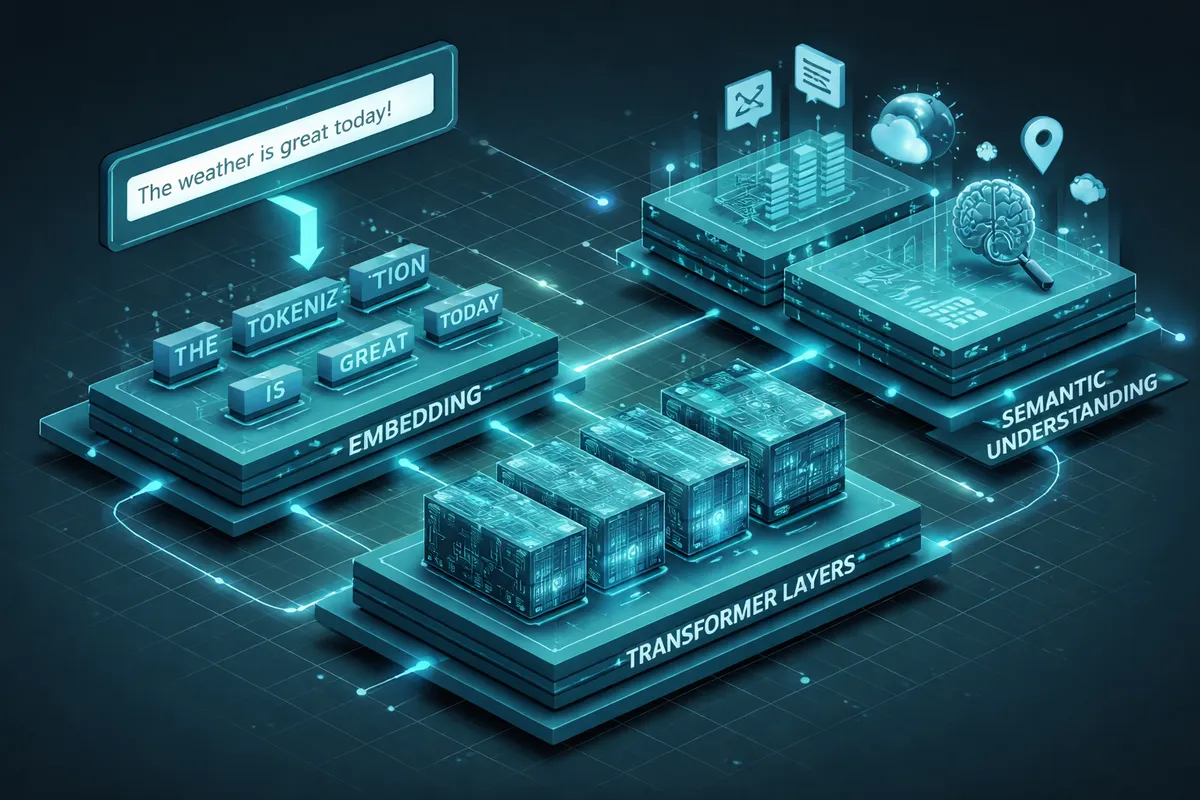
We develop and validate the NLP models. For many Lincoln Square business applications, we adapt and fine-tune pre-trained language models on your specific text data and domain context rather than training from scratch. A sentiment model fine-tuned on restaurant review language performs better on restaurant reviews than a general-purpose sentiment model. We validate model performance against labeled examples from your actual text data before deploying for production analysis.
We build the reporting and alert infrastructure that makes the NLP analysis actionable. An NLP model that produces analysis no one reviews is not useful. We build dashboards, reports, and alert systems that surface the most important insights in a format that fits your team's workflow. For a restaurant, this might be a monthly review sentiment report. For a music school, it might be a weekly at-risk student flag that alerts the administrator to reach out proactively.
We integrate with your existing text sources through API connections, email system integration, or scheduled data exports depending on where your text data lives.
Industries We Serve in Lincoln Square
Independent restaurants and cafes along Lincoln Avenue use NLP for customer review analysis, identifying which specific aspects of the dining experience drive positive and negative sentiment, and tracking how sentiment changes month over month across different dimensions. A restaurant that discovers through NLP analysis that service speed is the primary driver of negative reviews during weekend dinner service has actionable information for staffing and process improvement.
Music schools and lesson studios near the Old Town School of Folk Music use NLP for student and parent communication analysis, identifying families showing early warning signs of disengagement before they formally cancel. At-risk detection that allows proactive outreach improves retention rates for schools that previously learned about cancellation decisions only after they were made.
Yoga and wellness studios near Welles Park use NLP for member feedback analysis, turning open-ended class feedback into structured, quantified insight about which class types, instructors, and scheduling decisions drive member satisfaction. Monthly feedback reports replace manual reading of individual responses.
Professional service practices near the Brown Line Western station use NLP for document review, client communication analysis, and matter note processing. An attorney who can run an NLP review of a new contract for specific provision types in five minutes rather than thirty has a meaningful efficiency advantage. A client relationship health dashboard built from NLP analysis of client communication patterns supports proactive relationship management.
Specialty retailers on Damen Avenue and Lincoln Avenue use NLP to analyze customer communication and product feedback, identifying which product attributes customers respond to most positively and which generate friction or returns. This analysis informs both product selection and the way products are described in marketing communication.
Community organizations and nonprofits in Lincoln Square use NLP for community feedback analysis, grant application document processing, and program impact measurement from participant testimonials. Organizations that serve diverse communities with high communication volume benefit particularly from NLP tools that systematize feedback analysis at scale.
What to Expect Working With Us
1. Text data audit and opportunity assessment. We assess your available text data sources, evaluate the volume and quality of each source, and identify the NLP application that would produce the most actionable business value given your specific data. For most Lincoln Square businesses, this assessment takes one to two weeks and produces a clear recommendation for the highest-priority NLP application to begin with.
2. Model development and validation. We develop the NLP models appropriate to your specific analysis objective, fine-tune on your domain-specific text data, and validate performance against labeled examples from your actual text sources. We provide clear accuracy metrics before moving to production deployment.
3. Reporting and alert infrastructure. We build the dashboards, reports, and alert systems that make the NLP analysis actionable for your team. We design reporting to fit your team's workflow and decision-making cadence rather than requiring you to adapt your workflow to the NLP system's output format.
4. Integration and ongoing operation. We integrate the NLP system with your text sources and establish the data pipeline that keeps analysis current. We provide monthly performance reviews and adjust the analysis as your business needs evolve and as new text sources become available.