How We Build Legacy System Integration for Lincoln Square
We start with a system inventory. What platforms is the business running? What data flows between them today, and how? What is manual versus automated? Where are the highest-frequency manual transfers that automation would eliminate? This maps the integration landscape before we design a solution.
We then assess each legacy system's integration capability. Many systems that appear closed actually have data export functionality, ODBC connections, or undocumented APIs that enable integration. FileMaker databases can expose data through JDBC. Legacy POS systems often have flat-file exports that can be transformed and imported automatically. We look for the integration points that exist before building custom ones.
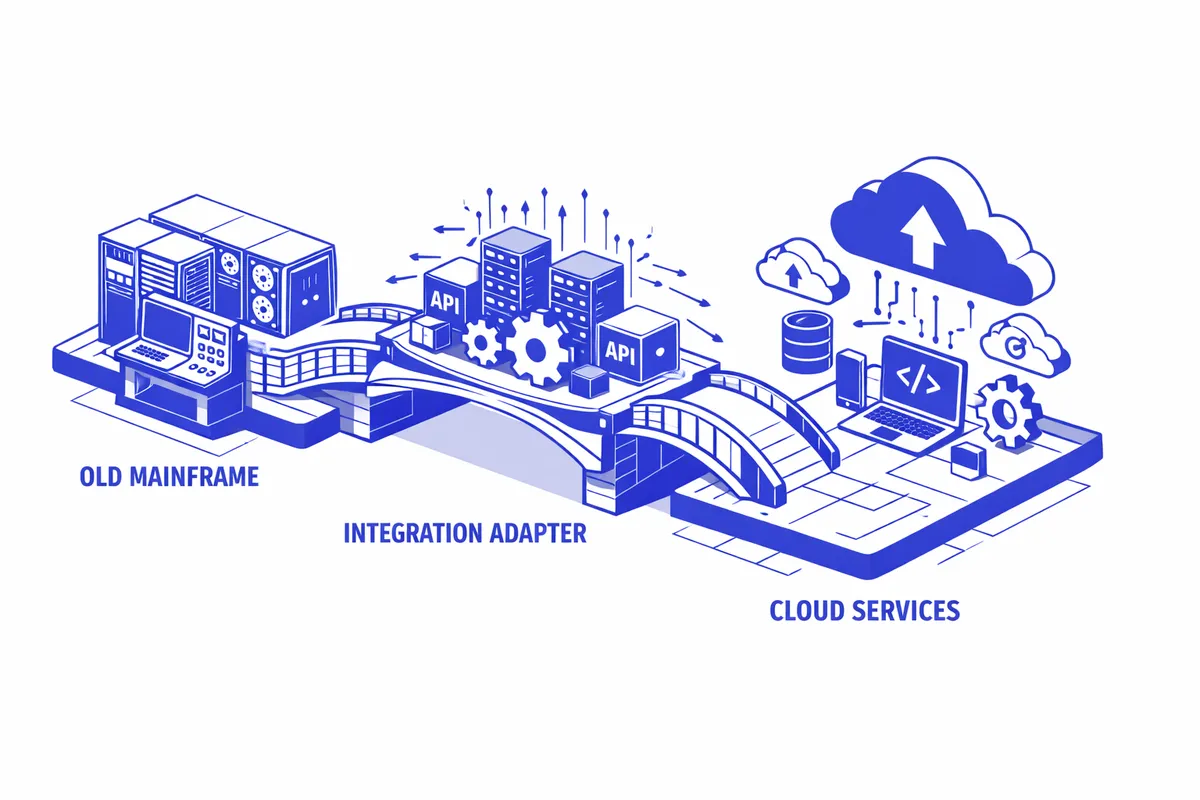
For systems with accessible data, we build middleware workflows using tools like Zapier, Make, or custom scripts that extract data from the legacy system on a schedule and push it to the modern tool in the correct format. For more complex integrations, we build lightweight API layers that sit between the legacy and modern systems and translate data formats in real time.
We test every integration in a staging environment before connecting to the live systems, confirm the data transformation is accurate, and document the integration so you understand what is running and how to troubleshoot if something changes.
Data transformation is often the most technically complex part of legacy integration work. A legacy POS system from 2010 may export sales data in a format that uses product codes from an old catalog structure, dates in a non-standard format, and tax line items that do not map cleanly to modern accounting categories. The middleware layer we build translates that data into the format the modern system expects, validating each transformation step. This translation work requires both technical capability and domain knowledge: understanding not just how to move the data but what it means in the context of the Lincoln Square business's operations.
We also build the monitoring and alerting layer that tells you when an integration fails. Legacy system integrations are more fragile than modern API-to-API connections because they depend on export files, database access, or undocumented capabilities that can change when the legacy system is updated or when the server environment changes. An integration that runs silently for months and then quietly stops is a failure mode we prevent by building active monitoring that sends an alert if a scheduled data transfer does not complete.
Industries We Serve in Lincoln Square
Restaurants and food businesses on Lincoln Avenue and Lawrence Avenue frequently run legacy POS systems that predate modern API ecosystems. We integrate these systems to accounting software, inventory management, and online ordering platforms without requiring a POS migration.
Specialty retailers and boutiques near Giddings Plaza and along Lincoln Avenue often have proprietary inventory systems with product data that must connect to e-commerce platforms. We extract, transform, and sync that data automatically so the business does not manage two inventory pictures manually.
Music schools and arts education programs near the Old Town School of Folk Music often run enrollment and scheduling software that does not connect to billing, communications, or reporting tools. We build the integration bridges that eliminate manual data movement between those systems.
Professional service businesses in Lincoln Square with legacy CRM systems use integration to sync client records to modern email platforms, billing systems, and scheduling tools without losing the history in the original system.
Home goods and craft retailers on Lincoln Avenue who added e-commerce during the pandemic often have online and in-store inventory running separately. Integration connects the two inventory pictures so stock availability is accurate on both channels.
Fitness and wellness studios near Welles Park that run older studio management platforms benefit from integration to accounting, marketing automation, and reporting tools that the legacy platform does not natively support.
What to Expect Working With Us
1. System inventory and integration map. We document every system you are running, the data flows between them, and the manual bridging work your team does today. We produce an integration map that identifies the highest-value connections to build.
2. Integration design. We design the specific integration approach for each connection: direct API, middleware, scheduled data sync, or custom extraction. We confirm feasibility and estimate the development work before proceeding.
3. Build and test. We build the integration in a staging environment, test with real data samples, and verify accuracy before connecting to production systems. We do not go live until the integration produces clean, verified data.
4. Documentation and monitoring. We document every integration we build, including how it runs, what it connects, and how to diagnose failures. We set up monitoring alerts so you know immediately if a sync fails.