How We Build Inventory Management for Lincoln Square
The starting point is understanding what platforms the business already uses. A Lincoln Square restaurant on Toast POS has inventory capability within that system that is often misconfigured or underutilized. A retailer on Shopify has inventory tracking that can be extended with apps for purchase orders and supplier management. A food producer using Square can connect Square's inventory tools to a lightweight procurement workflow.
We begin with an audit of what exists and what the business actually needs. Most Lincoln Square small businesses do not need enterprise inventory software. They need their existing POS or commerce platform configured correctly, connected to a simple reorder point system, and set up to provide weekly inventory reports that are actually useful.
For businesses with more complex needs, specifically multi-location operations on Lincoln Avenue and Western Avenue, businesses managing perishable and non-perishable stock simultaneously, or businesses with significant seasonal inventory variation, we implement purpose-built inventory tools like Sortly, Cin7, or Fishbowl connected to the primary POS or commerce platform.
We configure the system, migrate existing SKU data, train the staff who will use it daily, and build the reporting that gives ownership visibility into stock levels, sell-through rates, and reorder timing. The goal is a system that reduces manual counting time to a minimum and eliminates stockout events for core products.
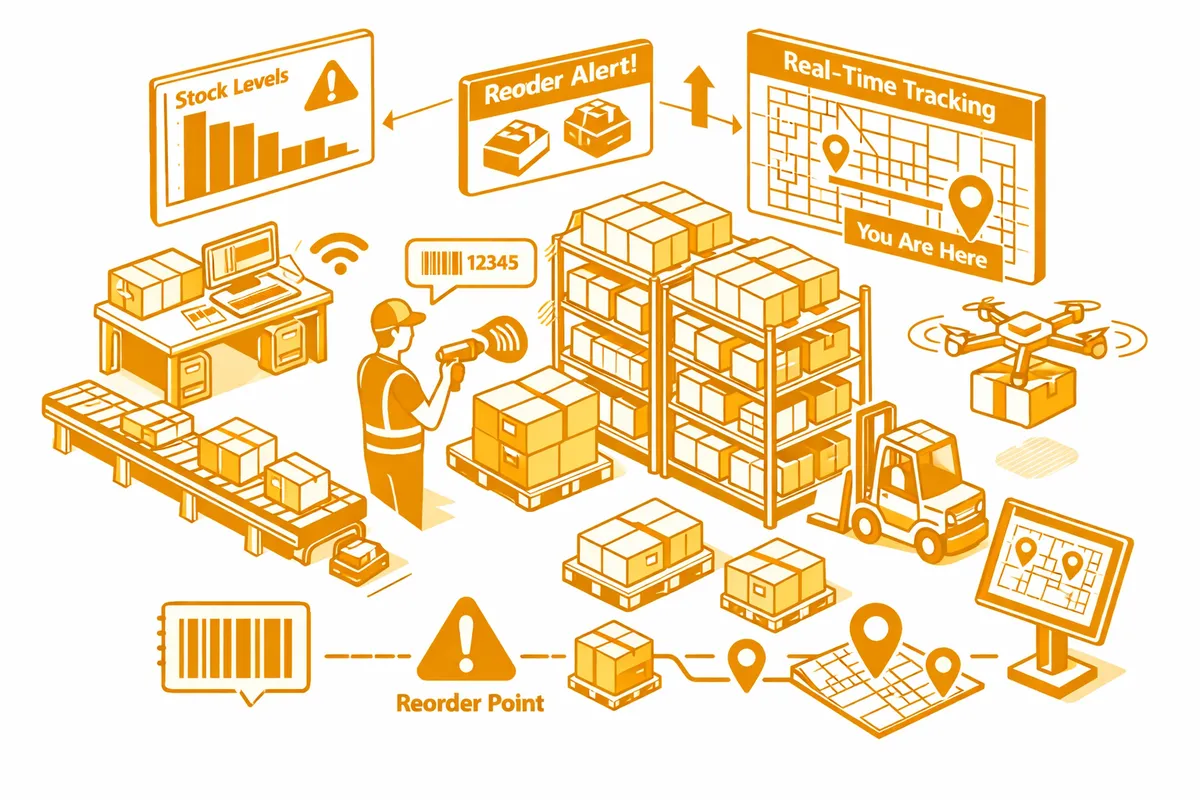
Reorder point calculation is the analytical work that most Lincoln Square businesses skip because it seems complicated. It is not. Reorder point equals daily usage multiplied by supplier lead time plus safety stock. A bakery on Lincoln Avenue that uses four bags of bread flour per day, receives deliveries from its supplier in three days, and wants two days of safety stock sets its reorder point at twenty bags. When the system shows twenty bags on hand, it generates a purchase order. This eliminates both the "we ran out" and the "we ordered too much" failure modes that manual management produces.
We also build the supplier performance reporting that tells you which vendors are reliable and which are creating problems. A specialty ingredient supplier that consistently delivers late or short is costing the business more than its invoice amount because of the emergency ordering, substitution decisions, and recipe modifications those failures create. Tracking fill rate and on-time delivery by supplier gives Lincoln Square businesses the data to have informed conversations with suppliers and, when necessary, to switch.
For businesses that use the Lincoln Square farmers market or direct local farm relationships as part of their ingredient sourcing, we build inventory management that accommodates the variability of seasonal supply alongside the predictability of commercial distributor deliveries.
Industries We Serve in Lincoln Square
Bakeries and food artisans on Lincoln Avenue manage ingredient inventory on a tight daily cycle. We build inventory systems that track ingredient usage by production batch, flag reorder points for key commodities, and generate weekly purchasing lists that eliminate the manual Monday morning count.
Boutique retailers and home goods shops near Giddings Plaza and along Lincoln Avenue manage large SKU counts with seasonal turnover. We build inventory systems that connect purchasing to sales velocity, flag slow-moving items before they become overstock, and automate purchase orders to key suppliers.
Restaurants and cafes on Lawrence Avenue and Lincoln Avenue deal with perishable inventory that requires tight cycle counting and waste tracking. We configure POS-connected inventory that tracks the cost of goods sold by menu item and alerts when key ingredients approach reorder points.
Specialty food shops and importers on the Lincoln Square commercial strip stock items from multiple international suppliers with long lead times. Inventory management for these businesses requires advance ordering visibility that connects forecasted demand to supplier lead times.
Music schools and arts education programs near the Old Town School of Folk Music manage instrument inventory, educational supplies, and equipment that cycles through student use. An asset tracking system distinct from retail inventory handles these needs.
Fitness and wellness studios near Welles Park manage retail merchandise alongside consumable supplies. We build simple systems that track both retail inventory and operational supplies without requiring separate platforms.
What to Expect Working With Us
1. Inventory audit. We review your current product catalog, the platforms you use, your current tracking method, and the specific pain points around stockouts, waste, or manual counting time. We identify the highest-leverage improvements.
2. System design and configuration. We configure your existing platforms or implement a new inventory tool, migrate your SKU data, and set up reorder points and reporting that match your actual business cycle.
3. Integration and testing. We connect inventory to your POS, e-commerce platform, or procurement workflow, and test the system end to end to confirm that sales are flowing to inventory correctly and alerts are firing when expected.
4. Training and handoff. We train you and your staff on daily inventory operations, cycle counting procedures, and how to read the reports. We document the system so new employees can be trained consistently.