How We Build ERP Integrations for Lincoln Square
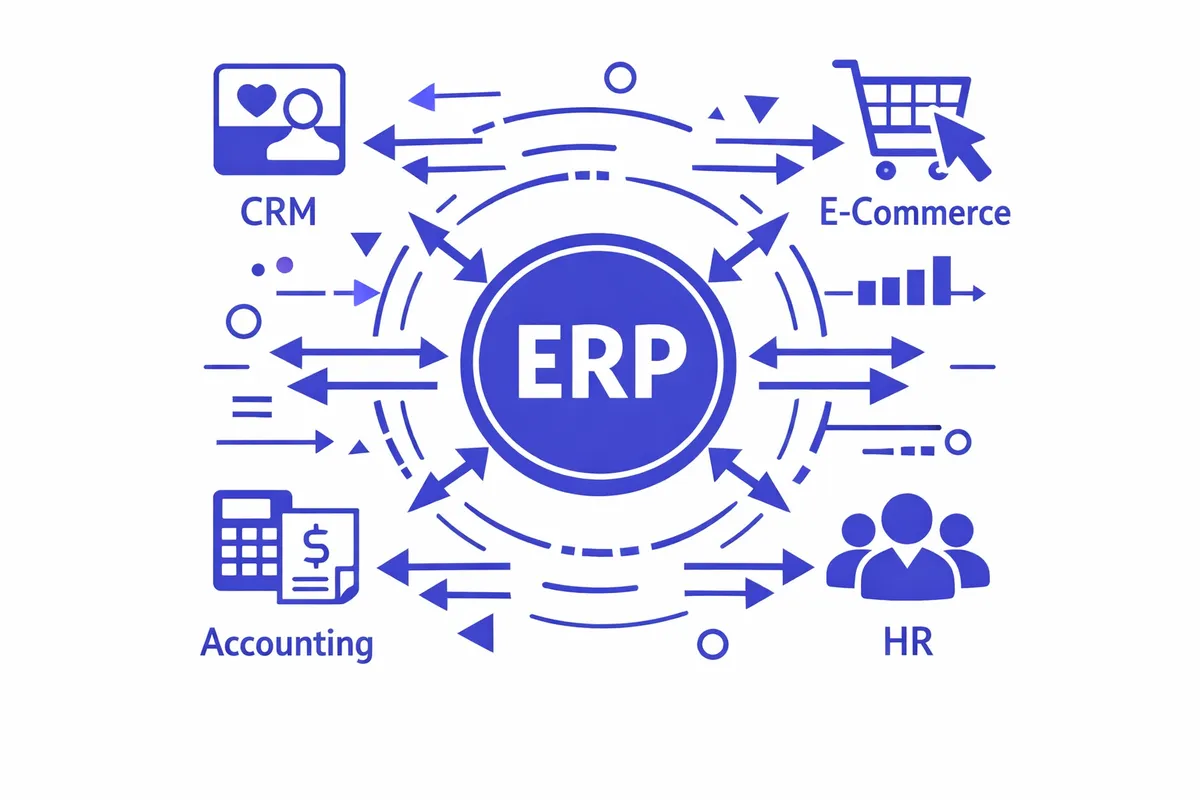
We begin with an integration architecture assessment. We document every system that needs to exchange data with the ERP, the specific data elements that need to move between each system pair, the direction and frequency of data flow, and the error handling requirements when data transfers fail.
We design the integration architecture: point-to-point integrations for simple, direct connections between two systems; middleware-based integrations for complex multi-system data flows; or iPaaS platform-based integrations for businesses that benefit from a managed integration platform rather than custom-built connectors.
For ERP integrations, we work directly with the ERP platform's API and integration tools. NetSuite has SuiteScript and SuiteTalk. Dynamics has its own API ecosystem. SAP has BAPI and IDocs. We use the integration mechanisms specific to the ERP platform rather than generic approaches that may not handle the ERP's data model correctly.
We design and build the data transformation layer between each connected system. Data from an e-commerce platform does not arrive in NetSuite's format. The transformation layer maps e-commerce order fields to NetSuite sales order fields, handles the exceptions and edge cases specific to your business, and manages the error logging that makes problems visible when they occur.
We test integrations against real data volumes, including the peak volumes that occur during busy periods. A Lincoln Square specialty food business that sells into retail channels will see order volume spikes during the holiday season; the integration needs to handle that volume reliably rather than breaking at peak load.
Industries We Serve in Lincoln Square
Specialty food producers and distributors using NetSuite or similar mid-market ERP platforms integrate with e-commerce platforms, EDI systems for wholesale customers, 3PL fulfillment portals, and demand planning tools. These multi-channel food businesses require integration that keeps inventory accurate across all sales channels simultaneously.
Multi-location retail businesses with Lincoln Square roots that use Dynamics or a similar platform integrate with point-of-sale systems, e-commerce platforms, and inventory management tools across locations. Retail ERP integration ensures that the financial picture in the ERP reflects the operational reality across all locations without manual consolidation.
Specialty manufacturing and fabrication businesses operating from Lincoln Square's commercial and light industrial corridors use ERP integration to connect their job costing and production planning ERP to customer-facing quoting tools, supplier procurement portals, and the financial reporting systems used for business review.
Professional service businesses operating in the neighborhood that use NetSuite or Dynamics for financial management integrate with project management tools, time tracking systems, and CRM platforms to keep client billing, project status, and financial reporting in sync.
Healthcare-adjacent and wellness businesses on Western Avenue that have grown to the scale of using a formal ERP for operations integrate their ERP with scheduling platforms, insurance billing systems, and the pharmacy or supply procurement systems that their operations depend on.
Import and distribution businesses serving Lincoln Square's specialty food and retail market integrate ERP systems with supplier portals, customs documentation systems, freight management platforms, and the EDI connections required for their retail customer relationships.
What to Expect Working With Us
1. Integration architecture and gap analysis. We document every system connected to the ERP or that should be connected, map the current data flows and the gaps, and design the integration architecture. We provide an integration gap analysis that shows where manual data entry is occurring today and what each integration would eliminate.
2. Integration design and specification. We produce technical specifications for each integration: the data fields involved, the transformation logic, the direction and frequency of data flow, and the error handling approach. These specifications govern development and serve as documentation for ongoing maintenance.
3. Development and testing. We develop each integration to specification, test against real data from both connected systems, and validate that data accuracy is maintained across the integration layer. We test error handling by simulating the failure modes that occur in real operations.
4. Deployment and monitoring setup. We deploy integrations to production, establish monitoring that covers every integration point, and set up alerting for integration failures. We provide post-deployment support for the first ninety days and ongoing maintenance options for businesses that want managed integration monitoring.