How We Build Document Management for Lincoln Square
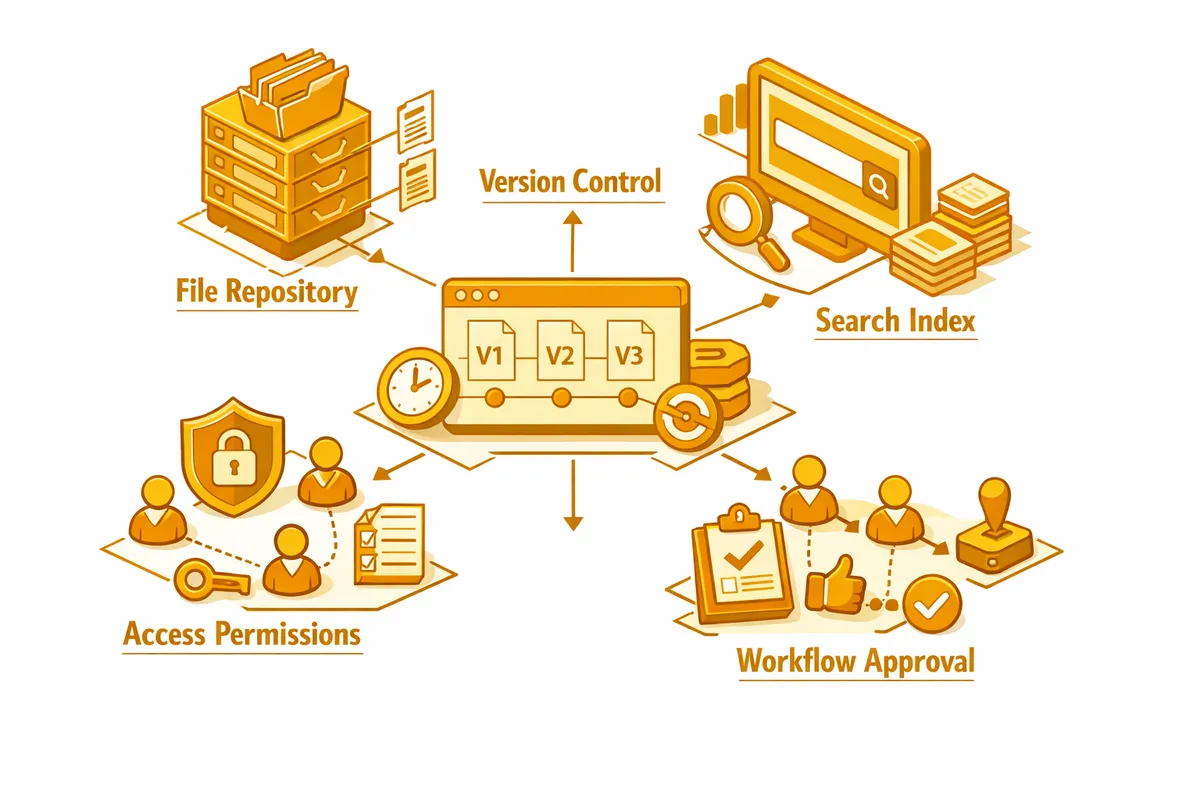
We begin with a document audit. We inventory the types of documents the business generates, receives, and manages, the typical lifecycle of each document type, who needs access to each type and at what stage, and the current storage and retrieval reality. This audit produces the taxonomy that governs the document management system design.
We select the platform appropriate for the business's scale and technical environment. For most Lincoln Square small businesses, a well-configured cloud document management system, SharePoint, Google Drive with structured organization, or a specialized document management platform like DocuWare for businesses with higher volume or compliance requirements, provides the right balance of capability and manageability. For businesses with unique workflow requirements, we build custom document management components that integrate with the broader technology environment.
We configure the folder taxonomy, metadata schemas, and naming conventions that bring order to the document repository. Taxonomy is not exciting, but it is the difference between a document system that works and one that accumulates chaos in a digital location instead of a physical one.
We configure the workflow routing for documents that require review and approval. Vendor invoices that need management approval before payment. Client contracts that need the legal review step tracked. Employment documents that need signatures from multiple parties before the employee can start. These workflows run inside the document management system rather than through ad hoc email chains.
We build the integrations with the other systems that generate or consume documents: the accounting system that needs to attach invoices to vendor records, the CRM that needs to store client contracts against client accounts, the email platform that should be able to save relevant attachments directly to the document system.
Industries We Serve in Lincoln Square
Independent restaurants and catering businesses on Lincoln Avenue and Lawrence Avenue manage vendor contracts, health department permits, catering event agreements, employee I-9 documentation, and insurance certificates. A document management system with clear taxonomy and access controls ensures that compliance documents are always findable and that the operational agreement documents for active catering events are accessible to the staff who need them.
Music schools and arts education businesses near the Old Town School of Folk Music manage enrollment agreements, media release forms for student photos and performances, tuition payment agreements, instructor employment contracts, and instrument rental agreements. The combination of family-facing agreements and employment documents creates a document volume that benefits significantly from structured management.
Fitness and wellness studios on Western Avenue manage membership agreements, liability waivers, instructor certifications, equipment maintenance records, and lease documents. Liability waivers in particular require reliable storage and retrieval, as they may need to be produced in response to an incident long after they were signed.
Specialty contractors and skilled trades operating from Damen Avenue and Leavitt Street manage client project agreements, change orders, inspection certificates, subcontractor agreements, insurance certificates, and warranty documents. The project document lifecycle, from estimate through completion to warranty period, benefits from structured management that keeps every project's documents together and retrievable.
Professional service firms operating in the neighborhood manage client engagement letters, deliverable documents, invoice history, and the information assets produced in the course of client work. Professional service firms with multiple active engagements need document management that organizes by client and matter rather than by chronological date or sender.
Event and cultural businesses near Welles Park and Giddings Plaza manage venue rental agreements, performer contracts, vendor agreements, sponsor agreements, and post-event documentation. Events generate a burst of documentation activity; document management systems that support that burst without requiring manual organization during the busiest operational periods are particularly valuable.
What to Expect Working With Us
1. Document audit and taxonomy design. We audit your current documents and storage reality, design the folder taxonomy and metadata schema for the document management system, and define the workflow routing rules for documents requiring review and approval. You approve the taxonomy before any system configuration begins.
2. Platform configuration and migration. We configure the chosen platform to the approved taxonomy, set up access controls and user permissions, and migrate existing documents from current storage locations into the structured system. Migration includes the metadata tagging work that makes documents searchable in the new system.
3. Workflow and integration configuration. We configure the approval workflow routes, build the integrations with connected systems, and test the full document lifecycle from creation through routing to storage. We validate that the retrieval experience matches the taxonomy design.
4. Training and adoption support. We train your team on document creation, storage, search, and the workflow routing tools. We provide reference documentation for the taxonomy and naming conventions. We support the first ninety days of operation to address questions and make adjustments as real usage reveals gaps in the initial configuration.