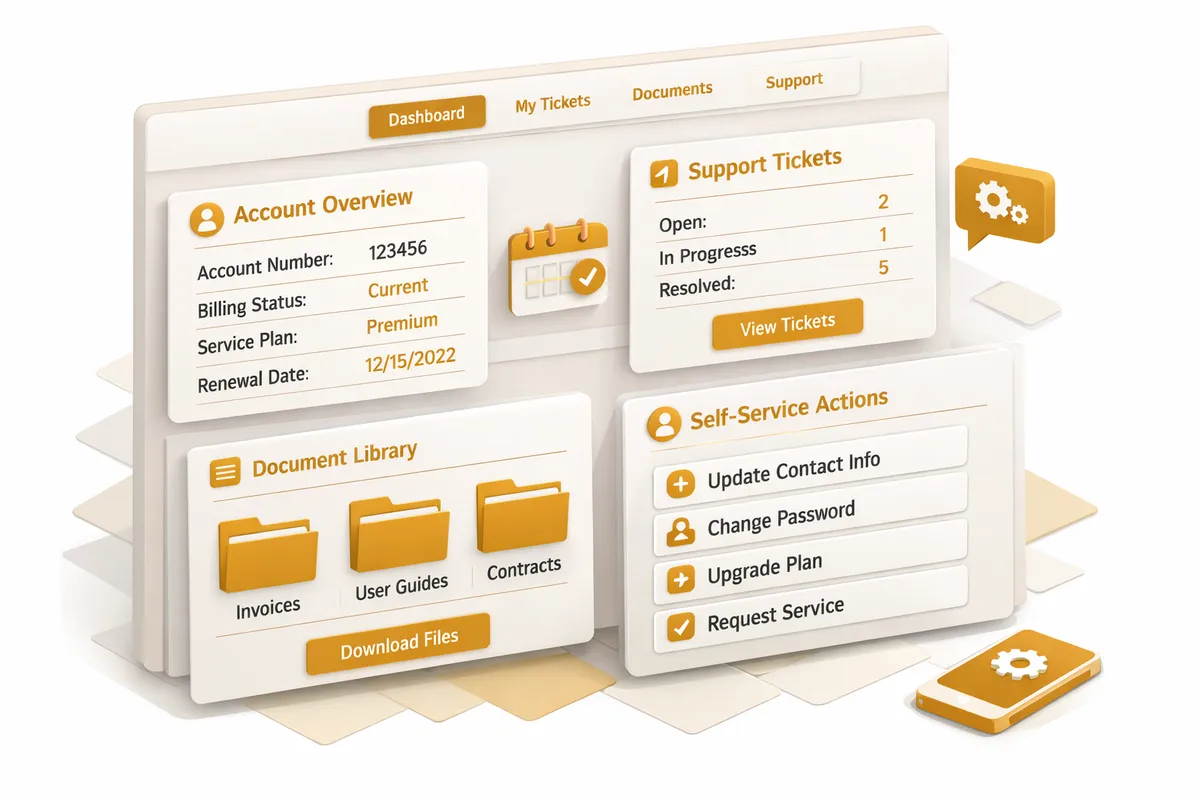
How We Build Customer Portals for Lincoln Square
We start with a customer journey mapping exercise. We identify the specific information and actions that your customers need most outside of direct interaction with your team: the questions they call about most frequently, the documents they ask to be resent, the status updates they check on, the actions they need to take that currently require staff involvement. These become the portal's core features.
We design the portal interface to reflect your brand and the relationship character of your Lincoln Square business. A portal for a premium catering operation has a different aesthetic and information architecture than a portal for a fitness studio or a music school. We do not apply a generic template; we design for the specific client relationship you have built.
We build the portal with secure authentication, appropriate data access controls ensuring each customer sees only their own information, and integration with your existing operational systems. If your scheduling system, billing platform, and document storage are the sources of truth for customer data, the portal reads from those systems rather than maintaining a separate database that can become inconsistent.
We build mobile-first, because the Lincoln Square client who wants to check their lesson schedule or review their invoice is likely doing it on their phone between the Brown Line Western station and a dinner reservation on Lincoln Avenue.
We configure the notification layer that lets customers know when something in their account changes: a new invoice posted, a scheduled appointment confirmed, a document made available. These notifications drive portal adoption, turning the portal from a destination customers need to remember into a communication channel they experience regularly.
Industries We Serve in Lincoln Square
Music schools and arts education businesses near the Old Town School of Folk Music build portals where families access lesson schedules, view instructor notes, download practice materials, review tuition account history, and manage upcoming session enrollment. The portal reduces the front desk burden of routine schedule and billing inquiries while giving families the transparency they want about their student's progress.
Catering and event businesses on Lincoln Avenue and Lawrence Avenue build portals where event clients review booking details, confirm event specifications, track item confirmations, access contracts and event timelines, and submit additional requests between their initial booking and event date. Client portals for event businesses reduce back-and-forth email chains and keep both parties aligned on event status without requiring manual status update calls.
Specialty contractor and home services businesses operating from Damen Avenue and Leavitt Street into adjacent neighborhoods build portals where clients see project status, access work order history, review warranties, request service appointments, and track pending proposals. Long-term service relationships benefit most from portals because the accumulated history of work done is directly accessible rather than requiring staff to research records on each call.
Fitness and wellness studios on Western Avenue build portals where members see their upcoming class reservations, track attendance history, manage membership billing, update payment methods, and access any digital content their membership includes. Member portals with complete attendance history also serve as a retention tool, showing members visually how regularly they have been engaging with the studio.
Professional service firms operating from the neighborhood build portals where clients access engagement documents, review project status, download deliverables, submit information requests, and track invoice history. Client portals for service firms reduce the administrative overhead of document distribution and status communication across multiple active client engagements.
Specialty retail shops along Lincoln Avenue with custom order, layaway, or subscription programs build portals where customers track order status, review account history, manage recurring purchases, and access digital materials associated with their purchases.
What to Expect Working With Us
1. Customer journey and feature prioritization. We map the customer journey for your business, identify the highest-value self-service features, and define the portal scope. We prioritize features by the combination of how frequently they are needed and how much staff time they currently consume. We design for the features that produce the most immediate value rather than building comprehensive portals that overwhelm users.
2. Portal design and system integration. We design the portal interface to reflect your brand and build the integrations with your operational systems. The design phase includes mobile layout review, accessibility review, and a presentation for your feedback before development begins.
3. Development, testing, and authentication setup. We develop the portal, implement secure authentication, configure data access controls, and test the portal across devices and use cases. We run user acceptance testing with real customers from your business before launch.
4. Launch, notification configuration, and training. We launch the portal, configure the notification emails that drive adoption, and train your team on how to use the administrative tools. We support the customer onboarding process, including the communication to existing customers that explains what the portal provides and how to access it.