How We Build Custom ERPs for Lincoln Square
We begin with a full operational mapping: the complete flow of materials, orders, production, and money through the business. We document the specific workflows that must be supported, the data that needs to be captured at each step, the reporting that management needs to run the business, and the integration points with external systems like suppliers, customers, and accounting infrastructure.
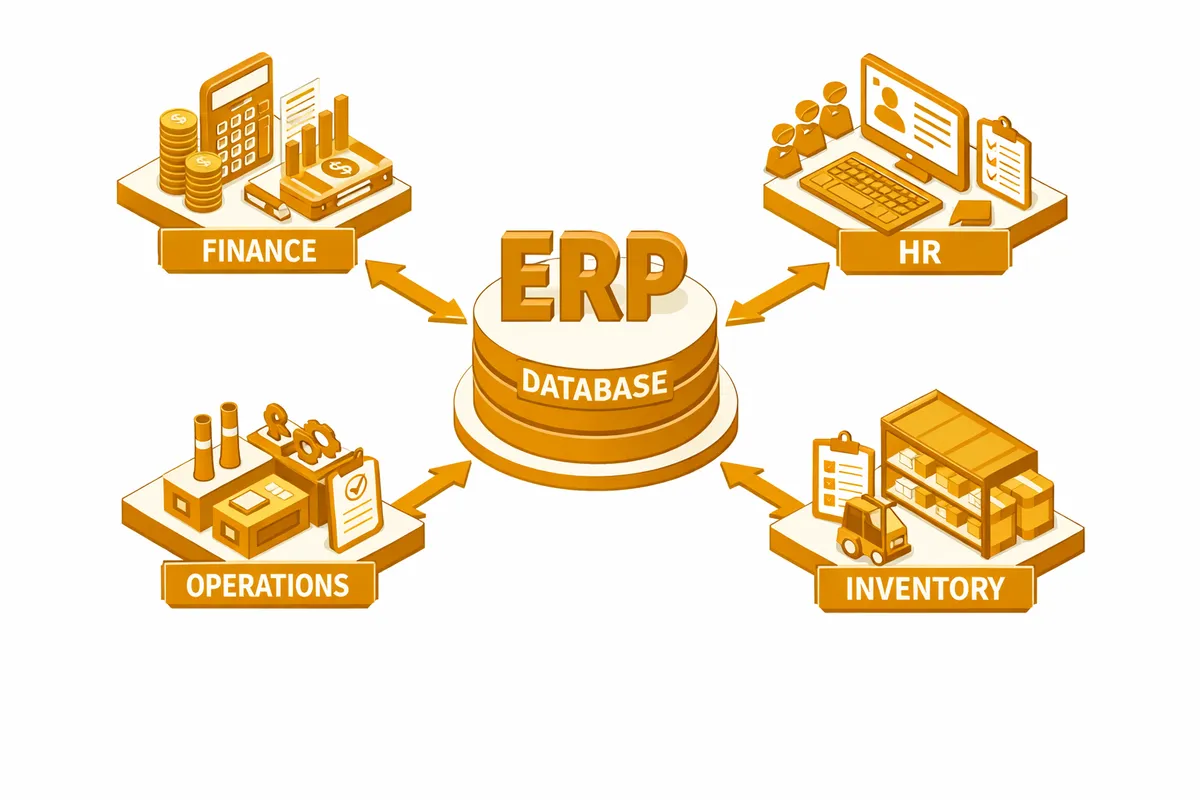
We design the data model and system architecture for the specific business. ERP is a tightly integrated system where design decisions in one module affect every other module. We architect the system holistically before writing any code, and we review the architecture with the business owner before development begins.
We develop the ERP in modules that can be tested independently before integration. Inventory management, order management, production planning, and financial reporting each receive dedicated development and testing before the modules are connected into the integrated system. This modular approach limits the complexity of any individual development phase and makes it easier to validate each piece before adding the next.
We build the integrations with external systems: supplier portals, customer ordering platforms, payment processors, tax services, and financial reporting tools. These integrations are specified during the requirements phase and built as part of the core system rather than added afterward.
We run a parallel operation period where the new ERP runs alongside existing systems before the business fully transitions. This ensures that the ERP handles all real-world scenarios correctly before the old systems are retired.
Industries We Serve in Lincoln Square
Specialty food and beverage producers along Lincoln Avenue with wholesale, retail, and direct-to-consumer channels need ERPs that manage ingredient inventory, track production runs, handle multi-channel order management, calculate cost of goods accurately, and generate the financial reports that wholesale customers and accountants require.
Multi-service wellness and fitness operators on Western Avenue that combine membership, private sessions, retail, and programming need ERPs that track service utilization, manage instructor and staff scheduling, handle multi-tier membership billing, track retail inventory, and generate the integrated financial picture that shows which service lines are profitable.
Custom fabrication and specialty manufacturing businesses operating from Lincoln Square's commercial buildings into adjacent industrial corridors need ERPs that manage material inventory, track job costing, schedule production capacity, handle customer quote-to-invoice workflows, and report on job profitability by customer and product type.
Multi-location retail and hospitality businesses operating in Lincoln Square with additional locations in Ravenswood or North Center need ERPs that consolidate inventory and financial data across locations, manage inter-location transfers, and produce location-level and consolidated financial reporting for management and tax purposes.
Catering and food service businesses that operate both regular restaurant service on Lawrence Avenue and large-scale catering need ERPs that separate the operational and financial tracking of both lines, manage shared ingredient inventory between them, and produce the margin analysis that helps operators understand the true profitability of each channel.
Import, distribution, and wholesale businesses serving Lincoln Square's specialty food and retail community need ERPs that manage supplier relationships, purchase orders, receiving, warehouse inventory, customer orders, invoicing, and the logistics documentation required for the products they handle.
What to Expect Working With Us
1. Operational mapping and requirements definition. We document your complete operational workflow, define the data model, and produce a detailed requirements specification. This phase is the foundation of the entire project; time spent here prevents expensive changes during development.
2. Architecture design and module sequencing. We design the system architecture and sequence the development modules. We present the design for your review and establish the project plan with milestones and deliverables before development begins.
3. Modular development and testing. We develop each module to specification, test it independently, and then integrate it with the modules already built. We review each module with you at delivery before proceeding to the next. You see the system being built progressively rather than receiving a complete system at the end with no visibility in between.
4. Integration, parallel run, and launch. We build and test the external integrations, run a parallel operation period with real business data, validate that all workflows are handled correctly, and execute the full cutover. We provide dedicated support for the first ninety days after launch.